The kitchen works harder than any other room in the house, and so does its blind. It has to cope with steam from the kettle and the pans, splashes at the sink and a fine film of cooking grease in the air. It needs to be easy to use with wet hands. And in a lot of homes the kitchen is where everyone gathers, so it needs to look good as well.
The right choice depends mostly on where each window is and how close it sits to the sink and hob. Here’s how our fitters approach it when we visit, and the options we’d recommend.
Start with where the window is
Above the sink
This is the most common kitchen window, and the most demanding. It gets splashed, it steams up during the washing-up, and you’ll be leaning over the sink every time you raise or lower the blind. Choose a material that shrugs off water, and think about how you’ll reach it. Controls on the side you can reach comfortably are far easier than stretching across the taps.
Check the tap, too. A tall or swan-neck tap can get in the way of a blind fitted inside the recess. When we measure, we check the clearance. If it’s tight, we can make the blind stop just above the tap, or fit a blind that sits on the glass behind it.
Near the hob
Heat, steam and grease all rise from the hob, and fabric doesn’t mix well with any of them. If your window is right behind or beside the cooker, we’ll look at the distance carefully. Sometimes the answer is a blind in a wipe-clean material fitted well clear of the heat. Occasionally, to be honest, it’s better to leave that window without a blind.
Tilt-and-turn and uPVC windows
Many modern kitchens and extensions have uPVC windows that tilt inwards. A blind fitted in the recess can stop them opening, or swing about when they do. A Perfect Fit blind clips into the window’s glazing beads, moves with the window when you open it, and keeps the windowsill clear for herbs, plants and the washing-up liquid. No drilling is needed, which is handy if the recess is tiled. Because it sits right on the glass, it also solves the tall-tap problem.
Patio doors and bifolds
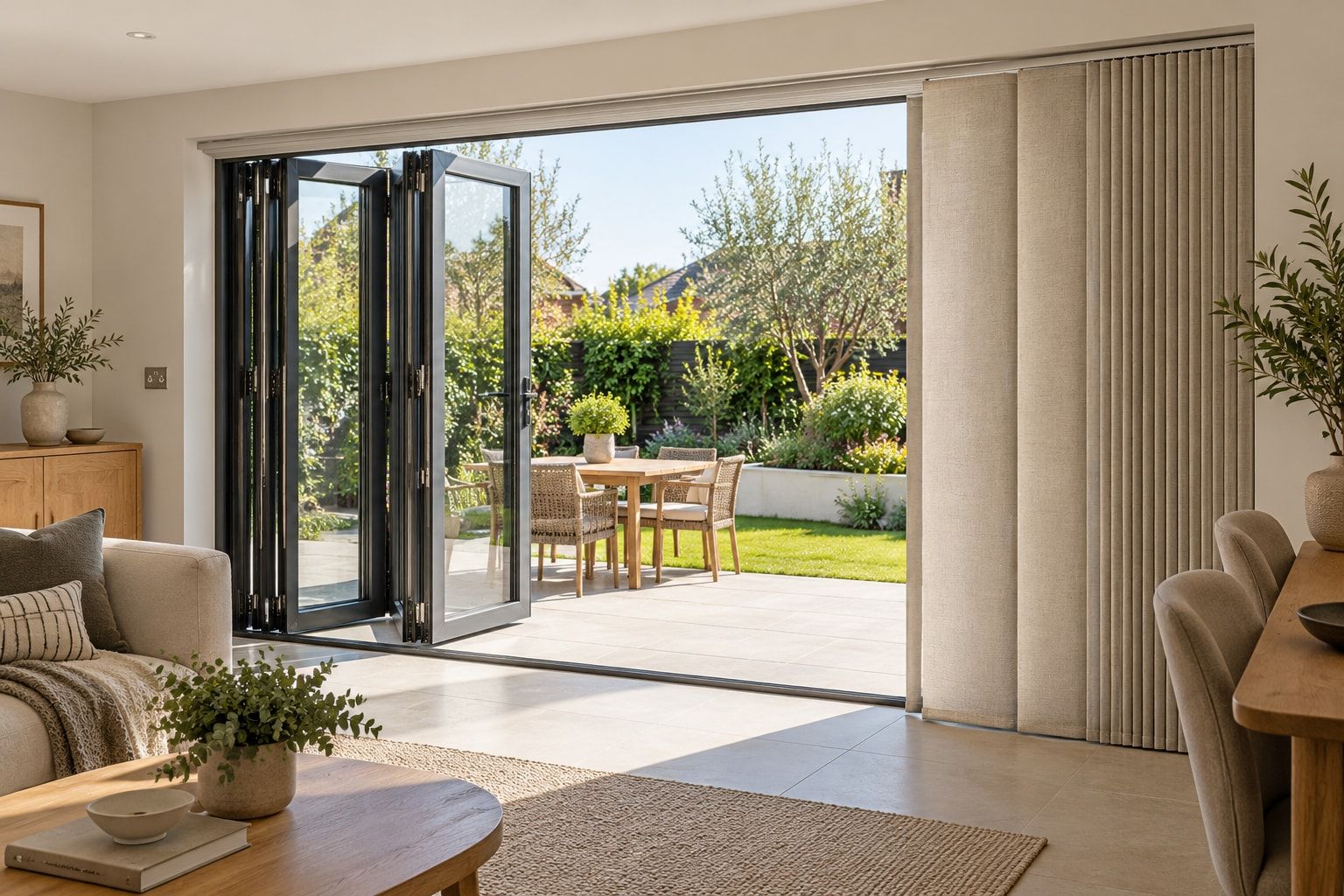
Kitchen extensions often open onto the garden through large glass doors. These need a different approach: vertical blinds, panel blinds or tracked shutters, depending on the doors and the look you want. Our guide to blinds and shutters for patio and bifold doors covers the options in detail.
The blinds that work best in kitchens
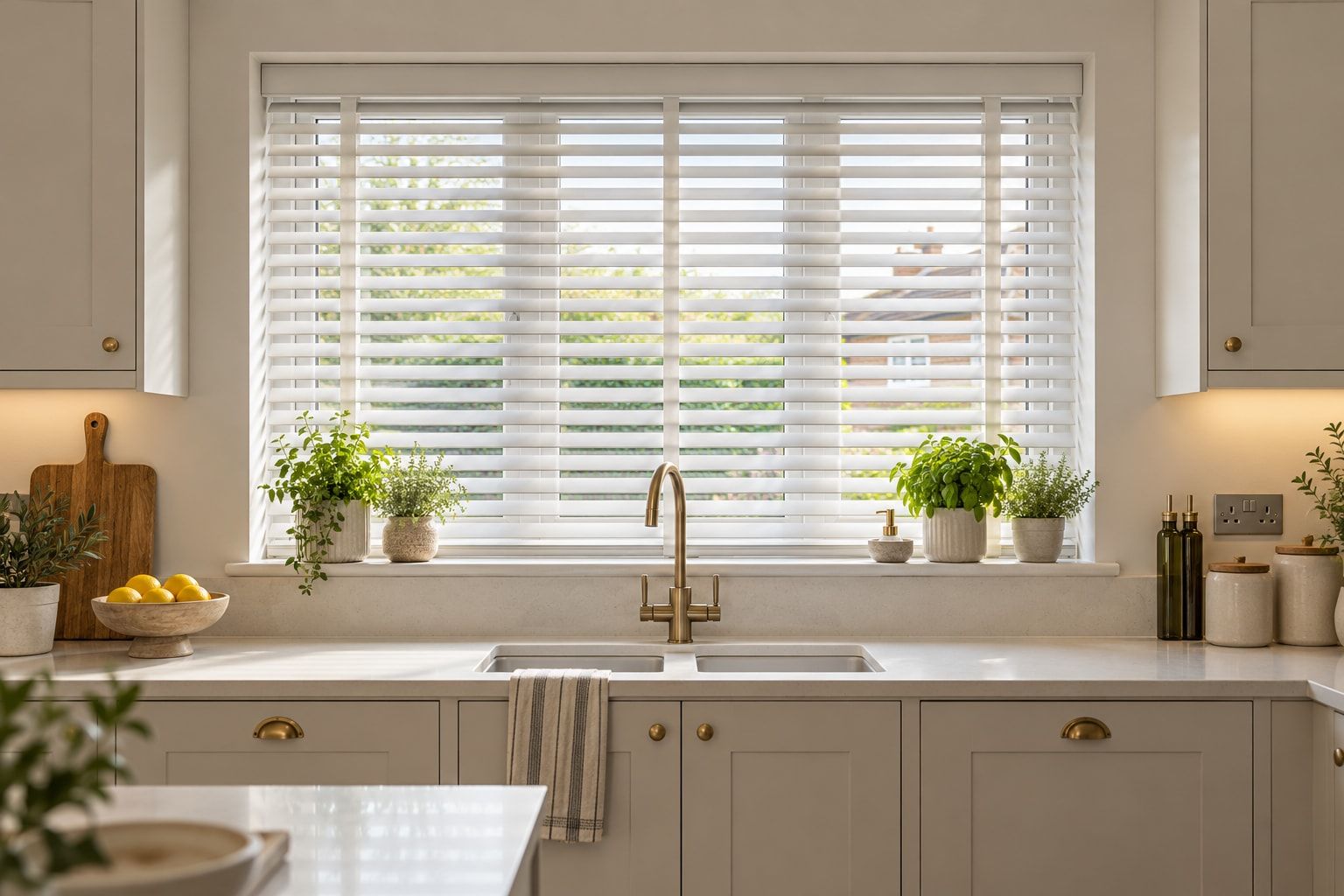
Faux wood Venetian blinds
Faux wood Venetian blinds are one of the most popular kitchen choices, and for good reason. They have the warm look of timber, but the slats are moisture-resistant, so steam won’t make them warp the way it would real wood. Tilt the slats to let light onto the worktops while blocking the view from the garden or the house opposite.
The honest downside is that slats collect grease and dust, especially near the cooker. You’ll need to wipe them slat by slat now and then. If that sounds like a chore, a roller blind is easier to keep clean.
Waterproof roller blinds
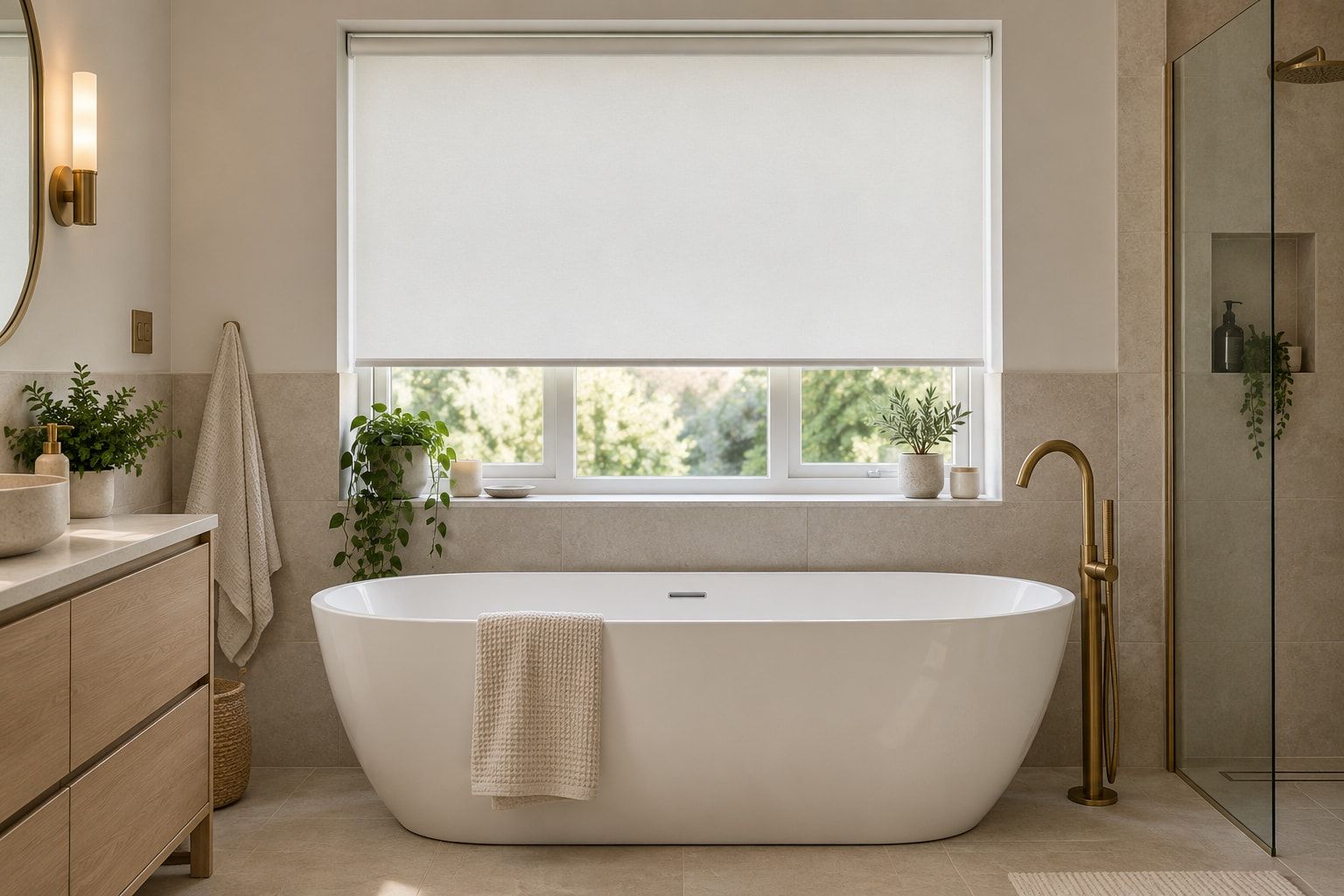
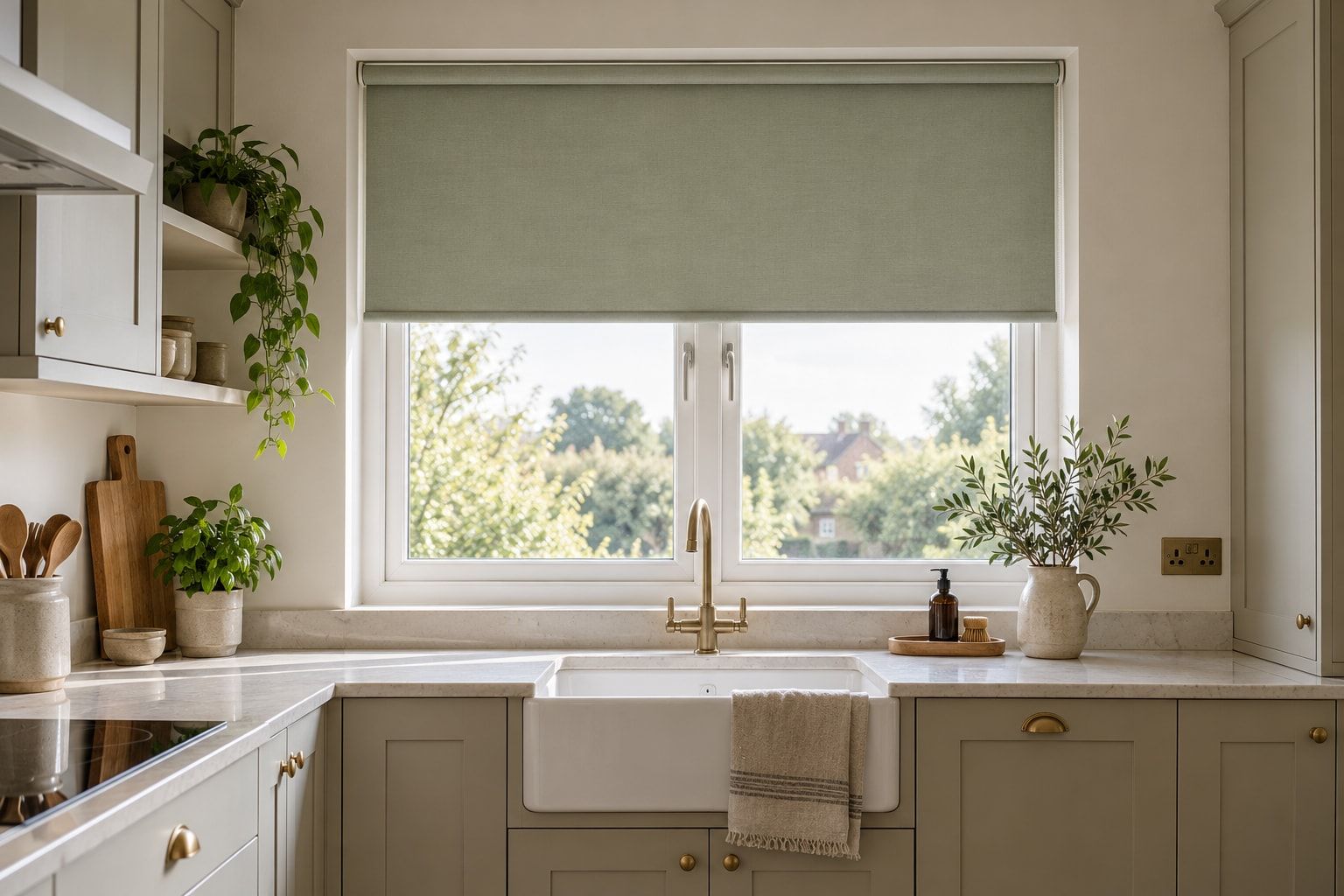
For the window directly above the sink, a waterproof roller blind is the most practical choice. The fabric is PVC or a waterproof wipe-clean material, so splashes simply wipe away, and it won’t warp or sag in steam. The finish is smoother than a woven fabric, so it looks clean and practical rather than soft.
Roller blinds in wipe-clean fabrics
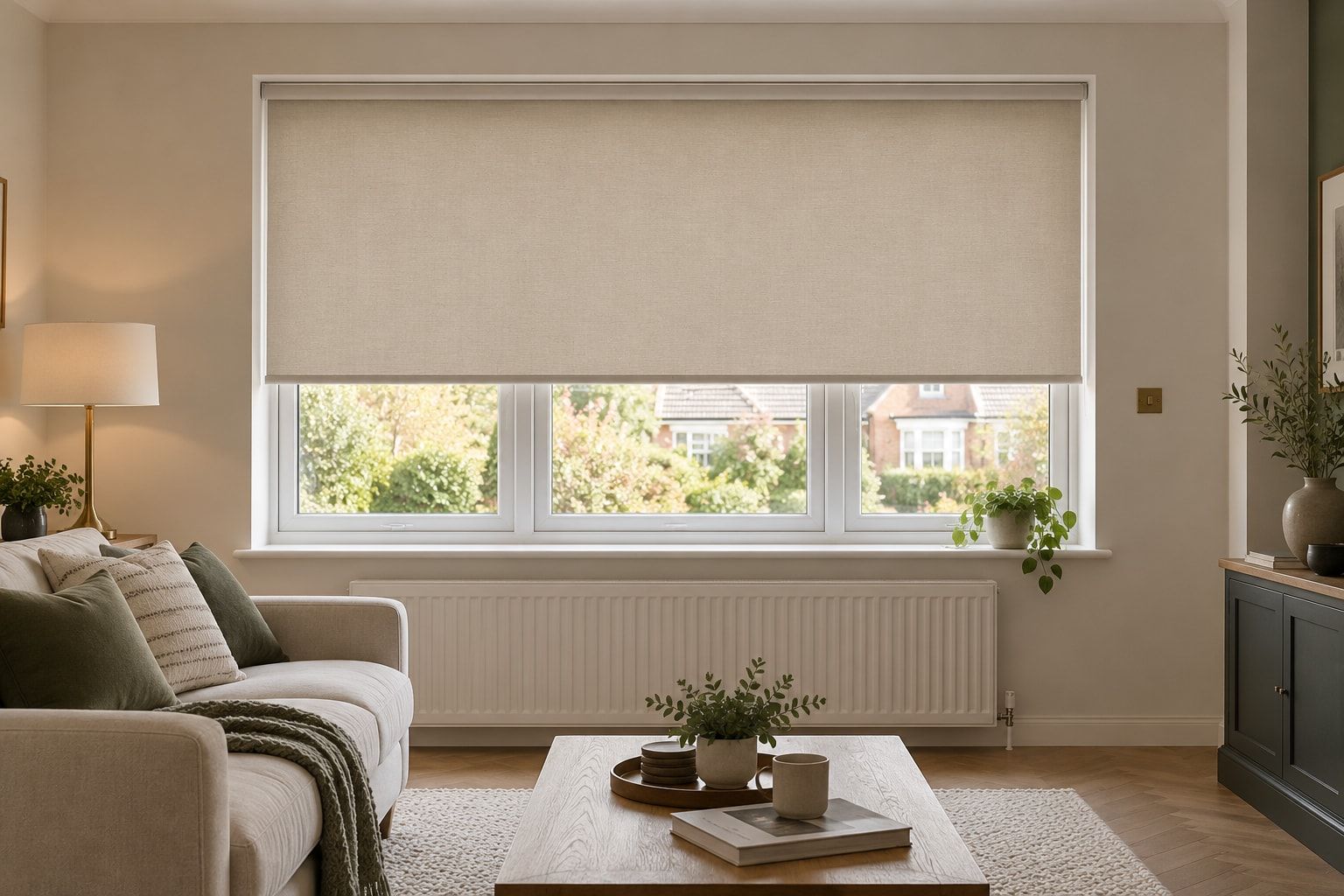
A roller blind in a wipe-clean, moisture-resistant fabric gives you much more choice of colour and pattern while still coping well with everyday kitchen life. It’s a good fit for windows that aren’t right next to the sink or hob, and it takes up almost no room when raised. A soft sage, a warm stone or a bold print can make a plain kitchen feel finished.
Perfect Fit blinds
Perfect Fit blinds are ideal for uPVC windows, especially tilt-and-turn. They’re neat, they leave the windowsill free, and with no loose cords they’re a sensible choice where children are around. We’ll recommend a fabric that suits a kitchen when we visit.
Comparing kitchen blinds
| Blind | Steam and splashes | Keeping it clean | Light control | Best spot |
|---|---|---|---|---|
| Faux wood Venetian | Moisture-resistant | Wipe slat by slat | Tilt for light and privacy | Most kitchen windows, a wood look |
| Waterproof roller | Fully waterproof | Wipe in seconds | Raise or lower | Directly above the sink |
| Wipe-clean roller | Copes with everyday steam | Easy to wipe | Raise or lower | Windows away from the sink and hob |
| Perfect Fit | Depends on the fabric | Wipe or dust | Raise or lower | uPVC and tilt-and-turn windows |
Practical details that make a difference
Colour
Very pale blinds show splashes and grease marks quickly. Mid-tones such as grey, stone, sage or a soft wood shade are more forgiving, and they still keep the room feeling light. If you love white, choose a finish you can wipe easily.
Light
Kitchens need good light for cooking, so most people choose a light-filtering fabric or tilting slats rather than anything dark. If low evening sun shines straight onto your worktops, a slightly denser fabric or a Venetian you can angle will cut the glare without making the room gloomy.
Child safety
The kitchen is often where children spend the most time with you. All our blinds meet the UK child-safety standard (BS EN 13120), with cordless and secured-chain options. Any chain is fixed with a child-safe tensioner so it’s held taut and out of the way.
Open-plan spaces
In a kitchen-diner or open-plan living space, the blinds don’t all need to be the same type, but they look best when they belong together. A waterproof roller by the sink and a fabric roller in a matching shade at the far end, for example, keeps things practical where it matters and soft where you relax.
Easy care
A quick routine keeps kitchen blinds looking their best. Wipe waterproof and wipe-clean blinds with warm, mildly soapy water and dry them with a soft cloth. Dust faux wood slats regularly and give them a gentle wipe when grease builds up, closing the slats one way and then the other so you reach both sides. Avoid harsh or abrasive cleaners, which can damage the finish.
Getting it right
Most kitchens are straightforward once you’ve looked at each window in turn: how close it is to the sink and hob, how it opens, and how much light and privacy you need. If you’d like help choosing, book a free home visit. We’ll measure every window, check the taps and handles, and bring samples so you can see how each option looks in your own kitchen. The quote is free and there’s no obligation, and fitting is included in your quote.
Questions
Can I have a Roman blind in my kitchen?
Yes, in the right spot. A Roman blind works well at the dining end of a kitchen-diner, or on a window well away from the hob and sink. Close to the cooking, the fabric will pick up grease and smells, and it can't be wiped down like a roller or faux wood blind.
Do you fit blinds in kitchen extensions?
Yes. We fit blinds on all kinds of windows and doors in extensions, including tilt-and-turn windows, French doors, patio doors and bifolds. Every blind is made to your exact measurements.
Do I need to measure my kitchen windows before you visit?
No. We measure every window ourselves at your free home visit, so you don't need to do anything beforehand.