It’s one of the questions we’re asked most often at home visits: should I go for blinds or shutters? Both are made to measure, both can look superb, and both do the basic job of giving you privacy and controlling the light. But they feel quite different to live with, and each suits some rooms better than others.
We fit both, so we’ve no reason to push you one way or the other. Here’s our honest comparison.
The short answer
Choose shutters if you want a permanent, architectural feature with fine control over light and privacy, especially on windows that face the street.
Choose blinds if you want a wider choice of colours and fabrics, a properly dark bedroom, or a practical answer for kitchens and bathrooms.
Plenty of homes have both, and that’s often the best result.
How blinds and shutters differ
How they’re made
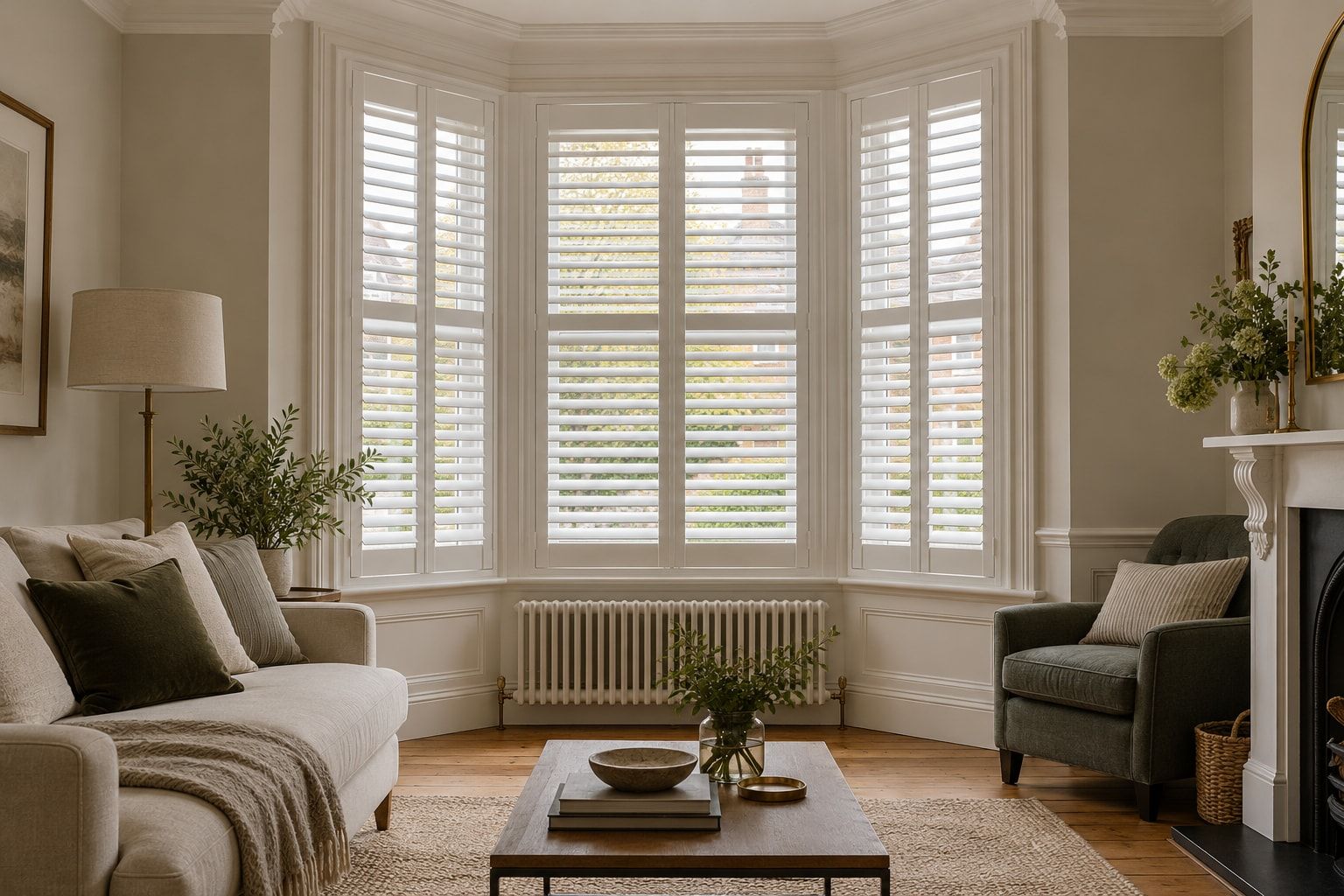
Shutters are solid hinged panels with adjustable slats, called louvres, fitted on a frame in or around your window. They stay in place all the time. You open them like small doors and tilt the louvres to control the light.
Blinds are fabric or slats that raise and lower from a headrail. When you don’t need them, most roll or fold away and leave the whole window clear.
Light and privacy
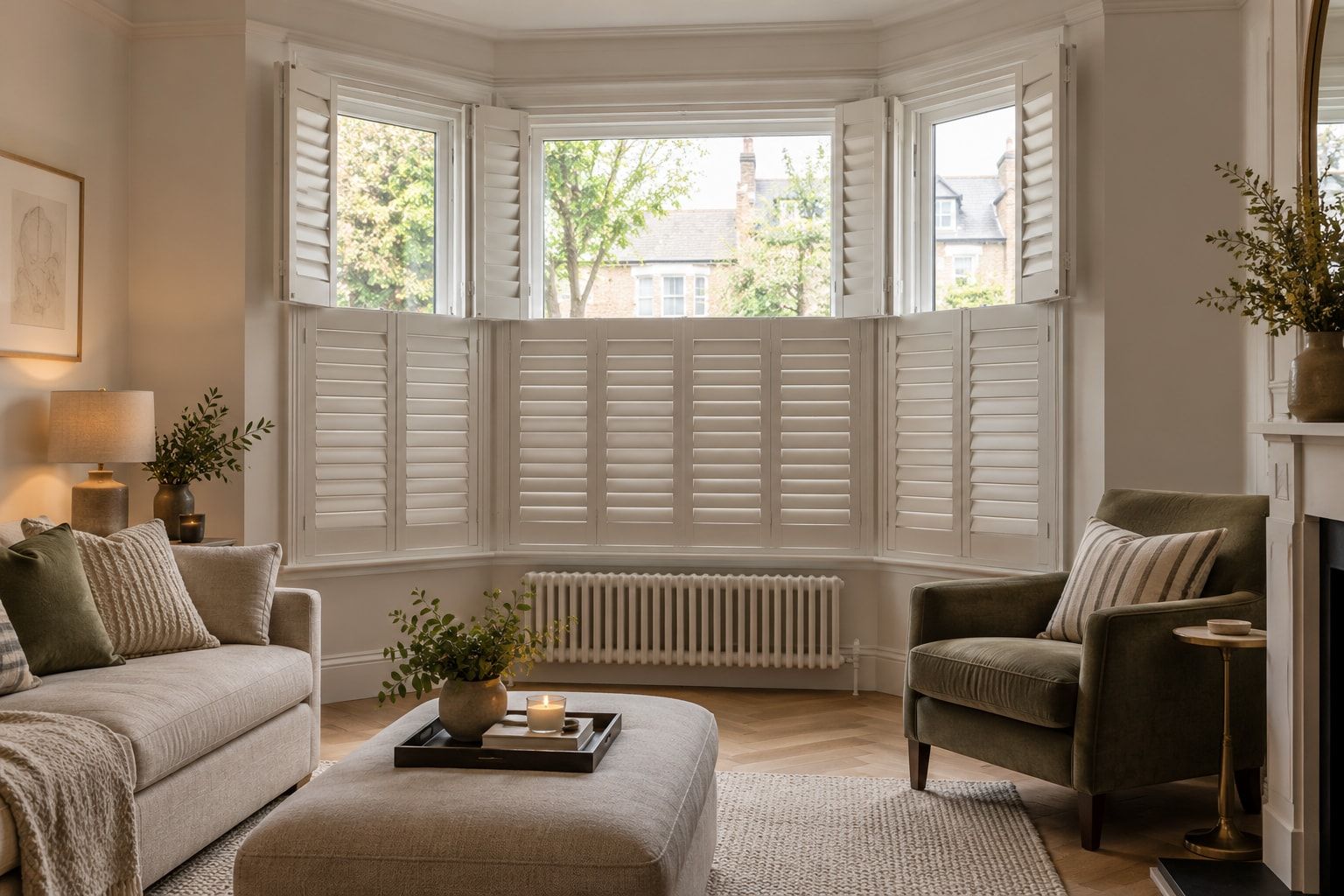
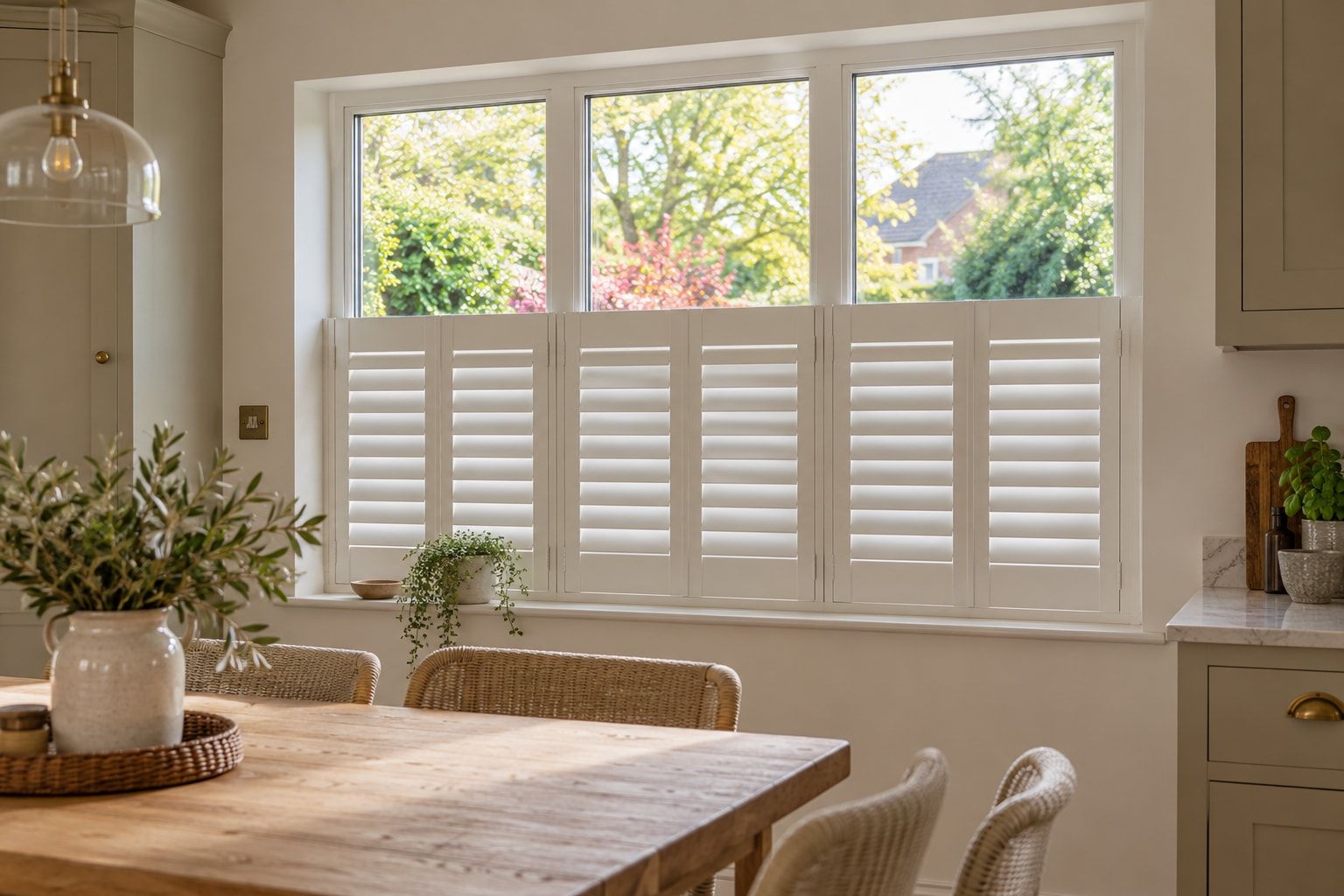
This is where shutters really shine. Tilt the louvres and you can let daylight in while blocking the view in from the street. Tier-on-tier shutters go further, with top and bottom sections that open separately, so you can have the top fully open for light while the bottom stays closed for privacy. Café-style shutters cover just the lower half of the window, which suits street-facing rooms.
Blinds offer different kinds of control. A roller blind is simple: up, down or anywhere in between. Venetian blinds tilt like louvres, and day and night blinds let you switch between sheer and solid bands.
Darkness
Closed shutters make a room much darker, but some light always gets in round the louvres and the panel edges. If you need a truly dark bedroom, a blackout blind does that job better.
Style
Full-height shutters give a classic, clean look that suits Victorian and Edwardian bay windows just as well as modern homes. They become part of the room’s architecture. Blinds give you far more choice: plains, textures, patterns and almost every colour you can think of, from crisp and minimal to soft and decorative.
Investment and permanence
Shutters are usually a bigger investment than blinds, and they’re designed to stay in place for the long term. Blinds are easier to change when you redecorate or your tastes change. Neither is right or wrong. It depends how long you plan to stay and how you feel about the room.
Day-to-day living
Shutter panels swing open into the room, so you need a little clearance in front of the window for furniture, plants and anything on the windowsill. Blinds sit neatly in the recess and need no space in front. Shutters have no cords or chains at all. All our blinds meet the UK child-safety standard (BS EN 13120), with cordless and secured-chain options.
Side by side
| Blinds | Shutters | |
|---|---|---|
| Light control | Good to very good, depending on the style | Excellent, with tilting louvres |
| Privacy | Good, best with Venetian or day and night styles | Excellent, especially tier-on-tier and café style |
| Darkness | Full blackout possible | Dark, with some light round the louvres |
| Choice of looks | A huge range of fabrics, colours and patterns | Fewer finishes, with a classic look |
| Investment | Generally lower | Generally higher |
| Space needed | None in front of the window | Room for the panels to swing open |
| Cleaning | Wipe or dust, depending on the type | Dust the louvres regularly |
| Changing later | Easy to update | A long-term fixture |
Which works best in each room?
Front rooms and street-facing windows
Shutters are hard to beat here. They give you daytime privacy without losing the light, and they look smart from the street, too. In terraced and semi-detached homes with bay windows facing the pavement, tier-on-tier or café-style shutters are a popular choice.
Bedrooms
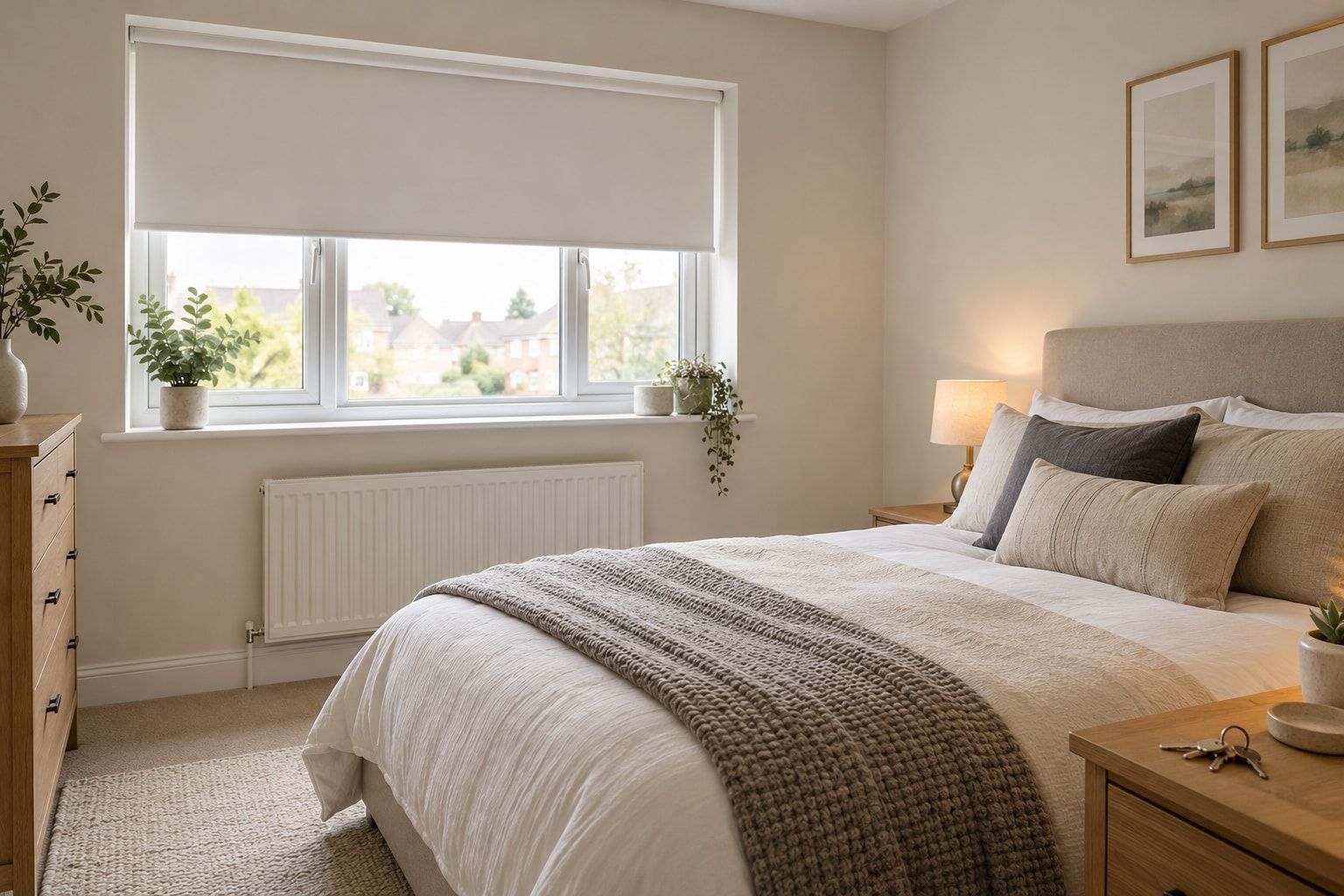
Blinds usually win in bedrooms, because a blackout blind gives a genuinely dark room. If you love the look of shutters, they can still work well, as long as you’re happy with a little morning light round the louvres.
Kitchens and bathrooms
We’d generally suggest blinds. Faux wood Venetians and waterproof roller blinds cope with steam and splashes and wipe clean easily. If you have your heart set on shutters for a bathroom, talk to us about whether they’ll suit your room.
Bay windows
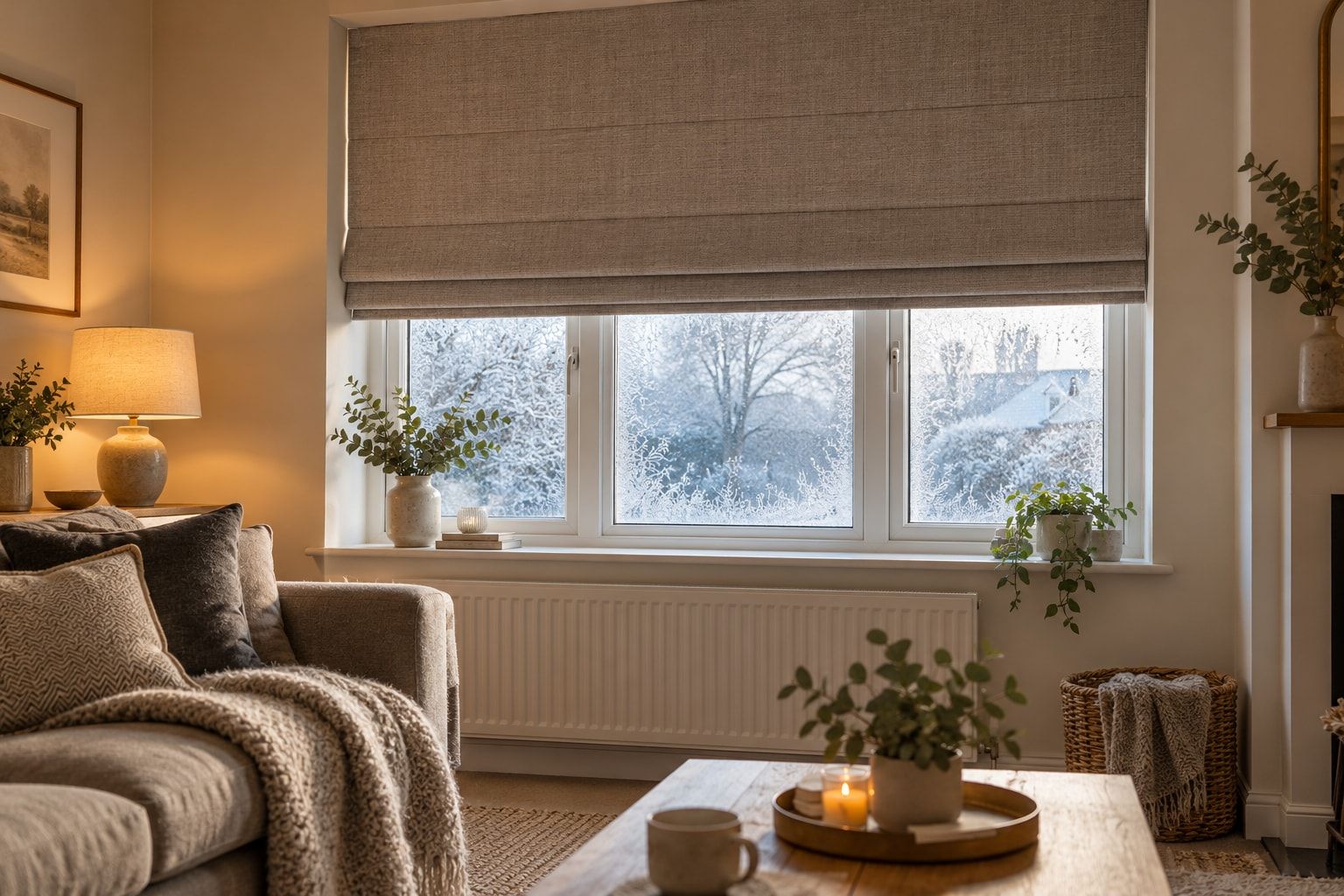
Both work well. Shutters can be made for each section of the bay, which gives a fitted, built-in look. Blinds are simpler and sit in each section separately, often with curtains on a bay track for extra softness.
Patio doors, bifolds and unusual shapes
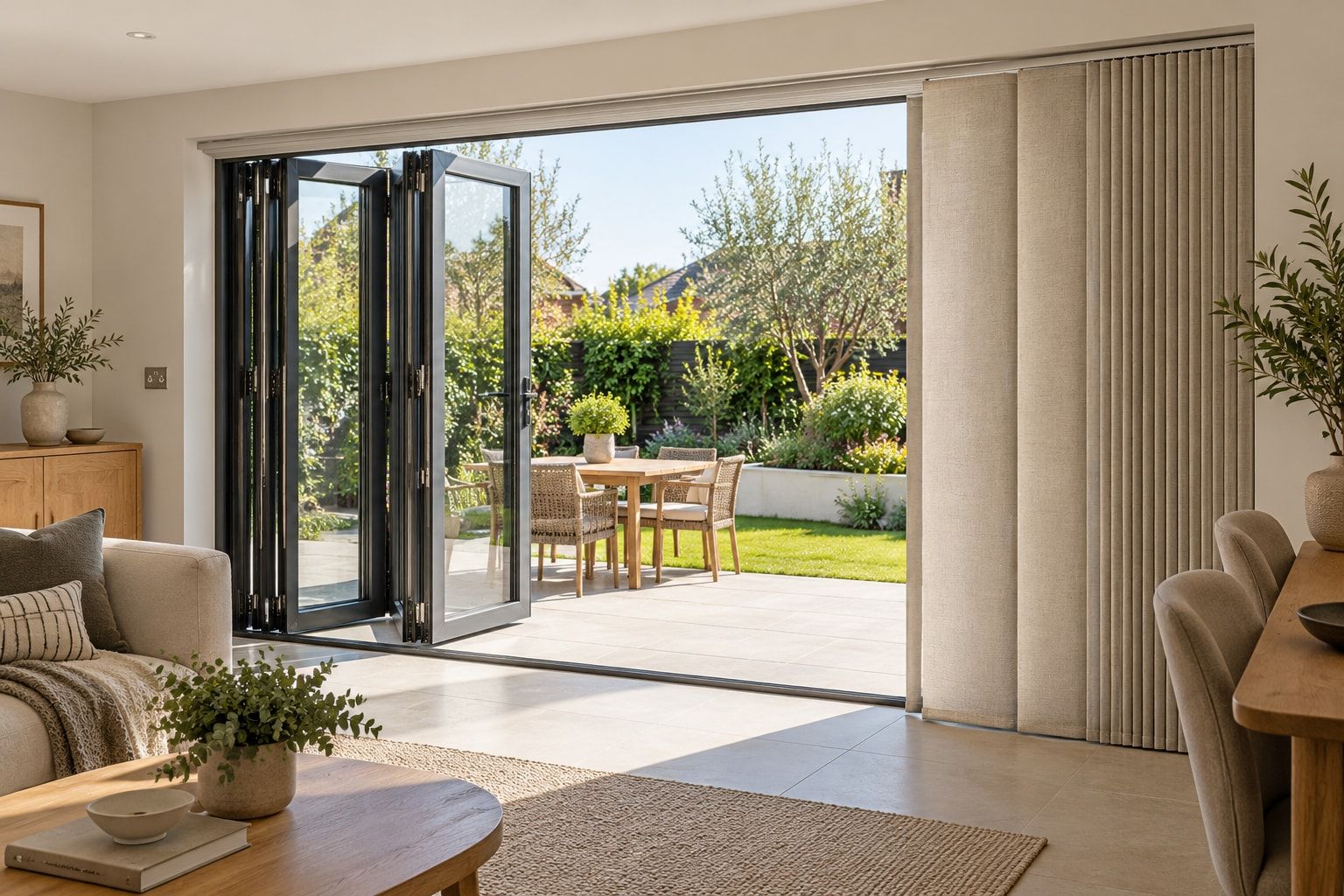
Large doors and arched or angled windows need special treatment. Tracked shutters slide or fold across wide openings, and special-shape shutters can be made for arches and angles. Vertical and panel blinds are a good alternative for big glass doors.
A middle ground: wooden Venetian blinds
If you like the look of shutters but want something lighter on the window, wooden Venetian blinds are worth a look. The slats tilt just like louvres, real wood brings natural warmth, and the whole blind raises clear of the window when you want the full view. They suit living rooms, studies and bedrooms, though not steamy bathrooms.
Mixing blinds and shutters
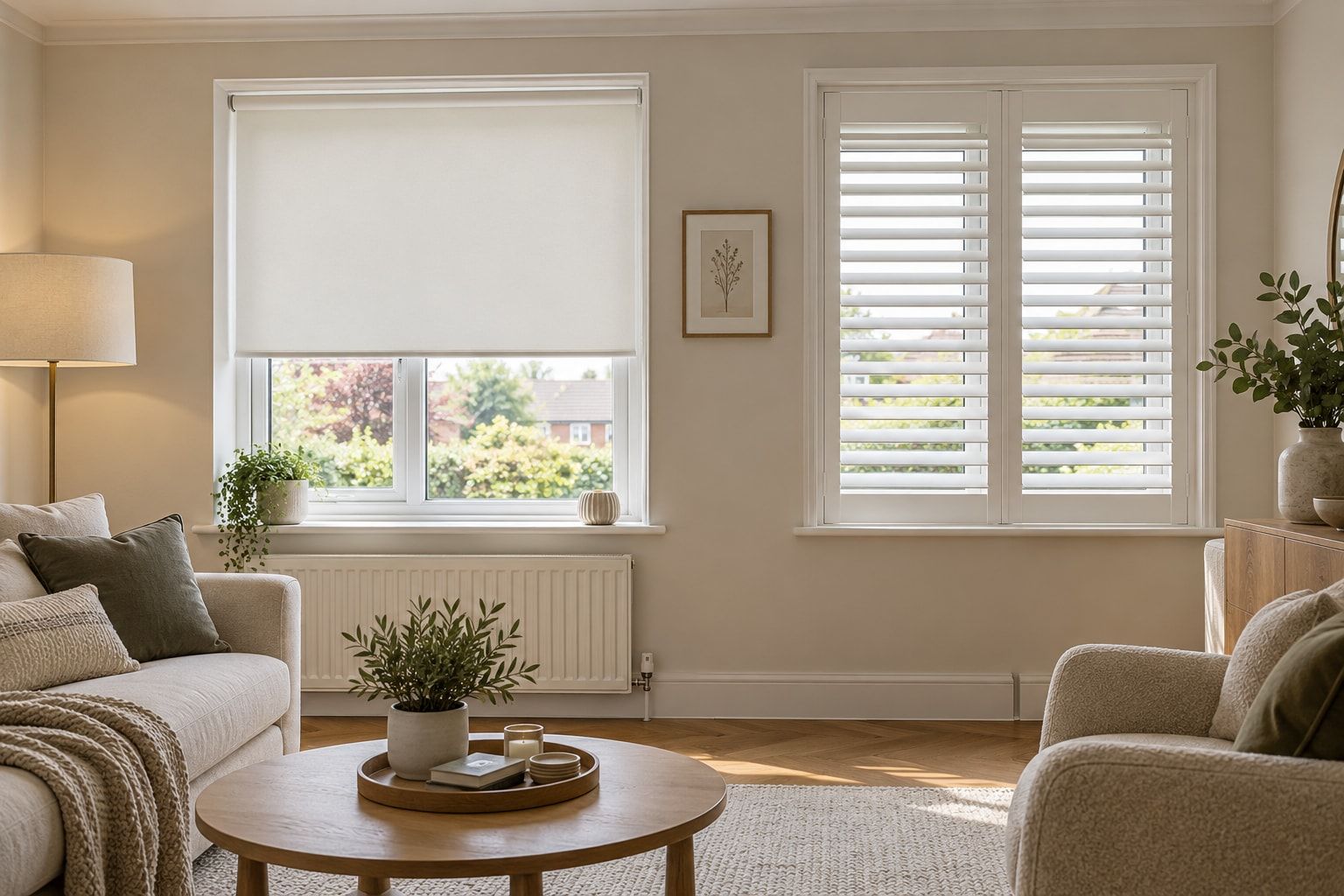
There’s no rule that says every window must match. A common approach is shutters on the front of the house, where privacy and kerb appeal matter most, with blinds in the bedrooms, kitchen and bathroom. Keep the colours consistent, such as white shutters with white or soft neutral blinds, and the house will feel joined up inside and out.
Questions to help you decide
If you’re still torn, run through these for each window.
- Does the window face the street or a neighbour? If daytime privacy matters, shutters or a Venetian blind will give you light and privacy together.
- Do you need the room dark? For bedrooms and nurseries, a blackout blind is the more reliable choice.
- Is there space in front of the window? A sofa pushed up to the sill, or a deep windowsill full of plants, can make shutter panels awkward to open.
- Is the room steamy? Kitchens and bathrooms usually call for wipe-clean blinds.
- How long are you staying? Shutters reward a long stay. If you might move or redecorate before long, blinds keep your options open.
- Do you want the full view? Blinds can be raised completely clear of the glass. Shutter panels fold back to the sides, but the frame stays in place.
Still not sure?
Seeing both in your own home makes the decision much easier. Book a free home visit and our fitters will measure up, bring samples of both, and give you straight advice for each window. There’s no obligation, and fitting is included in your quote.
Questions
Can I still open my windows with shutters fitted?
Yes. Shutter panels hinge open so you can reach the window and open it as normal. When we measure, we check the handles and the way each window opens so everything clears.
Can you quote for blinds and shutters at the same visit?
Yes. We can measure for both and quote for each, so you can compare them side by side. The home measure and quote are free, with no obligation.
How do I keep shutters clean?
Dust the louvres regularly with a soft cloth or duster, working along each one. For marks, use a cloth that's barely damp and dry the area straight away. Avoid soaking them or using harsh cleaners.