Patio and bifold doors are often the heart of a modern home. They flood the kitchen or living room with light and open the whole space up to the garden in summer. They also create the biggest window-dressing challenge in the house: a wall of glass that can be glaring on sunny afternoons, cold on winter evenings and very visible from outside once the lights are on.
Whatever you choose has to deal with all of that, and then get completely out of the way when you want to open the doors. Here’s how the main options compare.
The question to ask first
Before thinking about fabrics or colours, think about this: when the doors are open, where will the blind go?
- Sliding patio doors slide one panel behind another, so the opening is usually on one side.
- Bifold doors fold up concertina-style and stack at one or both ends of the opening. Depending on how they’re hung, they may fold outwards into the garden or inwards into the room.
- French doors swing open on hinges, inwards or outwards.
A good dressing either stacks clear of the opening, ideally on the same side as the doors fold, or moves with the doors themselves. Getting this right is the difference between a blind you love and one that’s always in the way.
Panel blinds
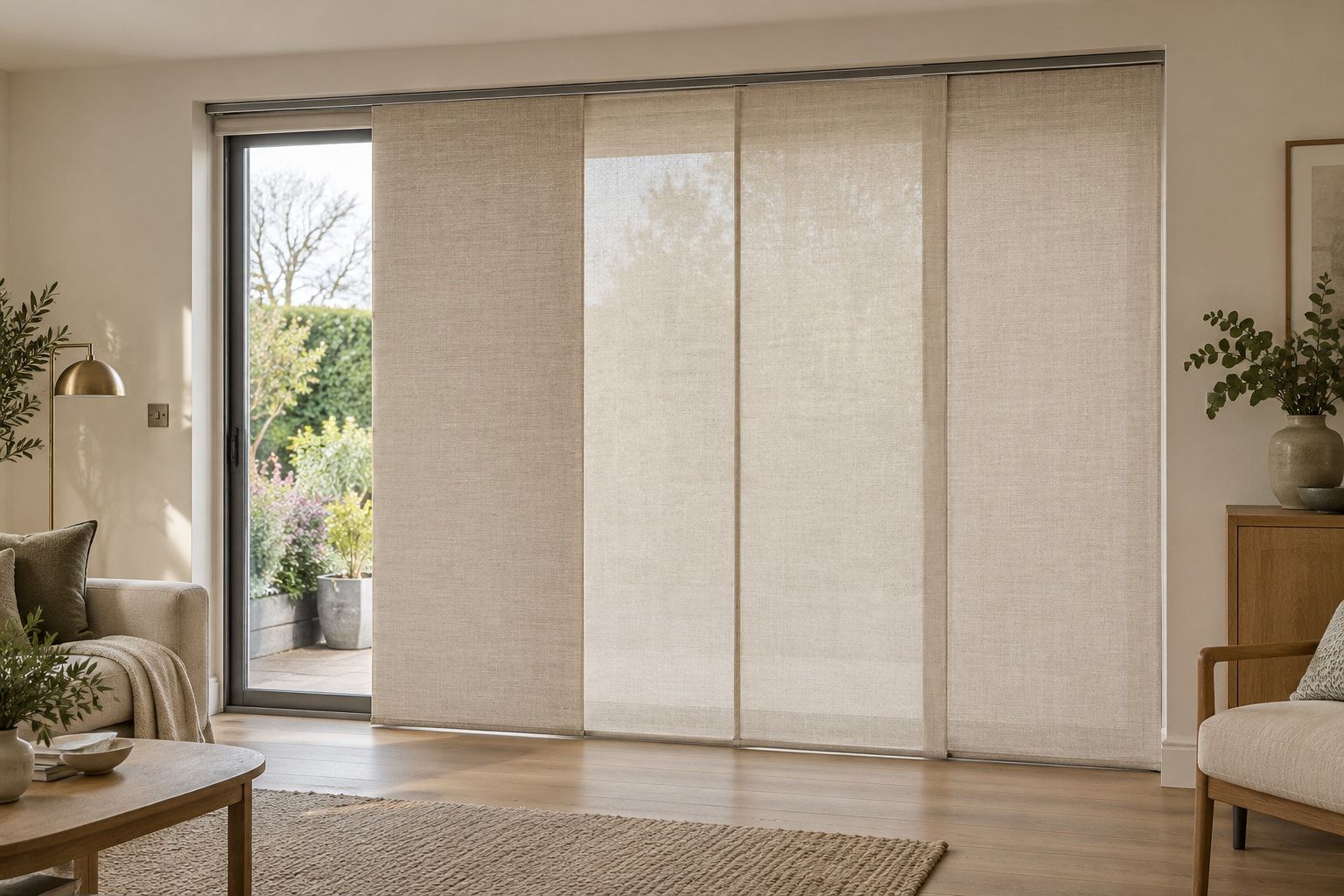
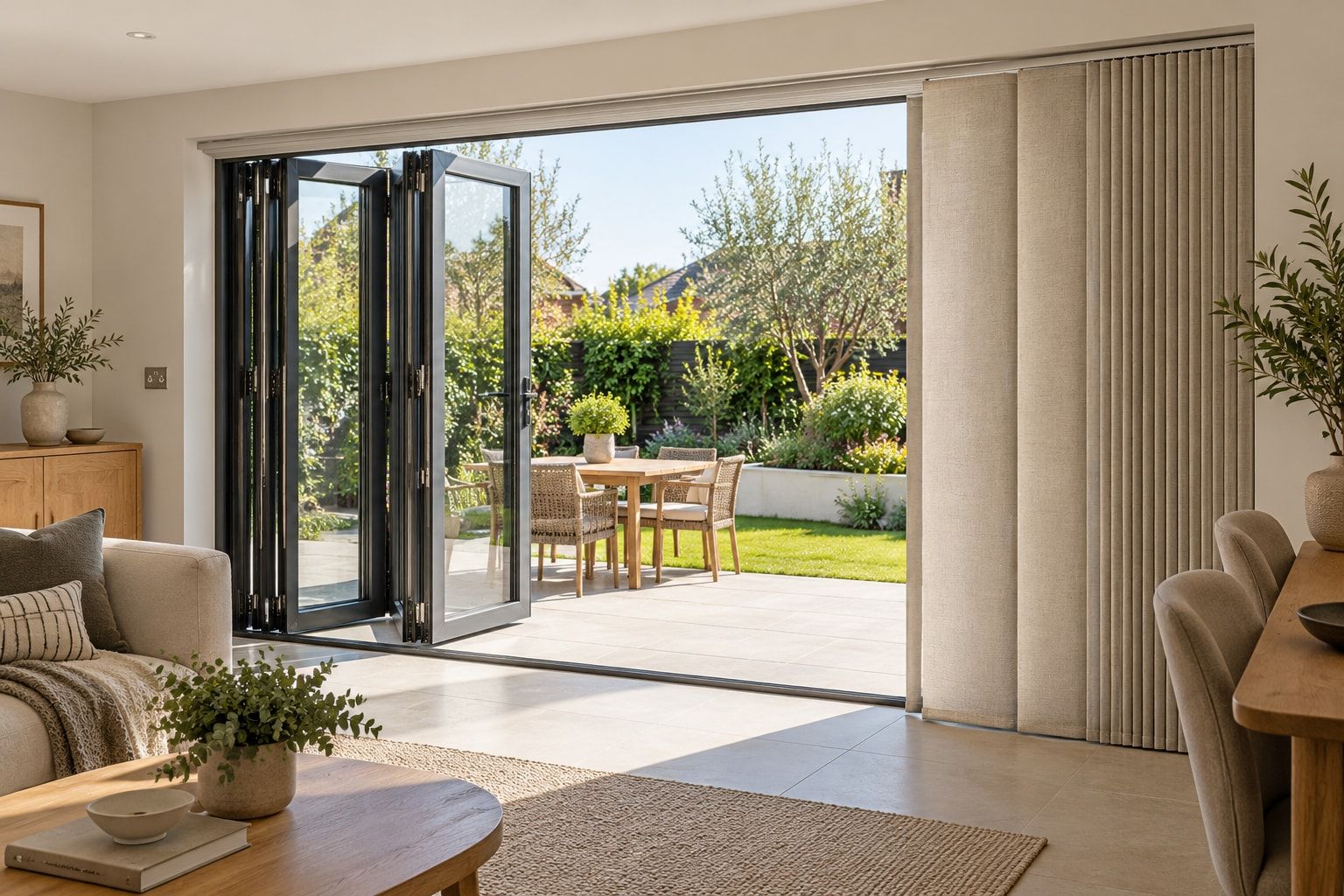
Panel blinds are wide fabric panels that hang from a track above the doors and slide past each other, like a set of modern sliding screens. When you open them, the panels slide together and stack neatly at one or both sides.
Why they work: they suit the clean lines of modern doors, the fabric hangs flat and smart, and they handle wide openings with ease. With the panels stacked beside the doors, the whole opening is clear.
Worth knowing: panel blinds don’t tilt, so light control comes from the fabric you choose and how far you slide the panels across. The stacked panels take up some width, so if there’s wall either side of the doors, we can extend the track so they stack off the glass.
Vertical blinds
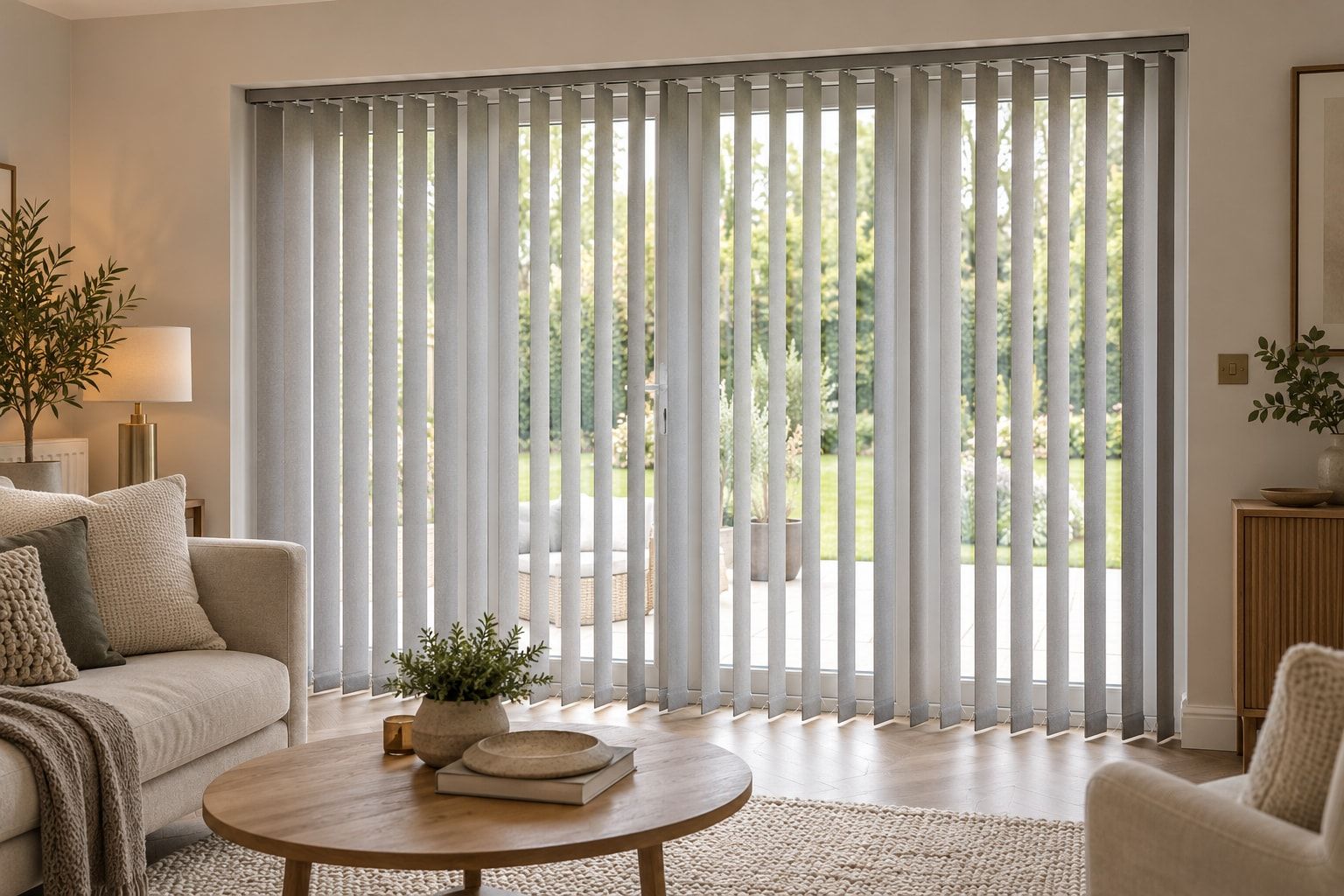
Vertical blinds have long fabric louvres hanging from a headrail. The louvres rotate to let light in or keep it out, and the whole blind draws back to one side or splits in the middle.
Why they work: they give precise control over light and privacy without moving the blind, which is handy on a sunny afternoon when you want to cut glare but keep the view. They’re practical, hard-wearing and suit sliding patio doors particularly well. Today’s fabrics look much softer and more homely than the office blinds many people remember.
Worth knowing: when drawn back, the louvres take up some space at the side. Fitting the headrail wider than the doors keeps them clear of the glass.
Perfect Fit blinds on each door
Perfect Fit blinds take a completely different approach. Instead of hanging above the doors, a separate blind clips into the frame of each glass panel, with no drilling. When you open or fold the doors, the blinds go with them.
Why they work: there’s nothing to draw back, and the opening is completely clear as soon as the doors are open. They sit close to the glass, so they look neat and don’t flap about in a breeze. They come in pleated and roller styles, with a good choice of fabrics.
Worth knowing: each blind is operated on its own panel, so on a large set of bifolds you’ll be adjusting several blinds rather than one. They also depend on your door frames being suitable, which we check when we measure.
Tracked shutters
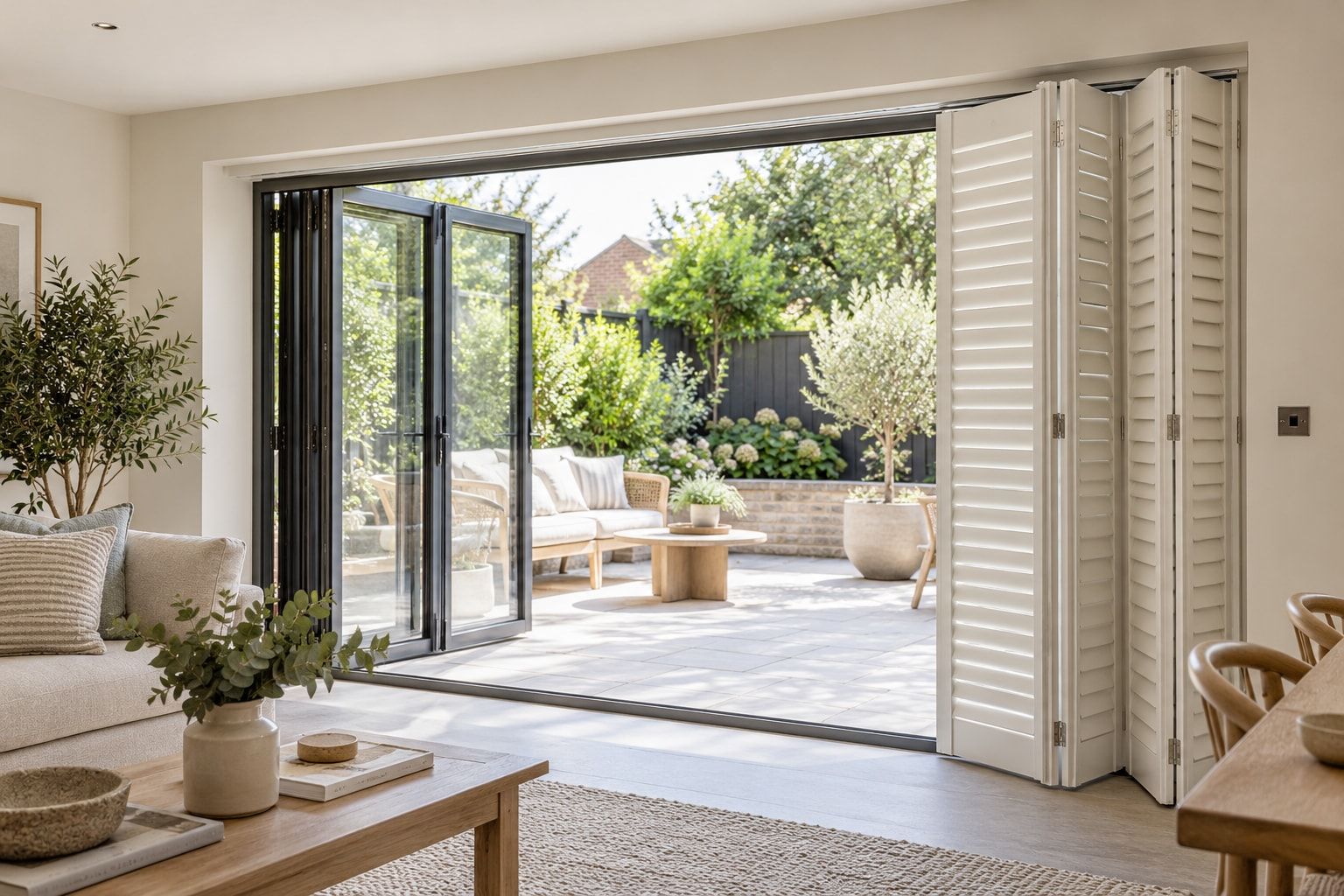
Tracked shutters bring the look of plantation shutters to wide doors. The shutter panels run on a track and either slide past each other or fold up concertina-style, just like the doors themselves. The louvres tilt for light and privacy.
Why they work: they look superb, give excellent privacy with the louvres closed and feel solid and substantial. Open, they frame the view of the garden beautifully.
Worth knowing: folded or stacked shutter panels still need space beside the doors, so they work best where there’s wall to spare. They also need clearance from door handles. Of all the options here, they’re the most substantial, permanent change to the room.
Curtains
Floor-length made-to-measure curtains on a pole or track that runs well past the doors on both sides can look wonderful. With a thermal lining, they add real warmth on a winter’s night. For very wide doors, an electric curtain track lets you open and close them at the touch of a button.
Worth knowing: curtains need space either side to stack back, and closing them shuts out both the view and the light, so they’re more of an evening dressing. Many people pair them with a light-filtering blind for the daytime.
Comparing the options
| Option | How it opens | Light control | With the doors open | Best suited to |
|---|---|---|---|---|
| Panel blinds | Panels slide and stack to the side | Your choice of fabric, and how far you slide them | Stacked beside the opening | Wide bifolds and modern interiors |
| Vertical blinds | Draws to one side or splits in the middle | Louvres rotate for precise control | Stacked to the side | Sliding patio doors and busy family rooms |
| Perfect Fit blinds | Raised and lowered on each glass panel | Pleated or roller fabrics | Move with the doors | Bifolds and French doors with suitable frames |
| Tracked shutters | Panels slide or fold to the side | Louvres tilt for precise control | Folded or stacked to the side | Statement doors where privacy matters |
| Curtains | Drawn by hand or on an electric track | Open or closed | Stacked beside the doors | Evening warmth and a softer look |
Choosing by door type
Sliding patio doors
Vertical blinds and panel blinds are both natural fits, stacking to the side where the doors open. Curtains work well too, where there’s enough wall either side.
Bifold doors
Plan everything around how the doors fold. Panel blinds or tracked shutters that stack on the same side as the folded doors keep everything together and leave the opening clear. If your doors fold inwards, anything fixed above them must sit far enough forward to clear the folded doors, so we’ll measure this carefully. Perfect Fit blinds avoid the question altogether by folding with the doors.
French doors
A Perfect Fit blind on each door is often the neatest answer, because the doors can swing open with the blinds attached. Curtains on a pole that extends past the frame are another good option, as long as there’s room for them to stack clear of the doors.
Glare, warmth and privacy
Big glass doors bring their own comfort challenges, so it’s worth thinking about how the room is used across the day and the year.
- Sunny afternoons. If your doors face south or west, glare on the TV or the dining table can be a nuisance. Louvres that tilt, or a light-filtering or dim-out fabric, take the edge off without shutting out the garden.
- Evenings. Once the lights are on, anyone in the garden, or at a neighbour’s upstairs window, can see straight in. Make sure whatever you choose gives full privacy when closed.
- Winter. A large area of glass loses heat quickly. Denser fabrics and lined curtains can help reduce heat loss and make the room feel cosier.
The right choice depends on your doors, your room and how you live in it, and it’s much easier to judge in person. Book a free home visit and we’ll look at how your doors open, measure everything and bring samples of every option that suits. We’ll give you honest advice, and fitting is included in your quote.
Questions
Can you fit blinds to aluminium bifold doors?
Yes. Panel blinds, vertical blinds, tracked shutters and curtains are all fixed above or beside the doors, so the frame material doesn't matter. Perfect Fit blinds clip into the frame itself, so whether they'll work depends on the shape of your door's glazing beads. We'll check at your visit.
Do vertical blinds blow about when the doors are open?
They can move in a breeze, especially on a windy day. Drawing the blind back to the side when the doors are open keeps it out of the way, and the weights and chain along the bottom of the louvres help keep them in line.
What if there's very little wall above my doors?
Many blinds, tracks and shutters can be fixed to the ceiling instead of the wall. Perfect Fit blinds don't need any wall space at all, because they sit within the door frame. We'll look at the options when we measure.