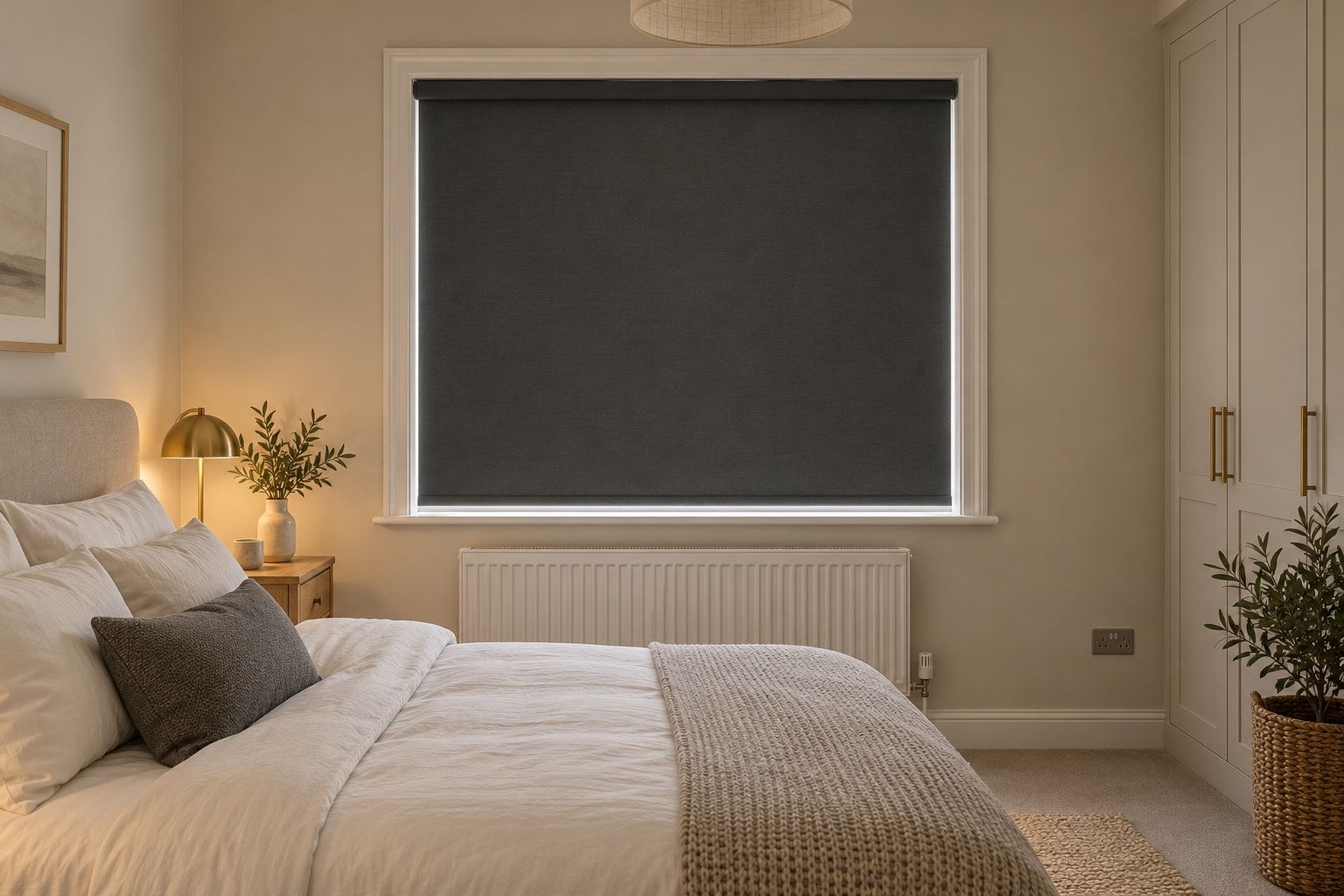
Blackout & Thermal Blinds
Light-blocking fabrics for rooms that need to be properly dark, with thermal options that help hold on to warmth when the blind is down.
Serving Birmingham and the West Midlands Appointments 7 days a week
Made-to-measure blinds
Soft, tailored folds in the fabric of your choice. Lined, blackout-lined or thermal-lined, and made to measure for a finished, upholstered look.
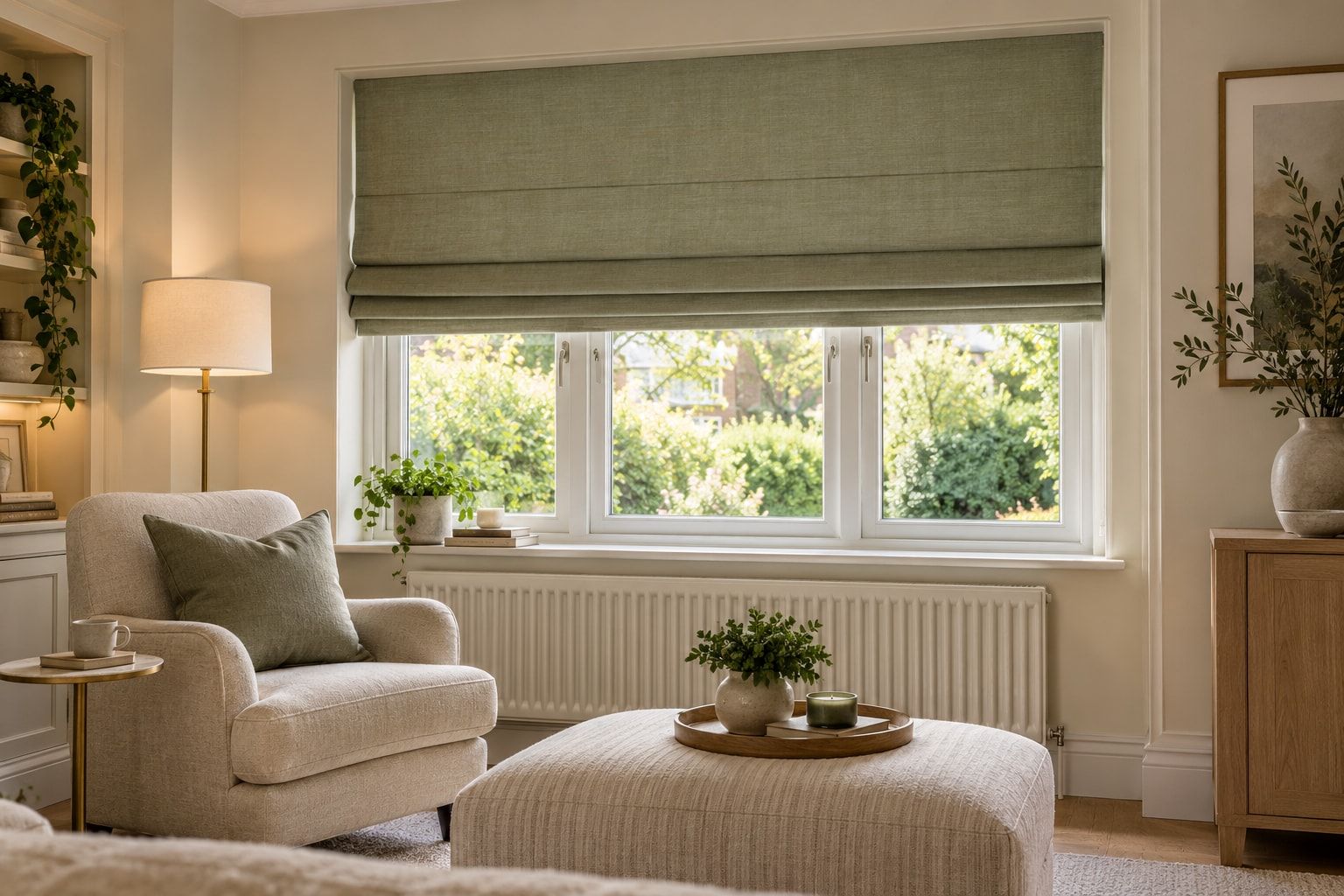
Each blind is sewn to the sizes we take at your home, so the folds rise level and the edges hang straight.
A standard lining for body and drape, blackout lining for bedrooms, or thermal lining to help reduce heat loss through glass.
Linens, textured weaves, velvets and prints, held up at your own window so you can judge colour and pattern in your light.
Every Roman blind meets the UK child-safety standard, BS EN 13120, with the operating chain held securely to the wall.
Colours
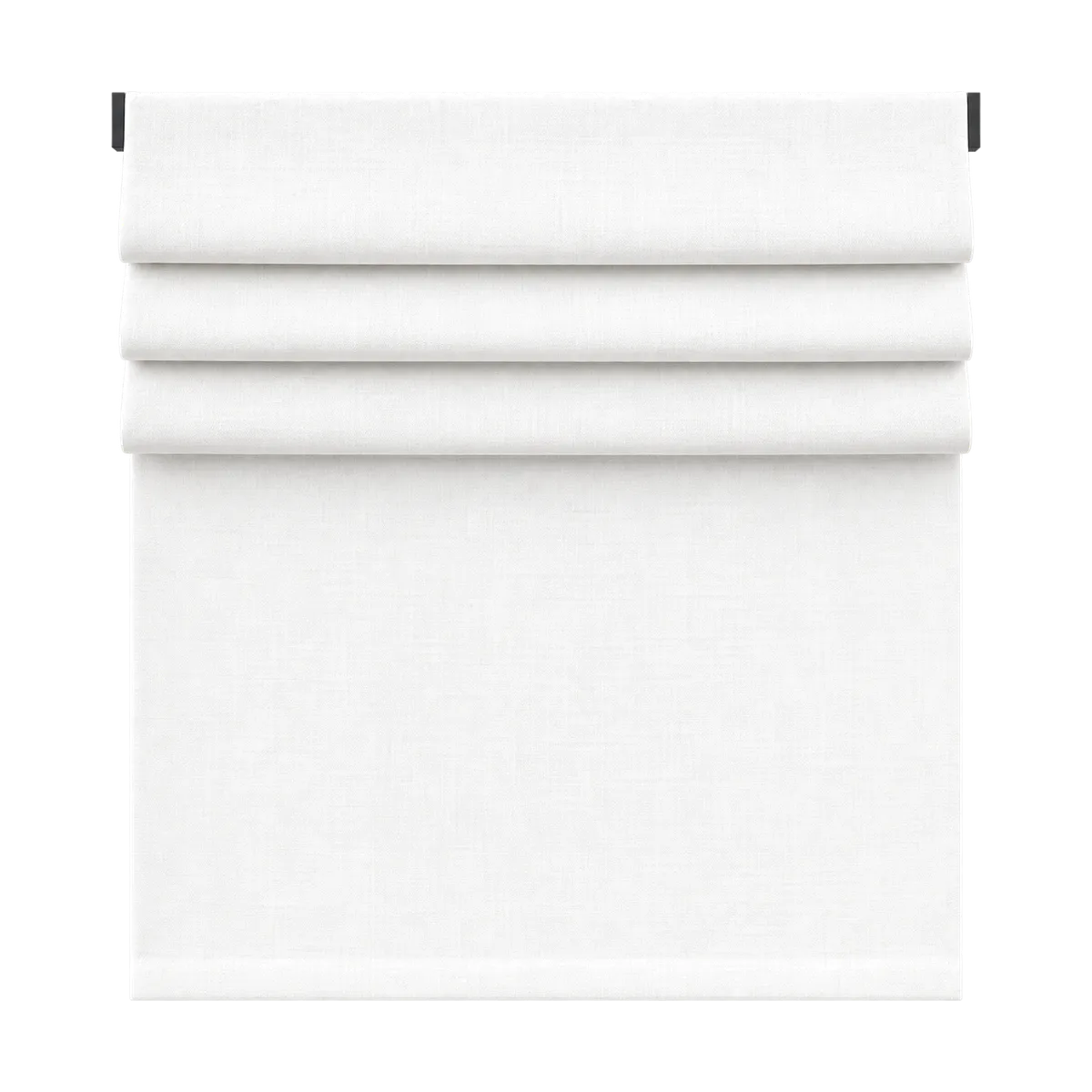
Tap a colour to preview your roman blinds. These are some of our most popular shades. There are many more at your home visit.
Selected: Bright White
Colour guide only. Screens vary, so we bring real samples to your free home visit.
Book a free measure in this colourA Roman blind is the softest way to dress a window without curtains. Raised, the fabric gathers into neat, layered folds at the top of the window. Lowered, it hangs flat and smooth across the glass, showing off the full width of the fabric. That makes Roman blinds a lovely choice for a bold print or a textured weave you’d hate to hide behind folds of curtain.
Because a Roman blind is sewn rather than simply cut, the making matters. We measure each window ourselves, and every blind is made to those exact sizes. The result is folds that stack level, edges that hang true, and a blind that looks as though it was always part of the room.
The lining does as much work as the fabric on the front. It gives the blind weight, helps the folds hold their shape, and decides how much light and warmth gets through. We offer three:
If you’re not sure which you need, think about when you use the room. A bedroom facing east will want blackout. A sitting room you mostly use on winter evenings may get the most from thermal.
Roman blinds are where fabric choice really shows. Linens and textured weaves give a relaxed, natural feel. Velvets are rich and warm. Prints and stripes add personality to a plain room. At your home visit we hold samples up at the window, so you can see how each one looks in your own light and how a pattern falls across the folds.
Where the blind is fixed changes the look too. Inside the recess, a Roman blind gives a crisp, tailored finish and keeps the windowsill clear. Fixed above the frame and a little wider than the window, it makes the window appear taller, lets the raised folds sit clear of the glass and cuts down light at the edges, which is worth considering for a blackout-lined blind.
A Roman blind looks finished on its own, but it also layers beautifully with dress curtains. We make and fit curtains too, so we can plan both at the same visit. If you’re torn between a Roman and something simpler, our honest guide to Roman vs roller blinds sets out the differences.
Roman blinds come into their own in living rooms, bedrooms, dining rooms and studies. They suit period homes particularly well, sitting comfortably alongside picture rails, deep skirting boards and tall sash-style windows. They’re less suited to a steamy bathroom or the window behind the kitchen sink, where fabric can mark and lose its shape. In those rooms we’d steer you towards a waterproof or faux wood blind instead.
Roman blinds reward a little care in the choosing, and after 20 years of fitting them across Birmingham and the West Midlands, we’re happy to help you get it right. Tell us about the room and how you use it, and we’ll suggest the fabric and lining to match, whether that’s a light, airy blind for a sitting room or a dark, cosy one for the bedroom.
Options
We'll talk you through every option at your free home visit, with samples in hand.
Questions
Anything else you'd like to know? Call or WhatsApp us on 07902 945533.
A standard lining gives the blind body and softens the daylight coming through. A blackout lining stops light passing through the fabric itself, so it's the one to choose for bedrooms. A little light can still show around the edges, which is why we often suggest fitting a blackout-lined blind outside the recess.
A thermal lining adds an insulating layer that can help reduce heat loss through the glass. It works best when the blind is lowered as it gets dark and covers the window closely, so we'll suggest the right fitting position when we measure.
Yes. We normally make a separate blind for each window in the bay, so each one raises and lowers on its own. We measure every window carefully so the finished blinds look consistent across the whole bay.
Dust it every so often with a soft brush or the upholstery attachment on your vacuum, with the blind lowered so the fabric is flat. How to treat marks depends on the fabric, so we'll give you care advice for the one you choose.
You might also like
Light-blocking fabrics for rooms that need to be properly dark, with thermal options that help hold on to warmth when the blind is down.
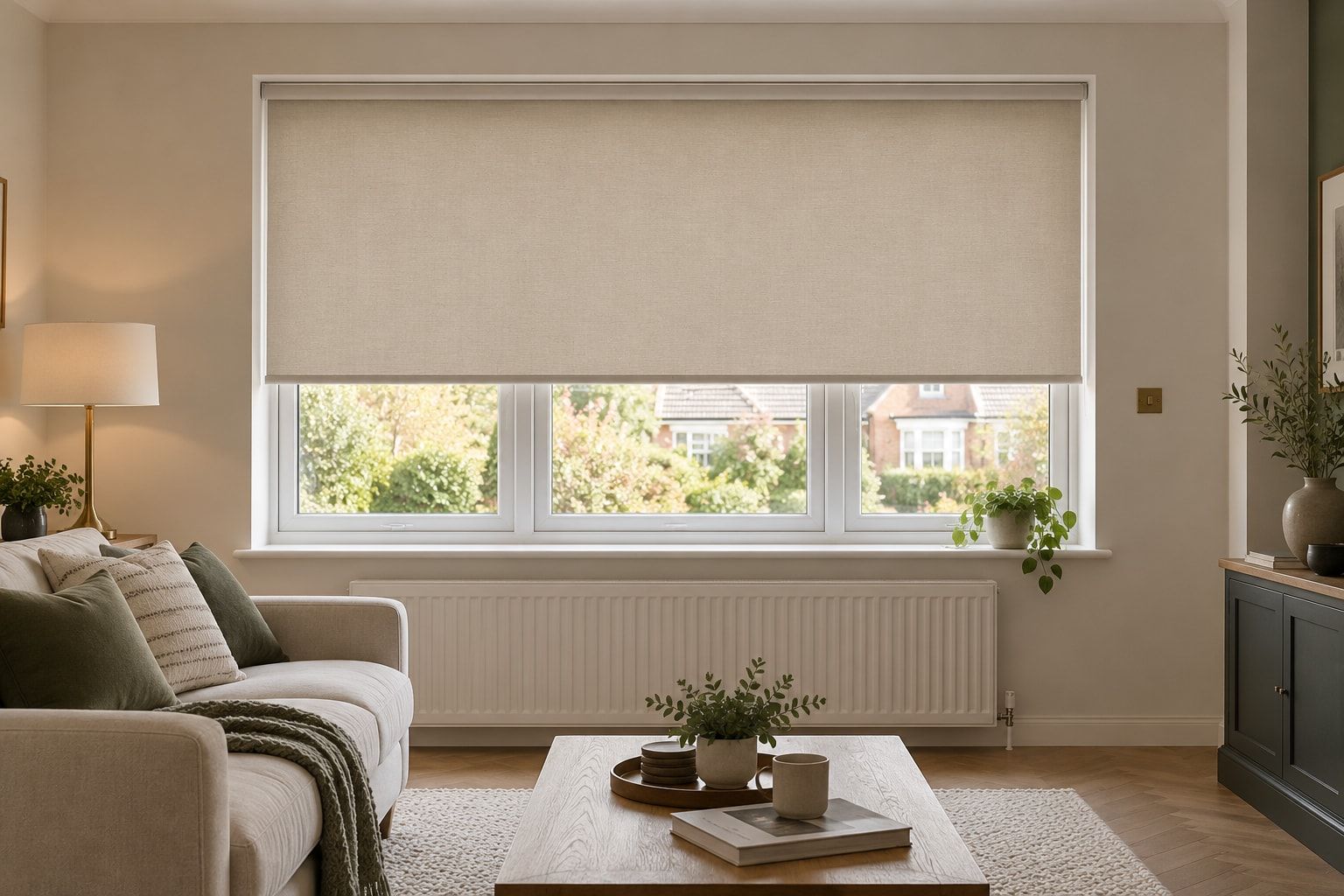
Clean, simple and endlessly versatile. Made to measure in plain, textured and patterned fabrics, from light-filtering to dim-out.
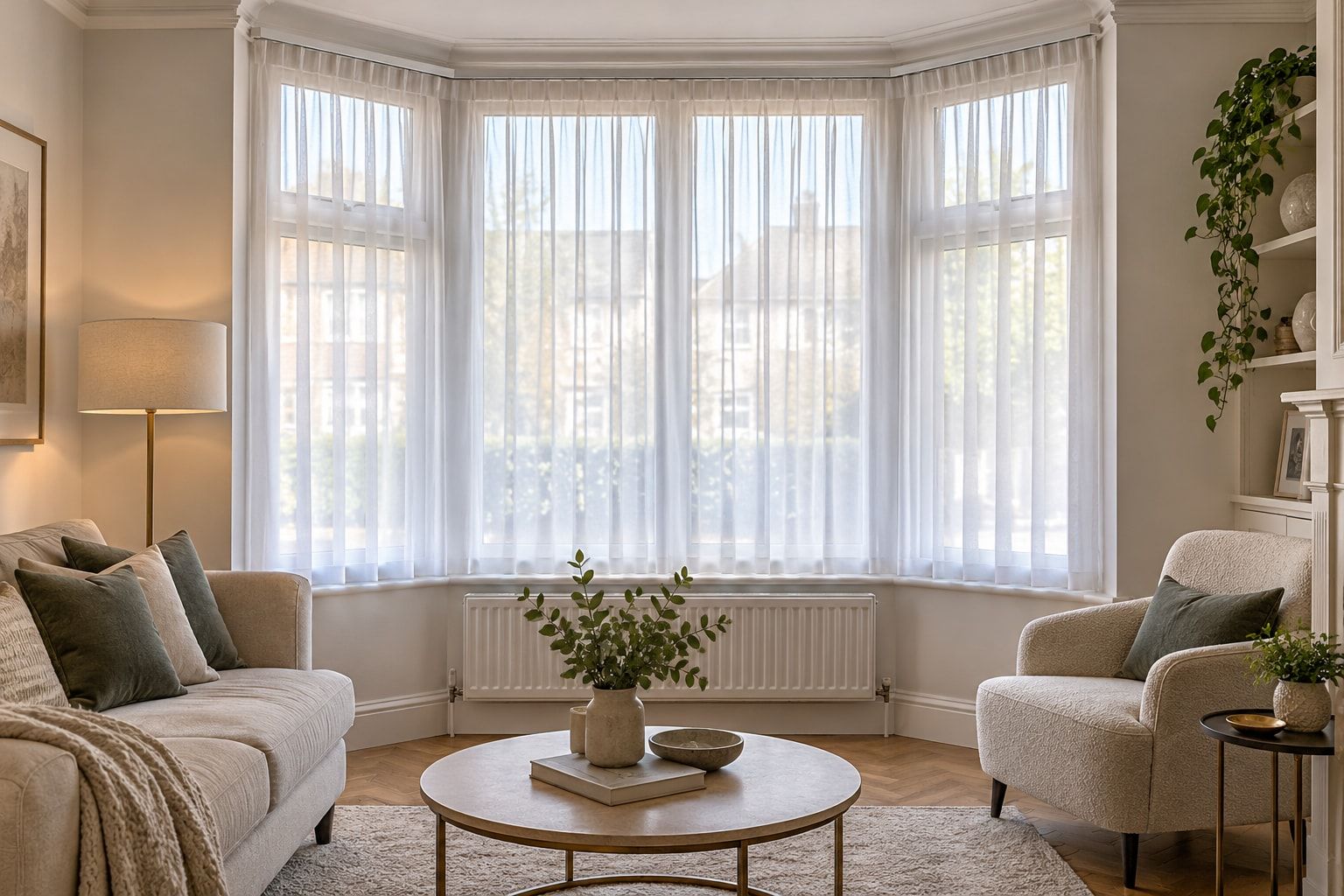
Curtains made to the exact width and drop of your window, in the heading, fabric and lining you choose, from soft pencil pleats to modern wave folds.
Advice
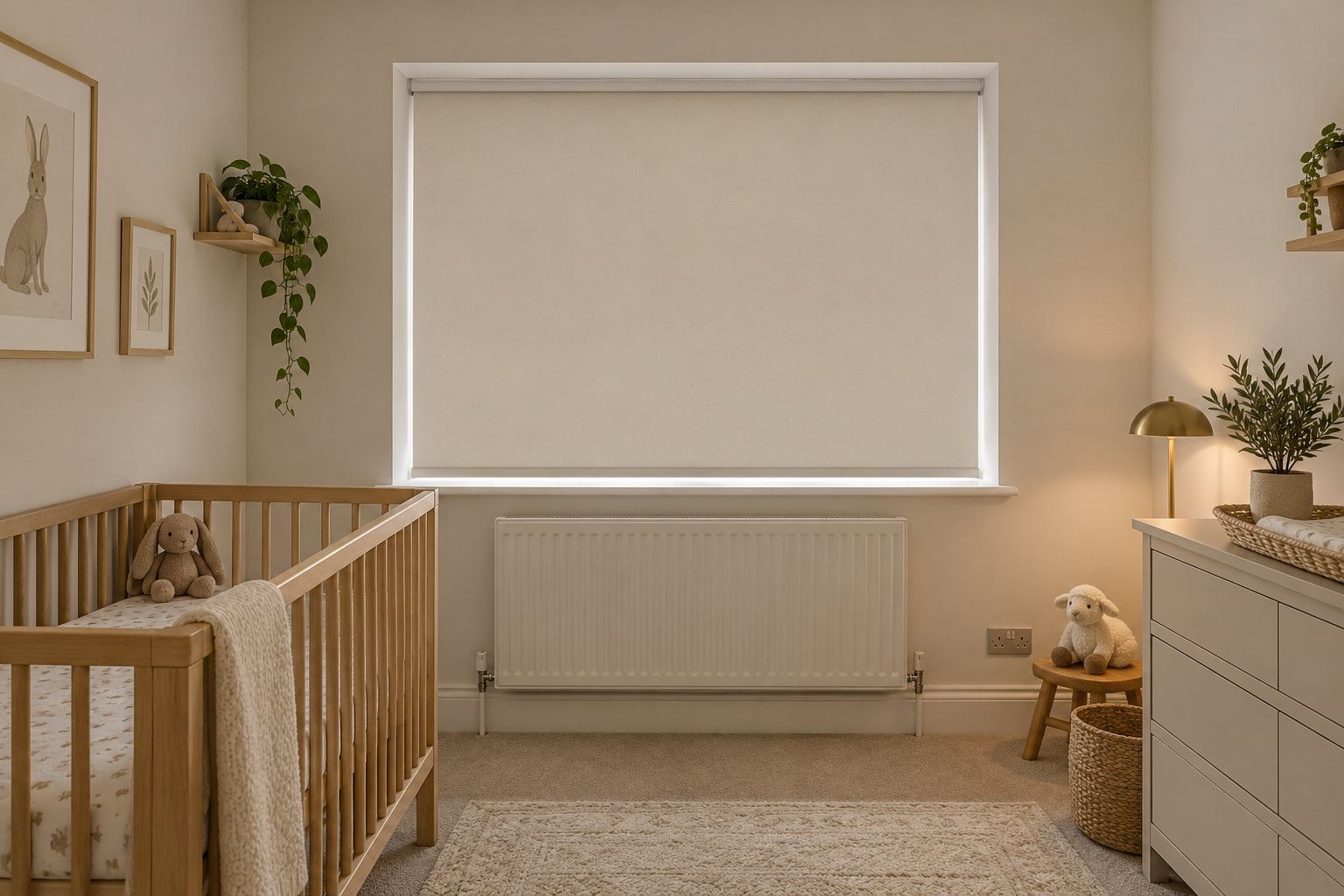
How to make a nursery or child's bedroom properly dark, and safe. Our fitters explain blackout blinds, light gaps, layering and cordless options.
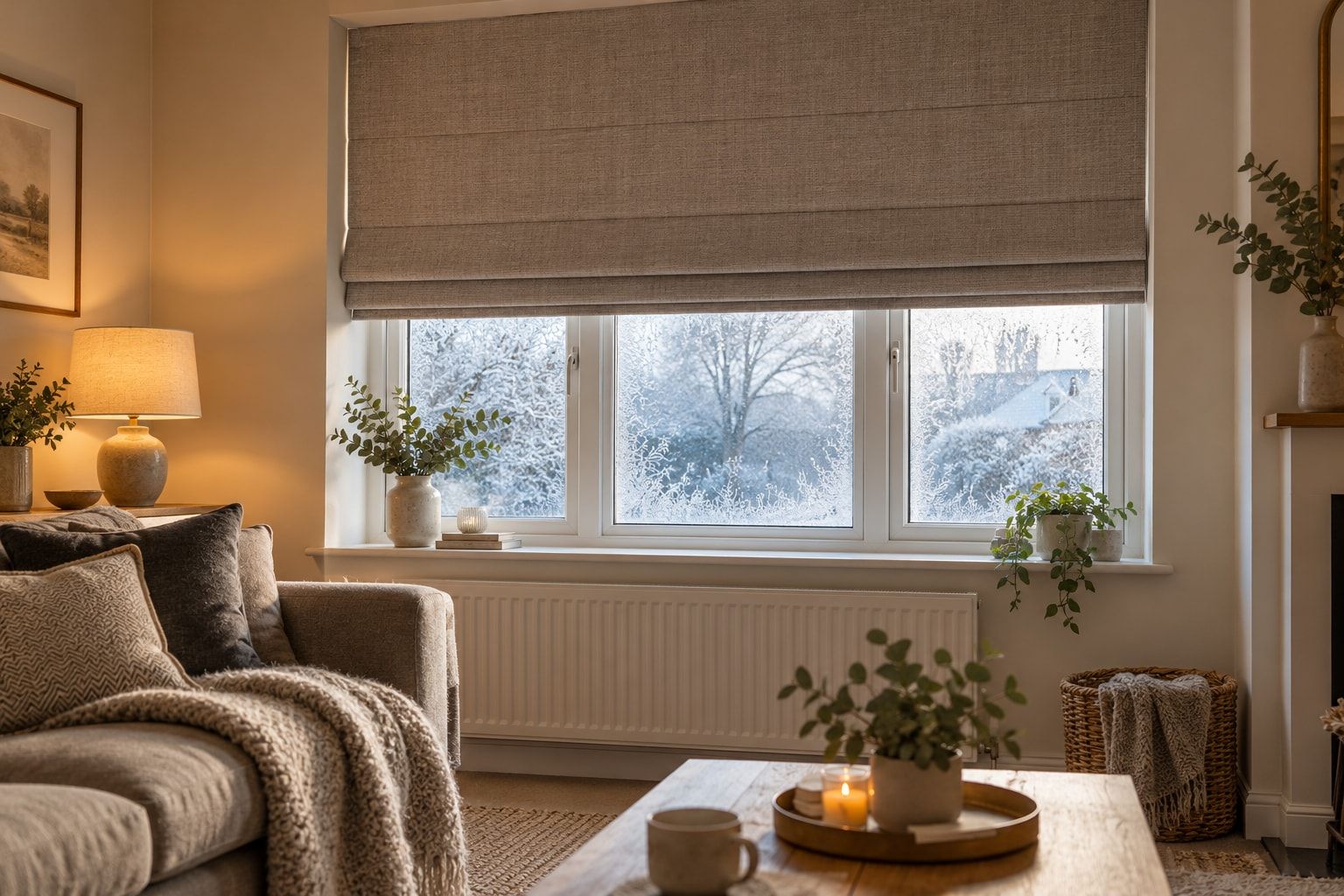
How thermal blinds, linings and lined curtains can help reduce heat loss and draughts at the window, with honest advice on what works and what doesn't.
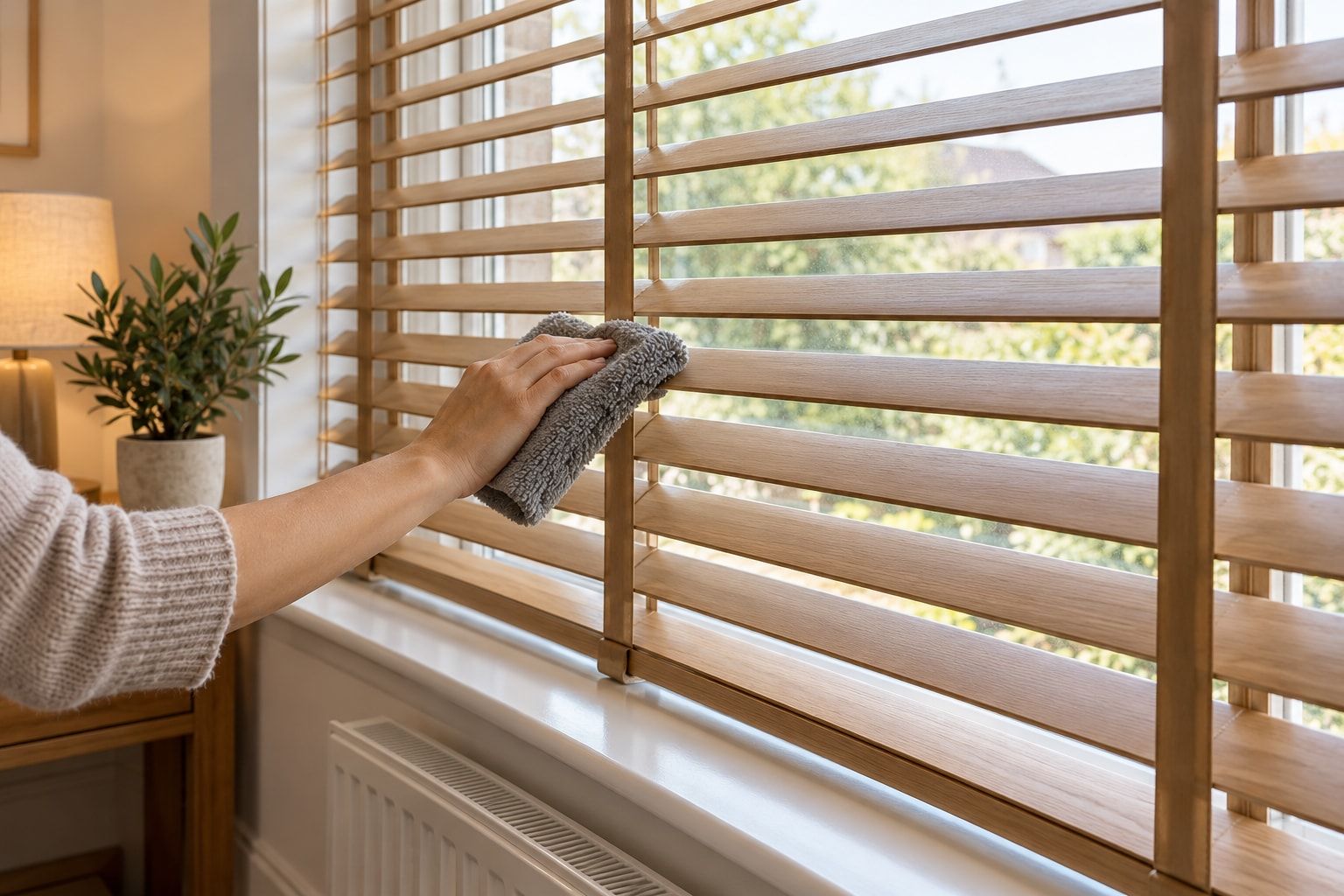
Simple, safe ways to clean roller, Roman, pleated, vertical and Venetian blinds, plus the mistakes to avoid so you don't damage fabric or slats.
Book a free, no-obligation home measure. We visit 7 days a week, bring samples to you, and fitting is included in every quote.