If your living room never quite feels warm, however high the heating goes, the windows are often the reason. Glass is one of the weakest points in any room for holding on to heat. The good news is that the right blinds and curtains can make a real difference to how warm a room feels, especially on cold winter evenings.
We’ll be honest from the start. A blind won’t do the job of double glazing, loft insulation or a draught-proofed frame. What it can do is add an extra layer at the window, help reduce heat loss through the glass and cut down the chilly draughts you feel when you sit near it. Here’s how that works, and which options are worth considering.
Why windows lose so much heat
Even good modern double glazing lets more heat through than a well-insulated wall. Older single glazing, which you’ll still find in plenty of period homes, lets through more again. Heat escapes in a few ways:
- Through the glass itself. Warmth from the room passes through the glass to the cold air outside.
- Cold air falling from the glass. Air that touches a cold window cools down and sinks, creating that steady chill you feel around your ankles near a window, even when it’s firmly shut.
- Gaps around the frame. Older sash and casement windows, and frames with tired seals, often let draughts in around the edges.
That’s why the area beside a window can feel noticeably colder than the rest of the room, and why rooms with large windows or bays can be hard to heat.
How blinds and curtains help
A blind or curtain works mainly by trapping a layer of still air between the fabric and the glass. Still air is a surprisingly good insulator. The fabric slows down the warm room air reaching the cold glass, and slows down the cold air falling back into the room.
Three things decide how well it works:
- The fabric. Thick, dense or lined fabrics hold back more heat than thin, open weaves.
- The fit. The smaller the gaps around the edges, the less air moves behind the blind. A blind made to measure for your window will always do better here than an off-the-shelf size.
- Coverage. A dressing that covers the whole window, including the frame, does more than one that only covers the glass.
What makes a blind “thermal”
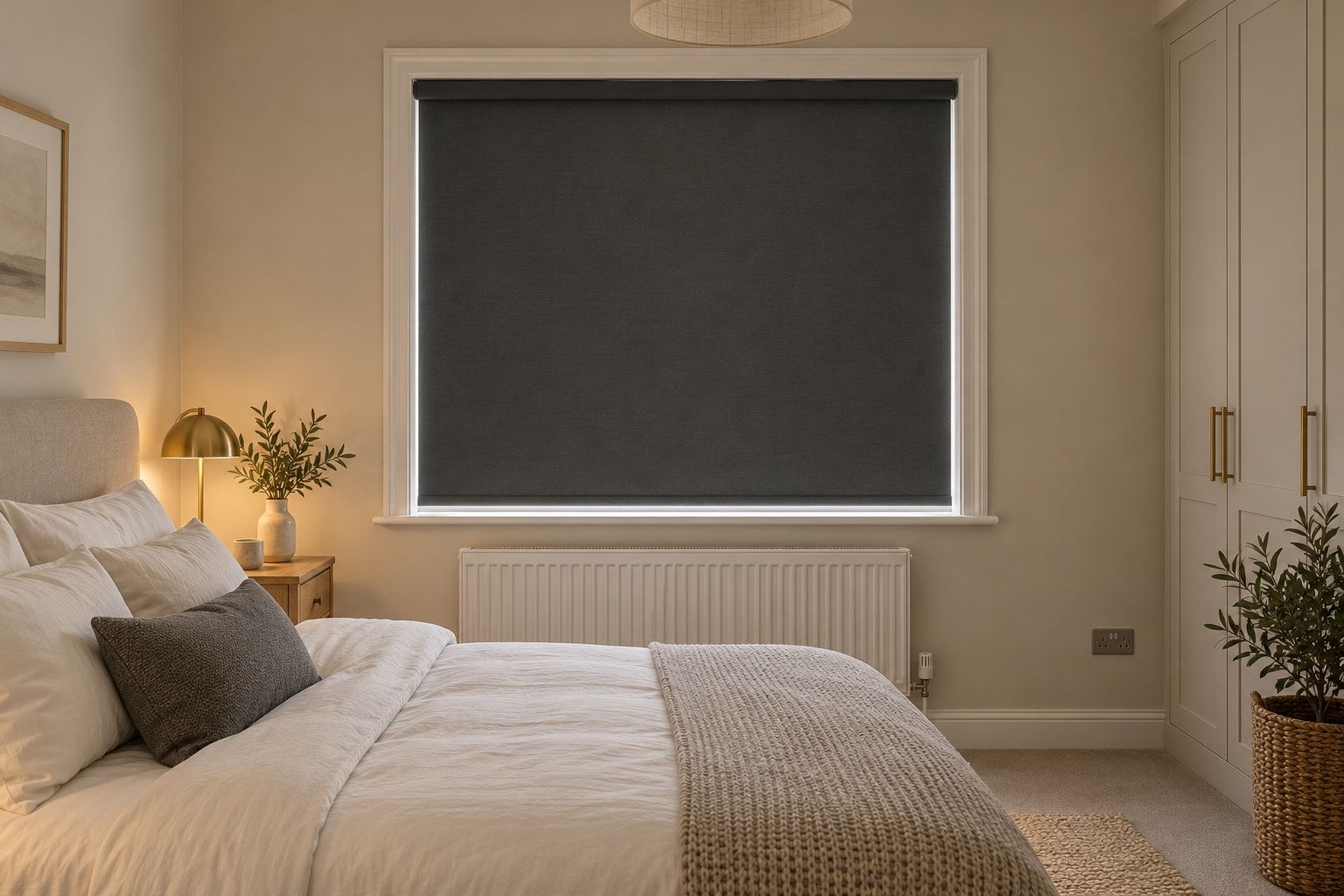
Thermal blinds use fabrics designed to help reduce heat loss. They’re usually heavier and denser than standard fabrics, often with a coated backing on the window side. Many blackout fabrics work well here too, because the coating that blocks light also adds a barrier against the cold. Our blackout and thermal blinds are made with exactly this in mind, which makes them a natural choice for bedrooms that need to be both dark and warm.
Which options work best
Some window coverings are better at keeping warmth in than others. This is our honest view, after 20 years of fitting them all.
| Option | How it helps | Worth knowing |
|---|---|---|
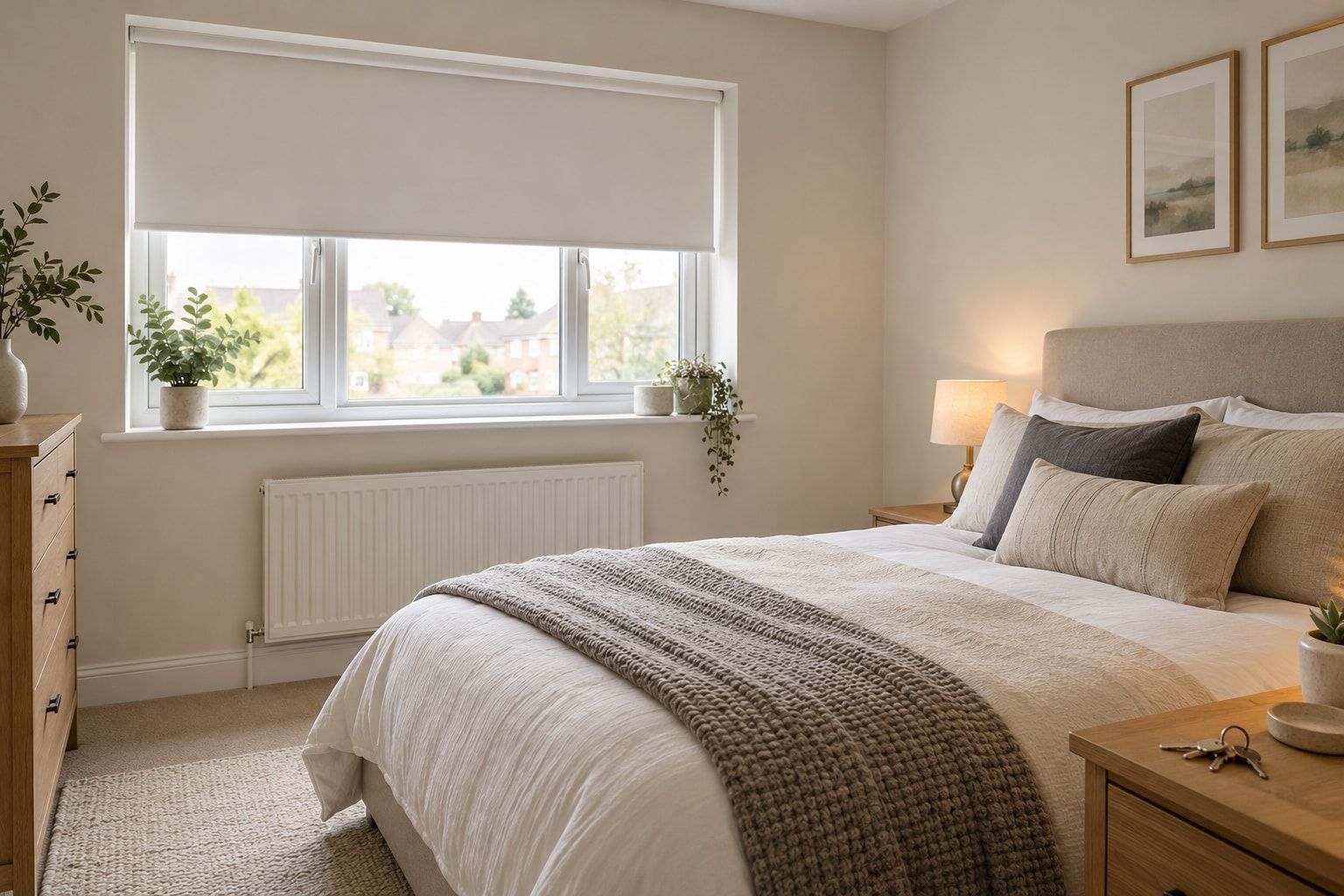
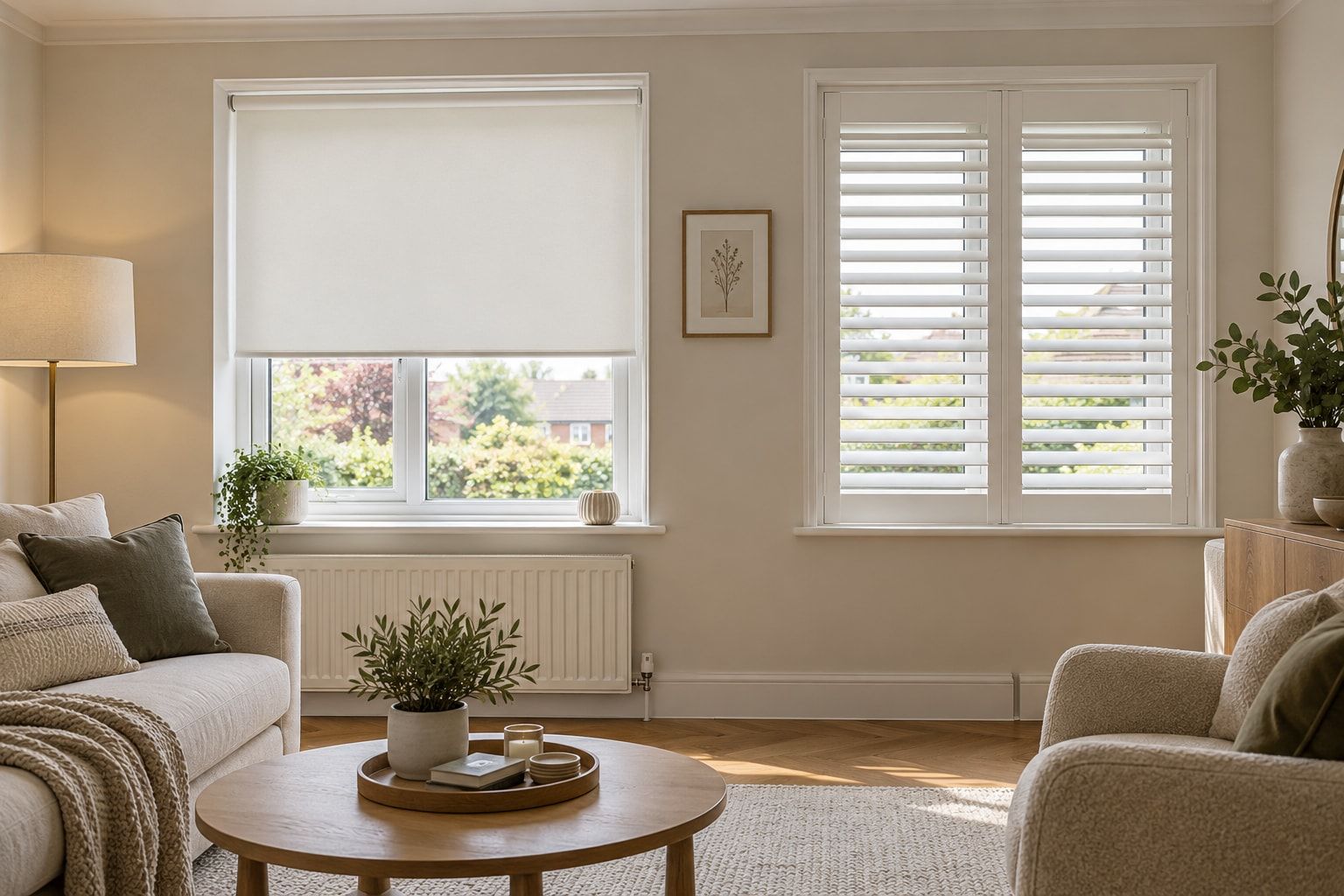
| Thermal or blackout roller blind | Dense, coated fabric sits close to the glass | Simple and neat. Fitted inside a recess, there will be small gaps at the sides |
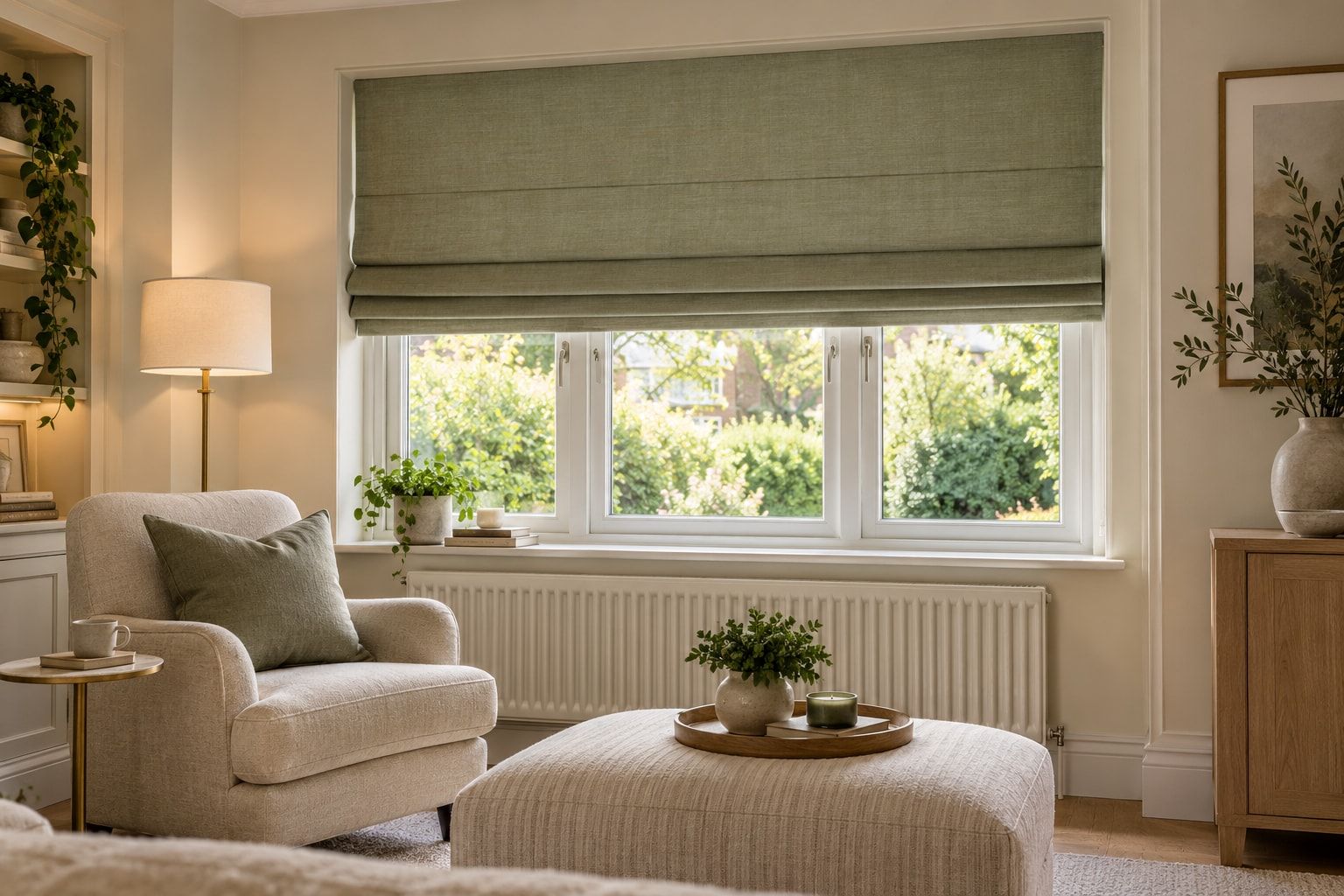
| Roman blind with thermal or blackout lining | Face fabric plus lining gives a thick, soft layer | Cosy and good-looking. The folds sit at the top of the window when raised |
| Lined curtains | The most fabric of any option, covering the frame as well as the glass | Very effective when wide and long enough, but they need space either side of the window |
| Perfect Fit blind | Sits within the window frame with very little gap around it | No drilling needed. Suits most uPVC windows |
| Shutters | Solid panels add a layer across the window when closed | Chosen mainly for looks, light and privacy, but they add some warmth too |
| Venetian and vertical blinds | Slats and louvres leave small gaps, even when closed | Great for light control, but not the first choice if warmth is your priority |
A Roman blind with a thermal or blackout lining is one of our favourite answers for cold living rooms and bedrooms. It has the softness of a curtain, but sits neatly in or above the window, which suits rooms where long curtains wouldn’t work.
For the coldest rooms, properly lined curtains are hard to beat. A thermal lining, plenty of width and a pole or track that runs past the frame on both sides all help to keep the heat in.
On uPVC windows, a Perfect Fit blind clips into the frame and sits close to the glass, with very little gap at the edges. That makes it a tidy option for bedrooms and tilt-and-turn windows, where other blinds can get in the way.
Getting the most from your blinds and curtains
The right product helps, but how it’s fitted and used matters just as much.
Mind the gaps
Fitting a blind inside the window recess gives a neat, built-in look, but leaves a small gap at each side. If warmth matters most, fitting it outside the recess so it overlaps the frame reduces the gaps where air slips past. We’ll talk you through the trade-off at your visit.
Watch out for radiators
Many homes have a radiator under the window. Long curtains that hang over it trap the heat behind them and send it straight towards the cold glass. In those rooms, a blind in the recess, or curtains that finish just above the windowsill, keeps the heat in the room where you want it.
Close them at dusk, open them on sunny days
Once the sun goes down, lowering blinds and drawing curtains helps hold the day’s warmth in. On bright winter days, open everything up and let the sunshine do some of the work.
Keep an eye on condensation
A well-fitted blind keeps warm room air away from the glass, so the glass itself gets colder. That can mean more condensation on the window on cold mornings. Opening a window or trickle vent for a while, and wiping the glass down, keeps it under control. In kitchens and bathrooms, choose a moisture-resistant fabric.
Layering for the coldest rooms
In north-facing rooms, or rooms with large bays, layering often works best. A blind does the everyday work of privacy and light control, and lined curtains come across in the evening for an extra layer of warmth. Our guide to layering curtains, voiles and blinds explains how to put the two together so they look right as well as work well.
What blinds can’t do
It’s worth being clear about the limits. A blind or curtain won’t fix a window with failed seals, a frame that rattles in the wind, or a room with no insulation. If cold air is pouring in around the frame, that needs sorting first.
What good window dressings do is make a sound window work harder for you. The room feels warmer near the glass, draughts are less noticeable, and the heating isn’t fighting the window quite so much. For many homes, especially older ones, that’s a change you notice every evening.
If you’d like to make a chilly room feel cosier, book a free home visit. We’ll look at your windows, bring thermal and blackout fabric samples for you to compare, and give you straight advice on what will help most. The quote is free with no obligation, and fitting is included in your quote.
Questions
What's the difference between blackout and thermal blinds?
Blackout fabrics are designed to block light, while thermal fabrics are designed to help reduce heat loss through the glass. The two often overlap, because a dense, coated blackout fabric also makes a good barrier against the cold. When we visit, we can show you fabrics that do both, so a bedroom can be darker and warmer at the same time.
Do thermal blinds help in summer too?
They can. The same dense fabrics that help hold warmth in during winter can also block strong sun on hot days, which helps stop rooms that face south or west from overheating. Lowering them before the sun reaches the window works better than waiting until the room is already warm.
Do thermal blinds look different from ordinary blinds?
Not from inside the room. The difference is in the weight and backing of the fabric, so you can still choose from plenty of colours and textures. We bring samples to your home visit so you can see and feel the difference for yourself.