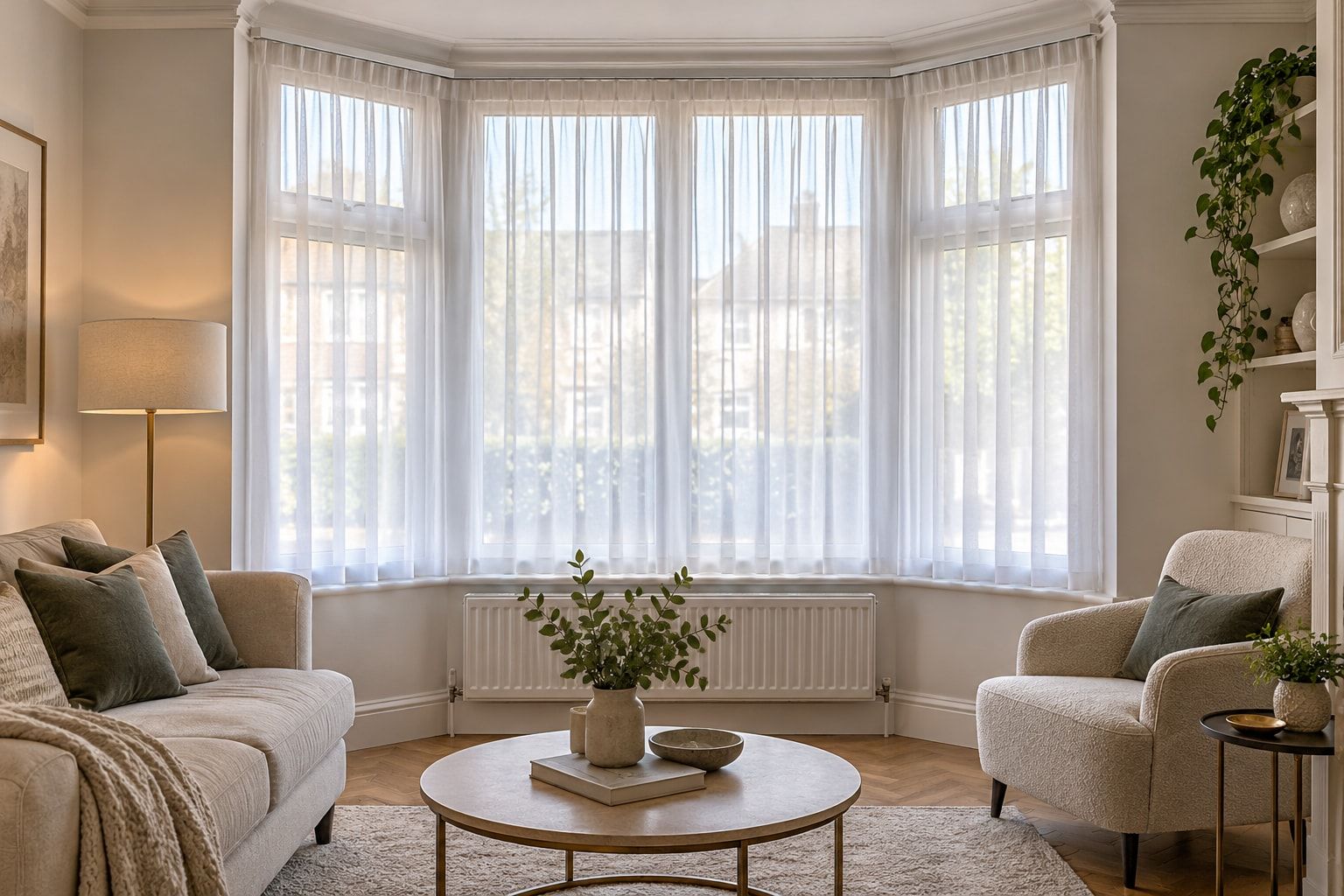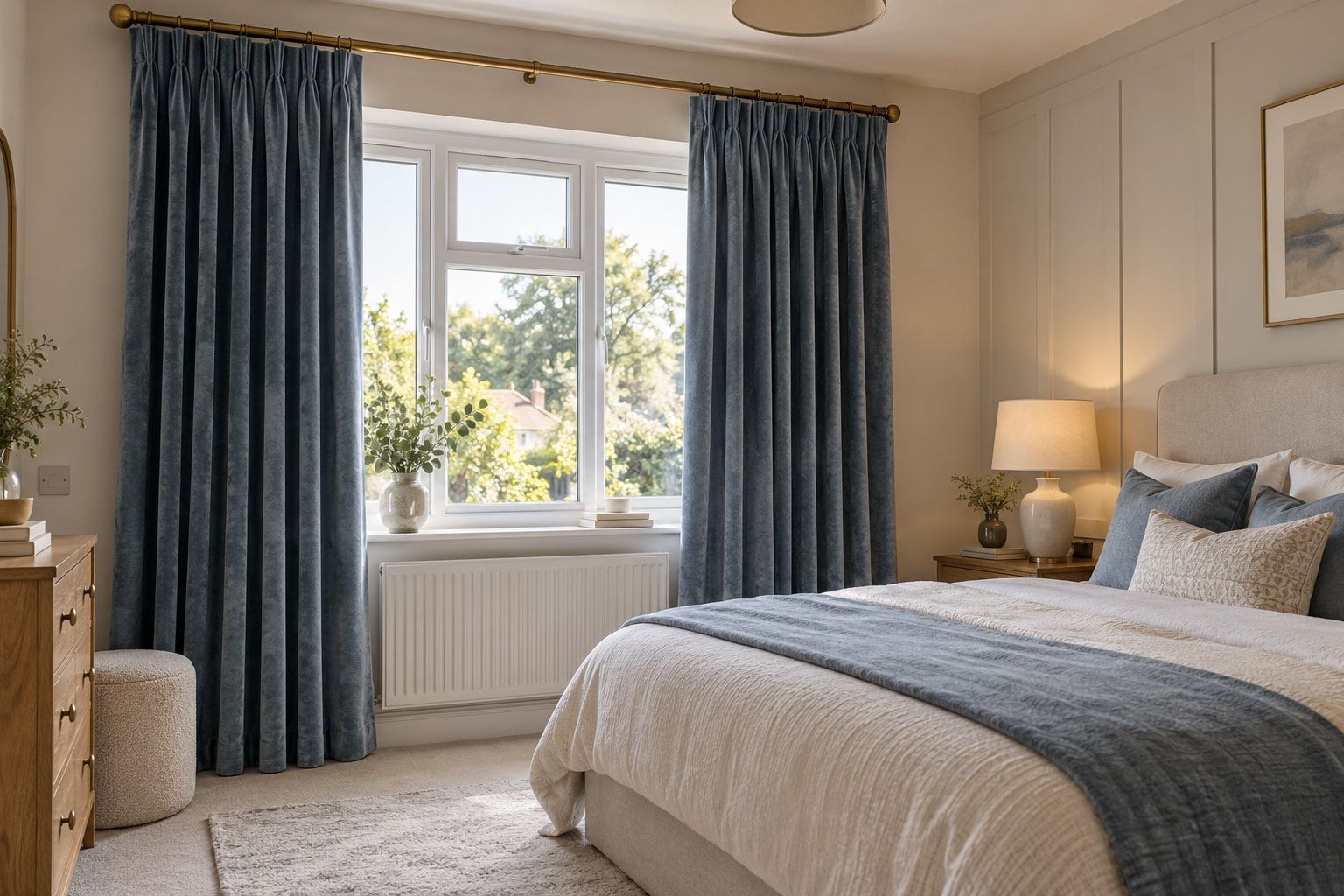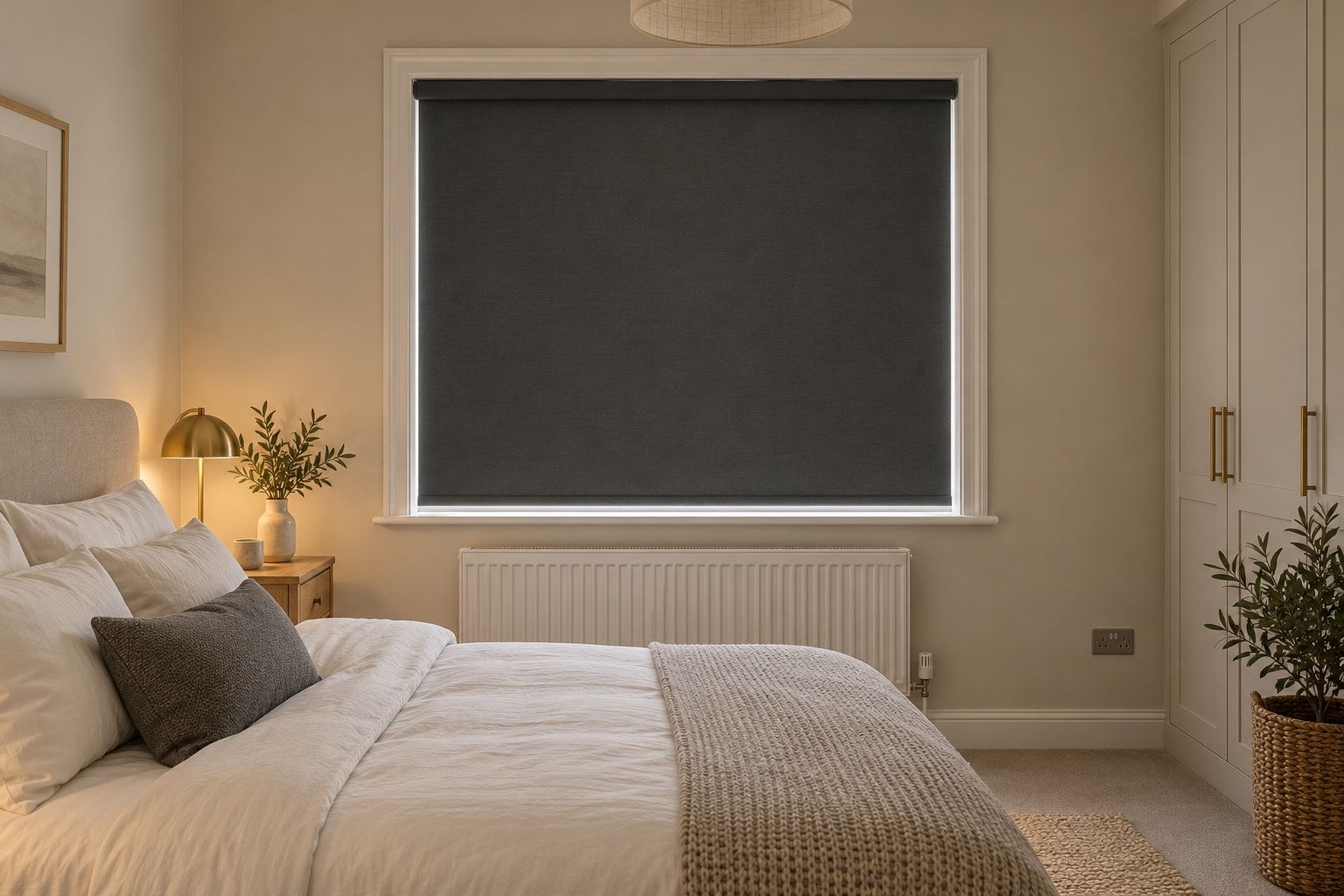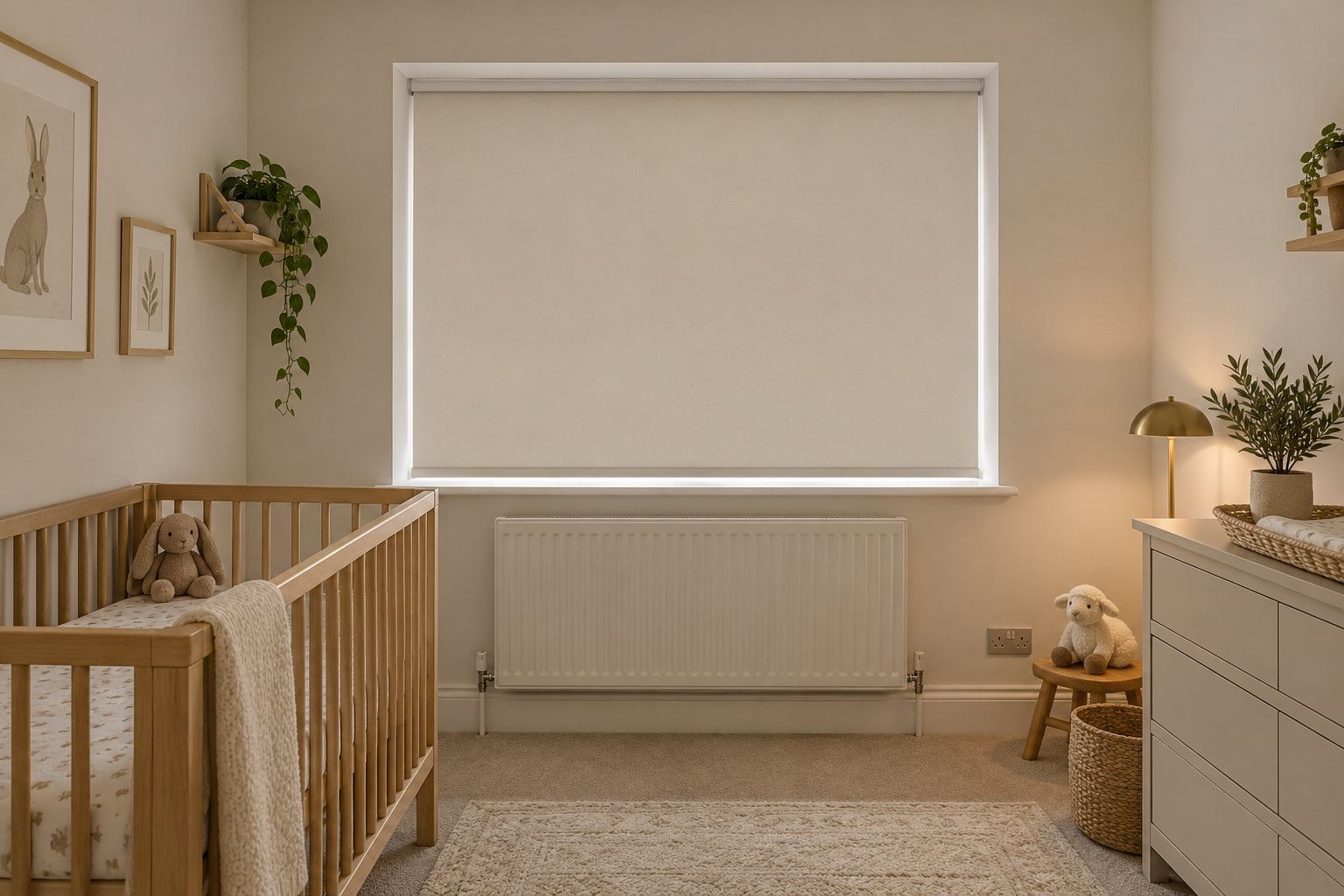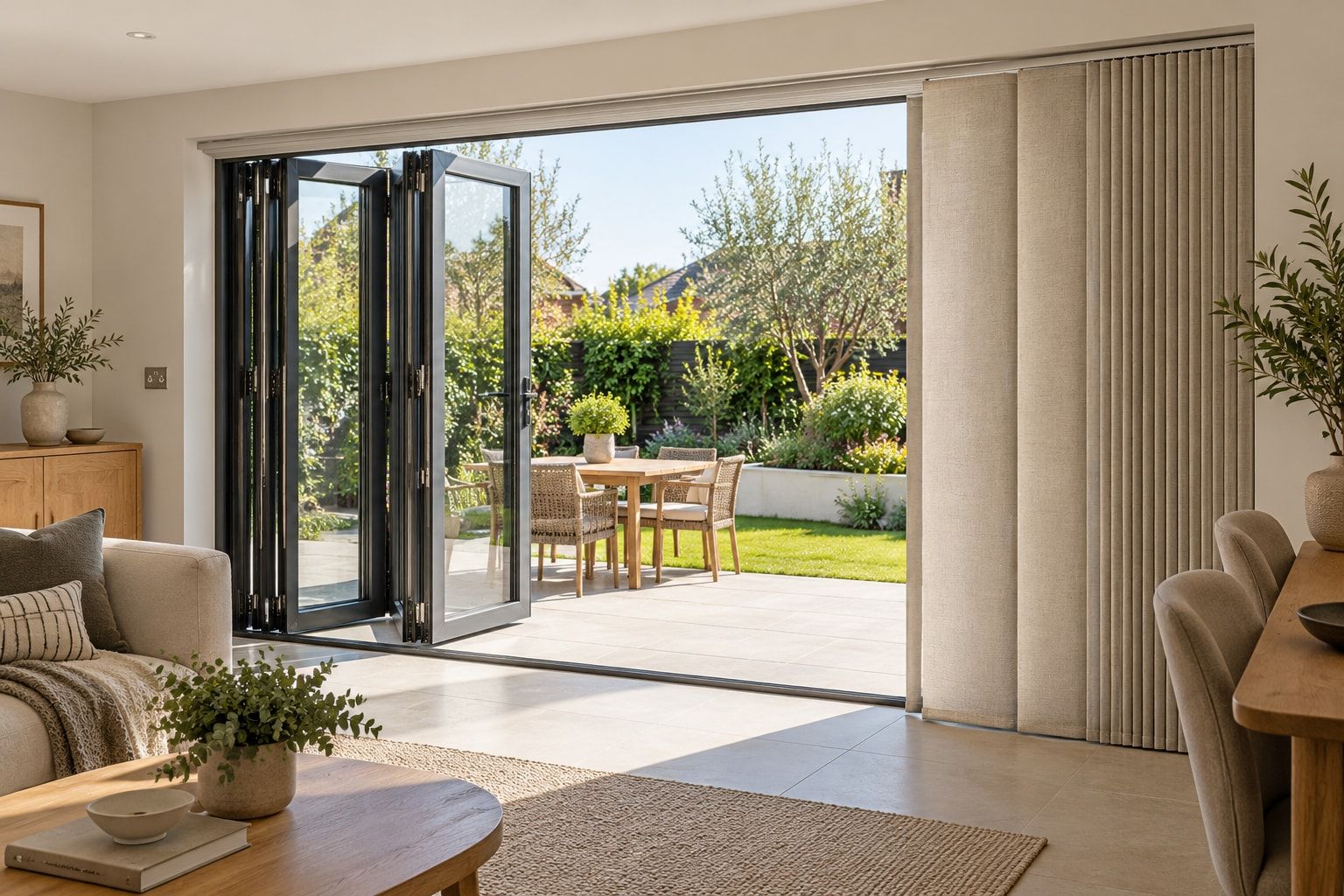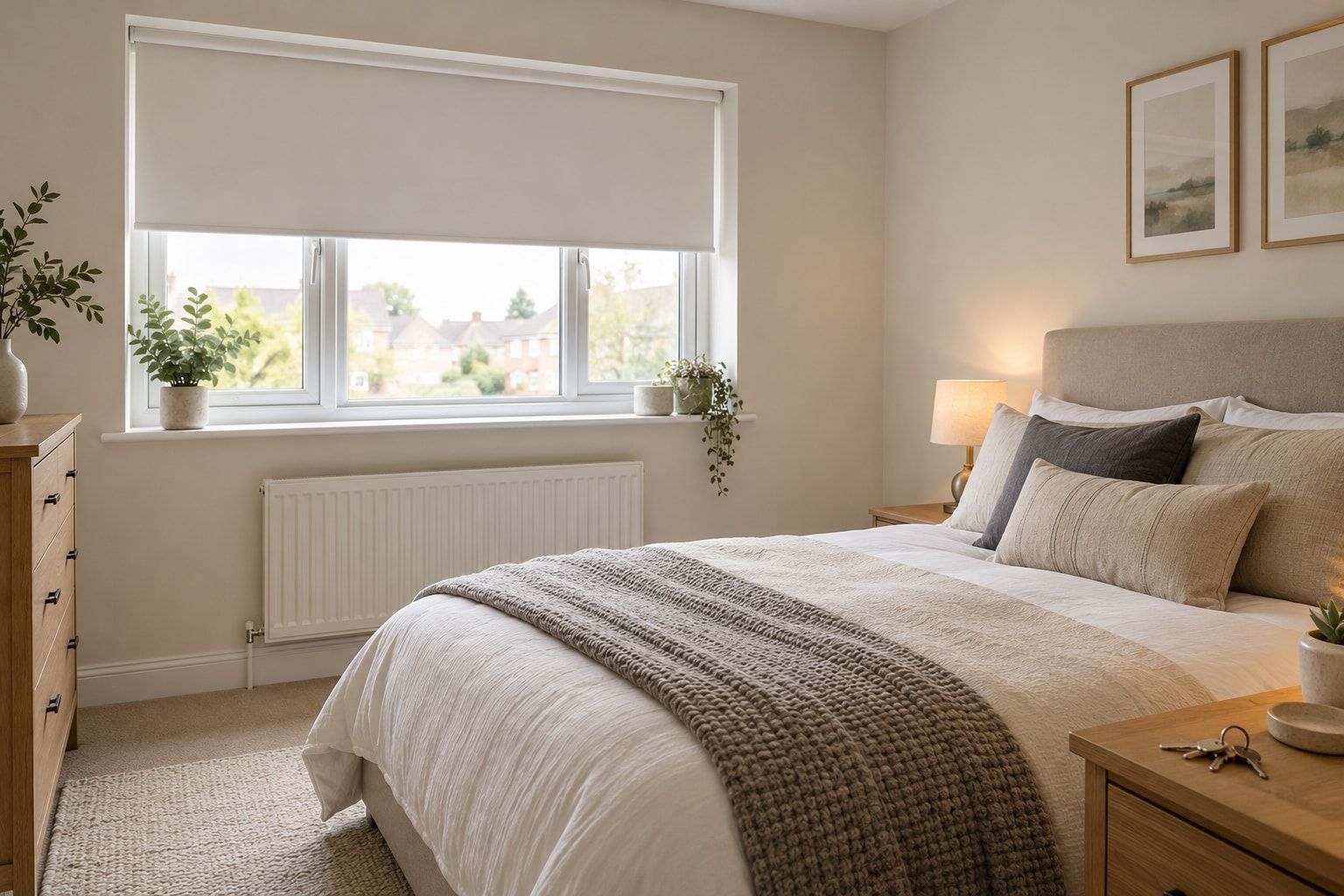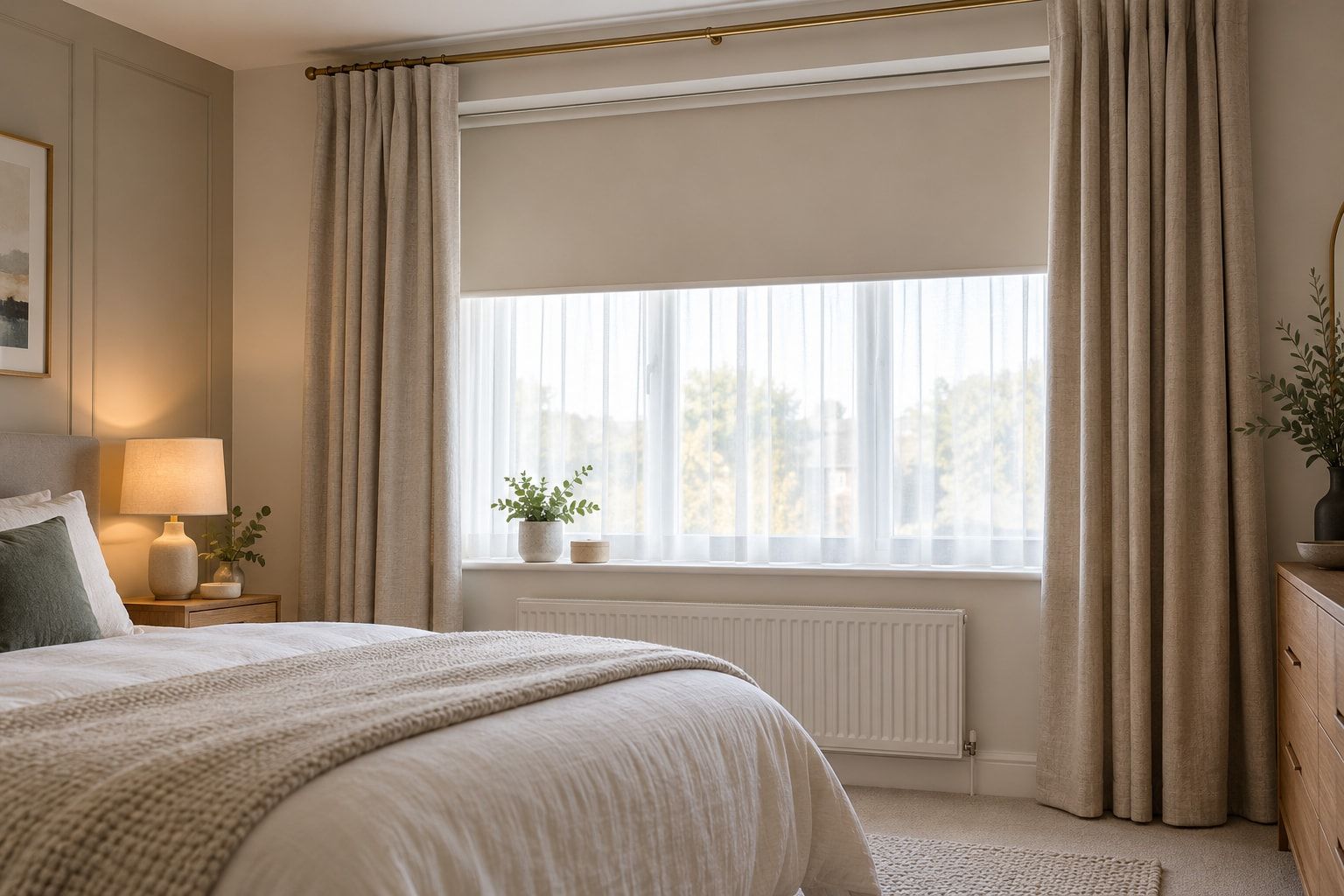
Layering simply means dressing a window with more than one thing: a blind and curtains, a voile and curtains, or all three together. It’s what makes a window look properly finished. It’s also practical, because each layer does a different job. Together, they give you more control over light, privacy and warmth than any single layer can on its own.
Done well, layering looks effortless. Done badly, it can leave you with curtains that catch on the blind, controls you can’t reach, or a window that feels cluttered. Here’s how to get it right.
Why layer?
- Light control. A blind or voile handles daytime light, while curtains or a blackout blind take over at night.
- Privacy without gloom. Voiles let daylight in while making it harder to see in from outside during the day.
- Warmth. Lined curtains drawn over a blind add an extra layer at the window, which can help reduce heat loss through the glass on cold evenings.
- Softness and style. Blinds give a crisp, tidy line. Curtains add colour, texture and a frame around the window.
- Flexibility. You can use each layer on its own or together, depending on the time of day and the season.
Popular combinations
A blackout blind with curtains
This is the classic bedroom setup. A blackout blind fitted inside the window recess does the real work of blocking light, while curtains frame the window, add warmth and soften the room.
Because the blind handles the darkness, the curtains don’t need to be blackout-lined, so you can choose them purely on looks. That said, a lined curtain hangs better and adds warmth. Curtains that overlap the window edges also help catch the little bit of light that can escape around the sides of a blind.
Voiles with curtains
This is a favourite for living rooms that face the street. The voile hangs closest to the glass and stays closed during the day, softening the light and giving you privacy. The curtains hang in front and are drawn in the evening. Like everything we supply, our voiles and nets are made to measure for your window.
One honest point: voiles give daytime privacy, but once the lights are on inside at night, people can see through them. That’s why they’re almost always paired with curtains or a blind.
A Roman blind with dress curtains
A Roman blind gives you a soft, tailored look and does the everyday job of opening and closing. Dress curtains hang either side of the window and stay open, framing it like a picture. This is a lovely, elegant look for living rooms and dining rooms, and it’s a good way to add colour and pattern without the curtains having to close.
A blind, a voile and curtains
Three layers give you the most control of all: the blind for darkness, the voile for daytime privacy and the curtains for warmth and style. This works best on larger windows, bay windows and rooms with high ceilings. In a small room, three layers can feel heavy and crowded, so keep it simple there.
Shutters with curtains
Curtains can soften shutters in a period living room or a bay window. The key is making sure the shutter panels can still open fully, and that the curtains stack back far enough to stay out of their way.
| Combination | Best for | Watch out for |
|---|---|---|
| Blackout blind and curtains | Bedrooms and nurseries | Leave room for the curtains to clear the blind |
| Voile and curtains | Living rooms and street-facing rooms | Voiles alone don’t give privacy at night |
| Roman blind and dress curtains | Living and dining rooms | Too many patterns can clash |
| Blind, voile and curtains | Large windows, bays, tall rooms | Can feel crowded in small rooms |
| Shutters and curtains | Period living rooms and bays | Shutter panels need room to open |
Getting the fitting right
Layering is as much about fitting as it is about fabric. These are the details we look at when we visit.
Inside or outside the recess
The usual approach is to fit the blind inside the window recess and hang the curtains on a pole or track above the window, wider than the frame. The blind gets a neat, built-in look and the curtains hang clear of it. If the recess is shallow, or there’s no recess at all, the blind may need to go on the wall outside it, and the curtains will need to sit further forward to clear it.
Clearance
Curtain brackets need to hold the curtains far enough from the wall to clear the blind and its controls. Roman blinds need extra room, because the fabric gathers into deep folds when raised. We measure for this, so nothing rubs or catches.
Poles and tracks for two layers
If you’re hanging a voile and curtains together, you’ll usually need a double pole or double track, with the voile on the inner run nearest the glass. Our curtain poles and tracks page covers the options. For wide windows or heavy curtains, electric curtain tracks can open and close them for you.
Stack-back
Extend the pole or track beyond the window on each side. That way, when the curtains are open, they stack against the wall rather than over the glass, and you keep as much daylight as possible.
Blind controls
Think about which side the blind’s chain or control sits. It’s much easier to reach if it isn’t hidden behind a bunched-up curtain.
Radiators and windowsills
Full-length curtains drawn over a radiator can trap heat behind them. If there’s a radiator under the window, consider sill-length curtains, dress curtains that stay open, or a blind as the main cover.
Choosing colours and fabrics that work together
- Pick one star. If the curtains are patterned, keep the blind plain, or the other way round. Two strong patterns at one window tend to fight.
- Let the blind blend in. A blind that matches the window frame or walls looks calm, leaving the curtains to bring the colour.
- Keep voiles simple. White and ivory voiles suit almost any curtain fabric.
- Think about the view from outside. Blinds and voiles are what passers-by see, so neutral shades keep the front of the house looking consistent.
The best way to judge is to see everything together. We bring samples to your home visit, so you can hold blind fabrics, voiles and made-to-measure curtain fabrics side by side in your own light.
Planning your layers
Layering works best when every layer is planned together, rather than added one at a time. With 20 years of fitting blinds, shutters and curtains across Birmingham and the West Midlands, our team can help you work out the right combination for each room.
To get started, book a free home visit. We’ll measure up, check the clearances and bring samples of every layer. The quote is free with no obligation, and fitting is included in your quote.
Questions
Can you supply the blinds and the curtains together?
Yes. We supply and fit blinds, curtains, voiles, and curtain poles and tracks, so we can plan every layer at one home visit and make sure they all work together.
Can I add voiles to curtains I already have?
Often, yes. If your current pole or track only carries one layer, it may need swapping for one that takes two. We can look at what you have when we visit and suggest the simplest way to do it.