Anyone who has tried to settle a baby for a lunchtime nap, or explain to a toddler that it really is bedtime on a bright June evening, knows how much light matters. Many parents find that a properly dark room makes naps, early summer sunrises and light evenings much easier to manage.
In a child’s room, though, darkness is only half the job. The blind also has to be safe, now and as your child grows. Here’s what our fitters recommend, and why.
What blackout really means
A blackout fabric is made to stop light passing through it. Hold it up to a bright window and you won’t see a glow. That’s different from a dim-out fabric, which darkens a room noticeably but still lets some light through. For a nursery, it’s worth going for full blackout.
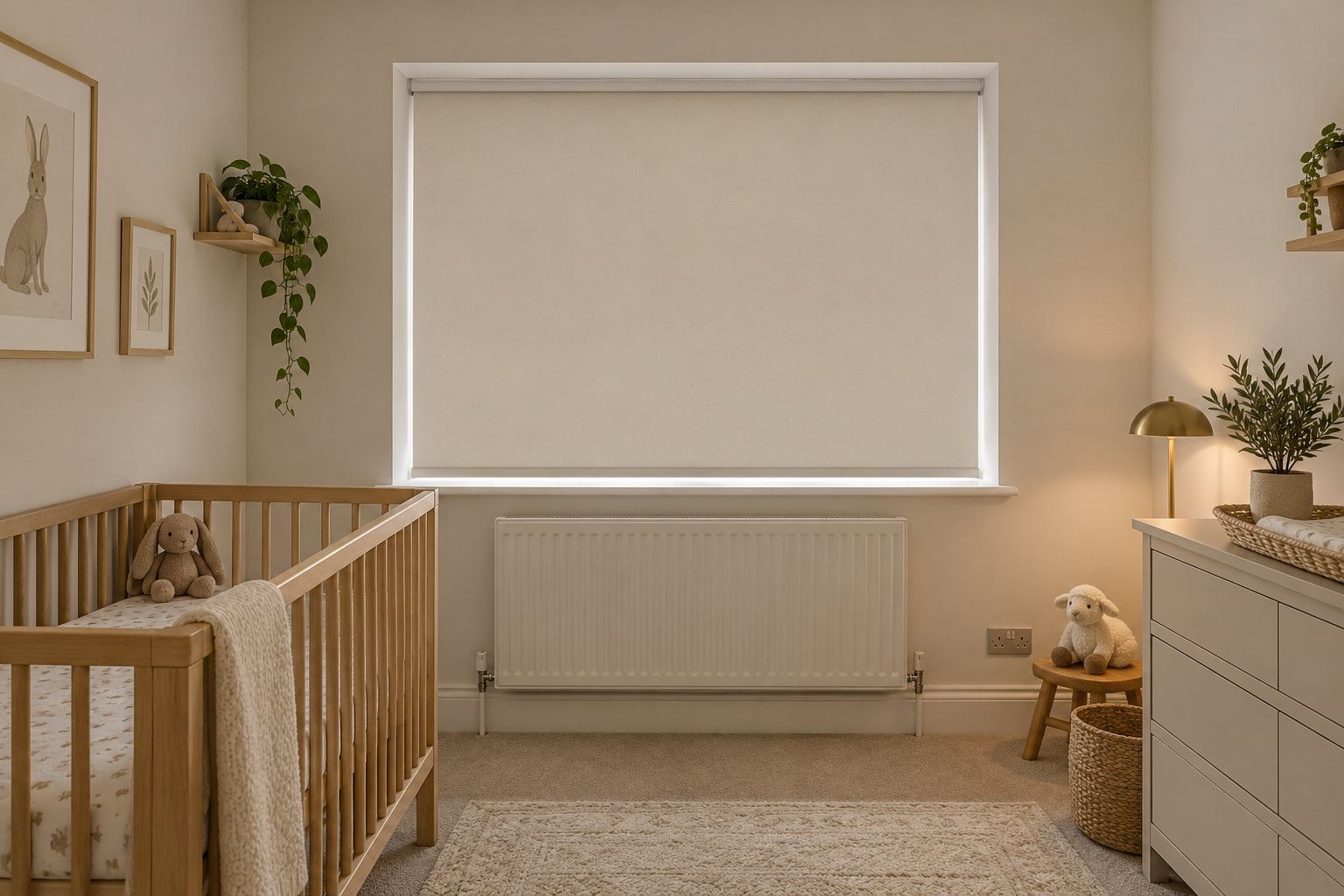
The fabric is only part of the story. Most of the light that gets into a room with a blackout blind comes round the edges, not through the fabric. A blind fitted inside the window recess needs a small gap at each side so it can roll up and down freely, and light creeps through those gaps. That’s the thin bright line you often see down the sides of a blind on a sunny morning.
So getting a room really dark is about how the blind is fitted as much as what it’s made of.
How to get a child’s room really dark
Fit the blind outside the recess
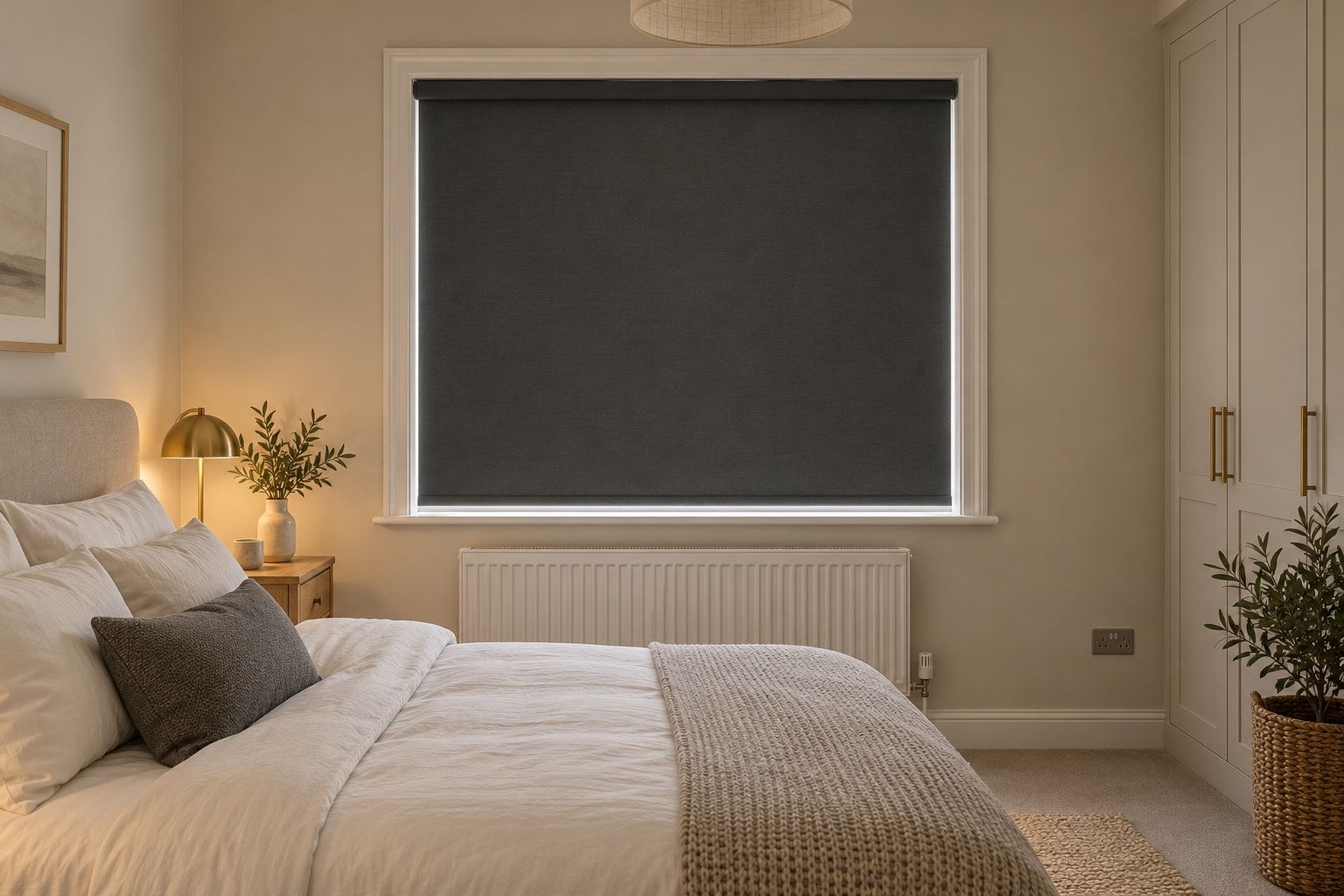
Fitting a blackout blind on the wall above the window, so it overlaps the recess on all sides, cuts down the light that gets round the edges. The wider the overlap, the darker the room. It also makes the window look a little larger, which can suit a small bedroom.
Choose Perfect Fit on uPVC windows
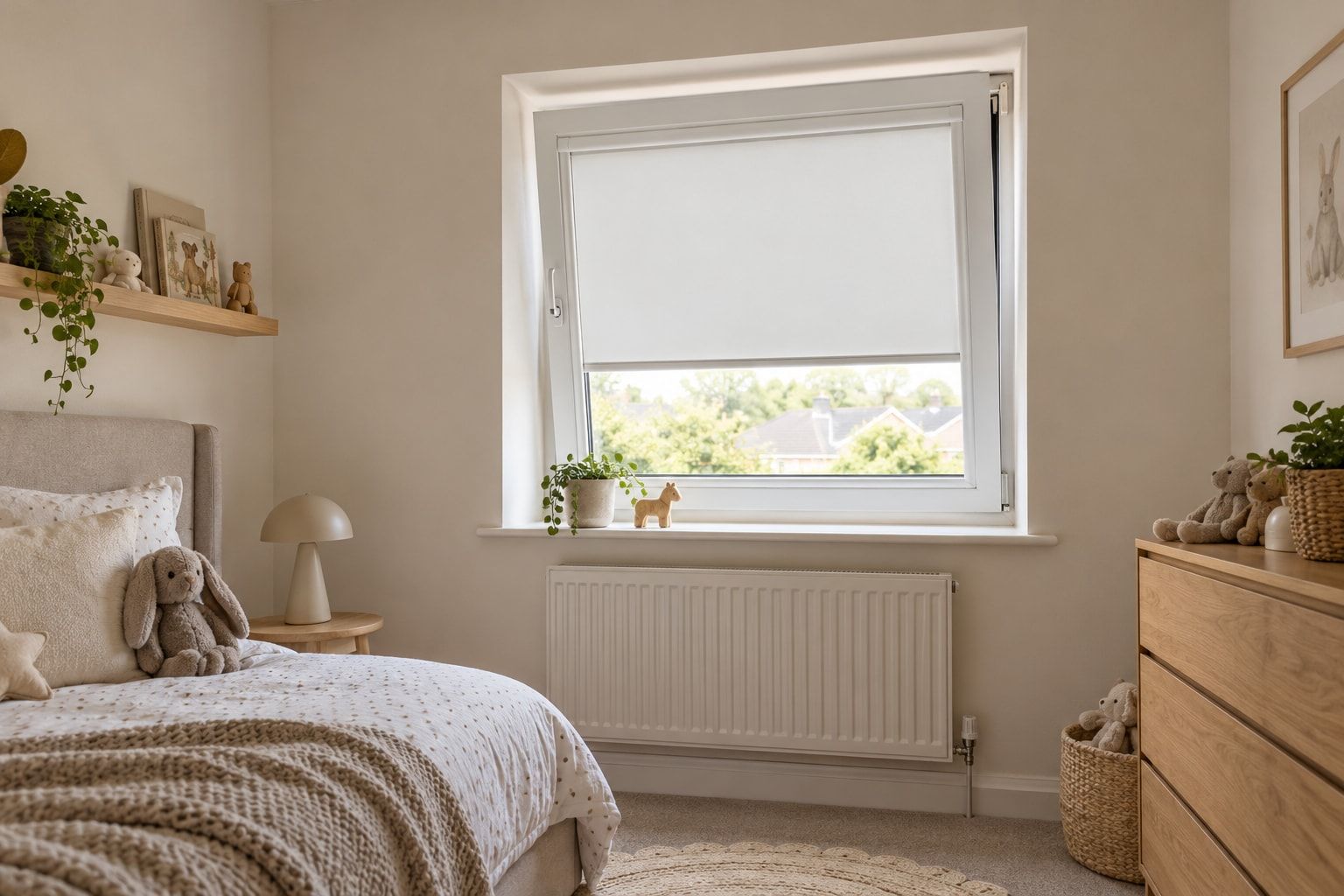
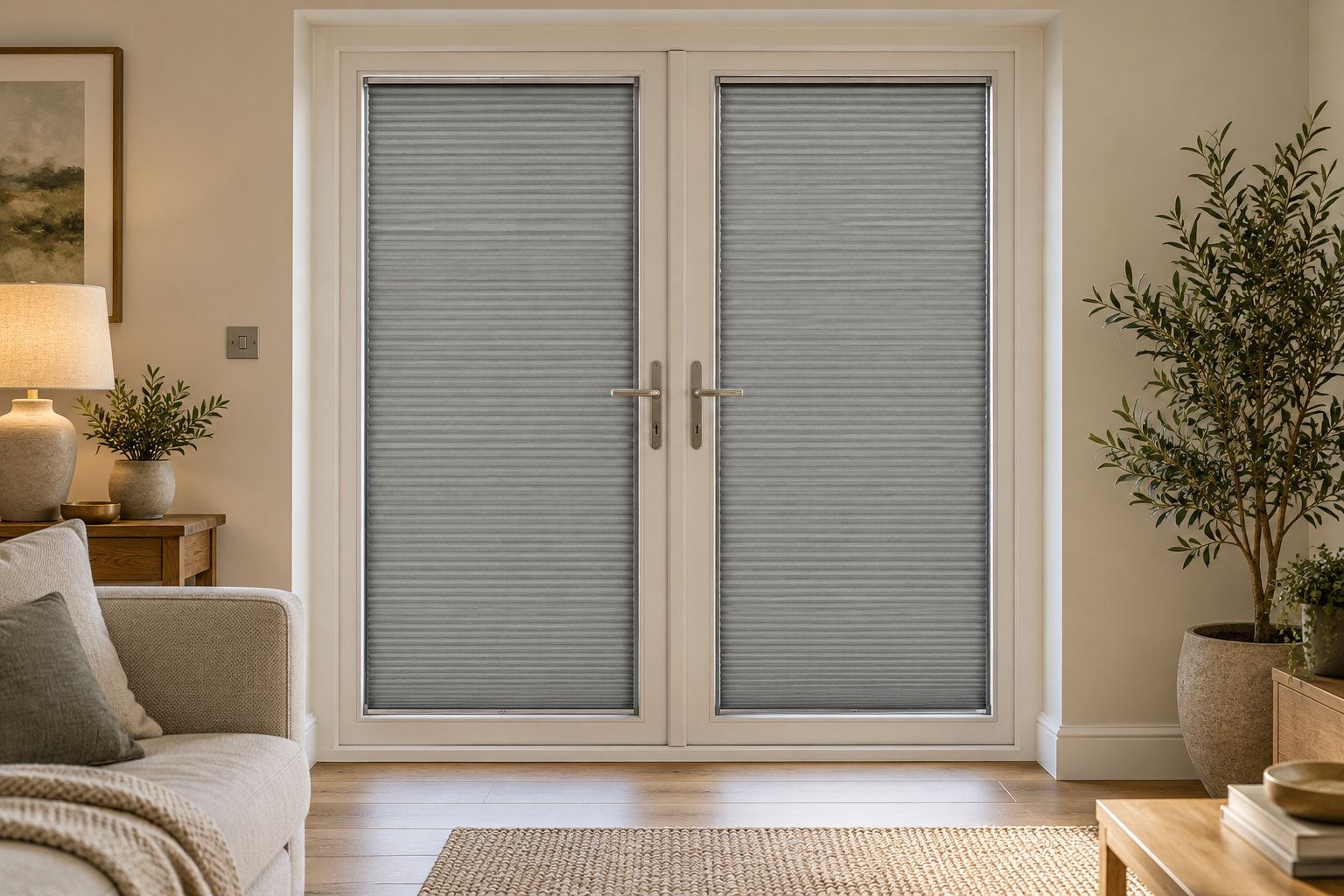
If your child’s room has uPVC windows, a Perfect Fit blind is one of the neatest ways to darken it. The blind sits in a slim frame that clips into the window, close to the glass, which keeps edge gaps small. There are no loose cords, it moves with the window if you tilt it open for fresh air, and there’s no drilling. With a blackout fabric, it’s a tidy, child-friendly option.
Consider a Roman blind with blackout lining
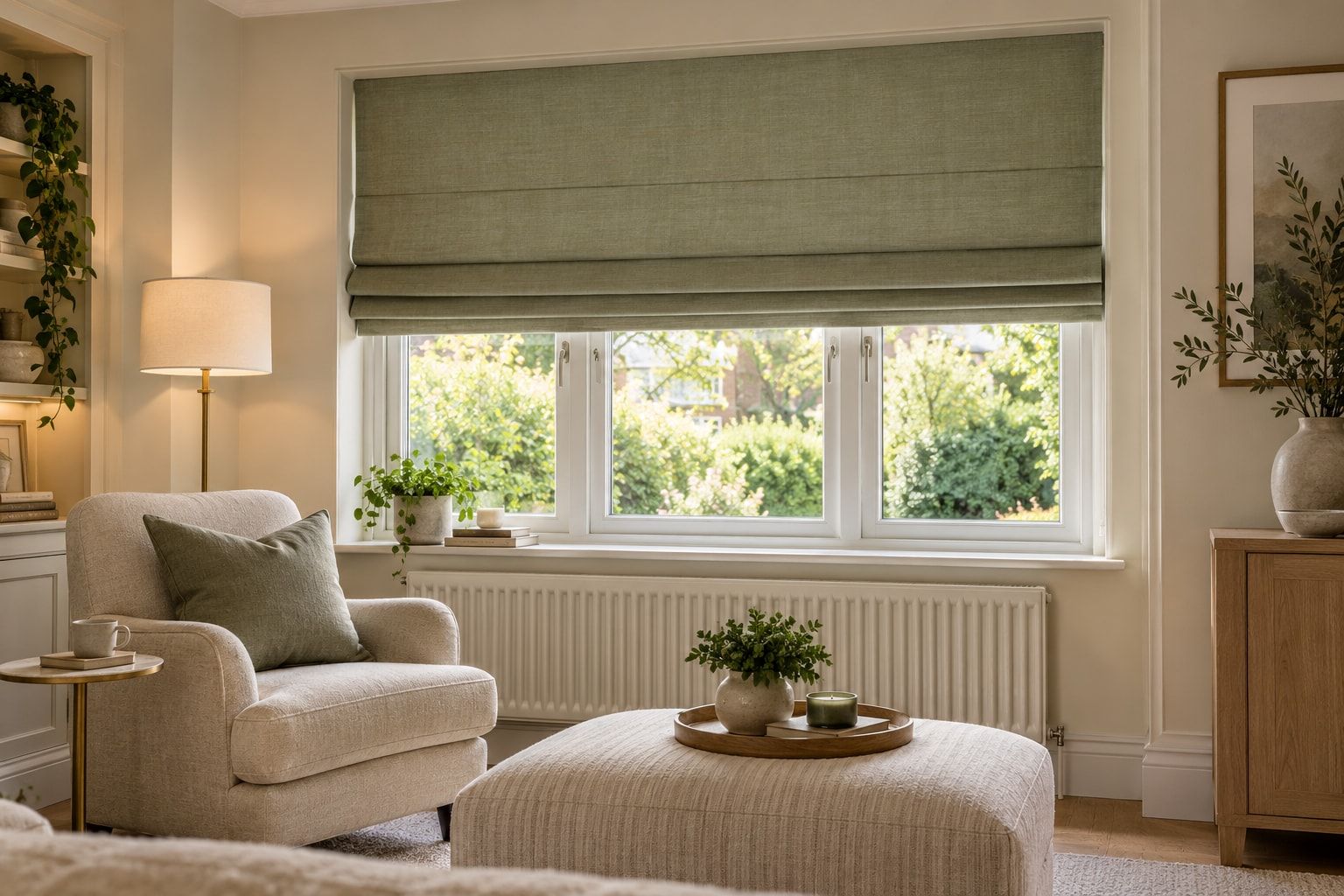
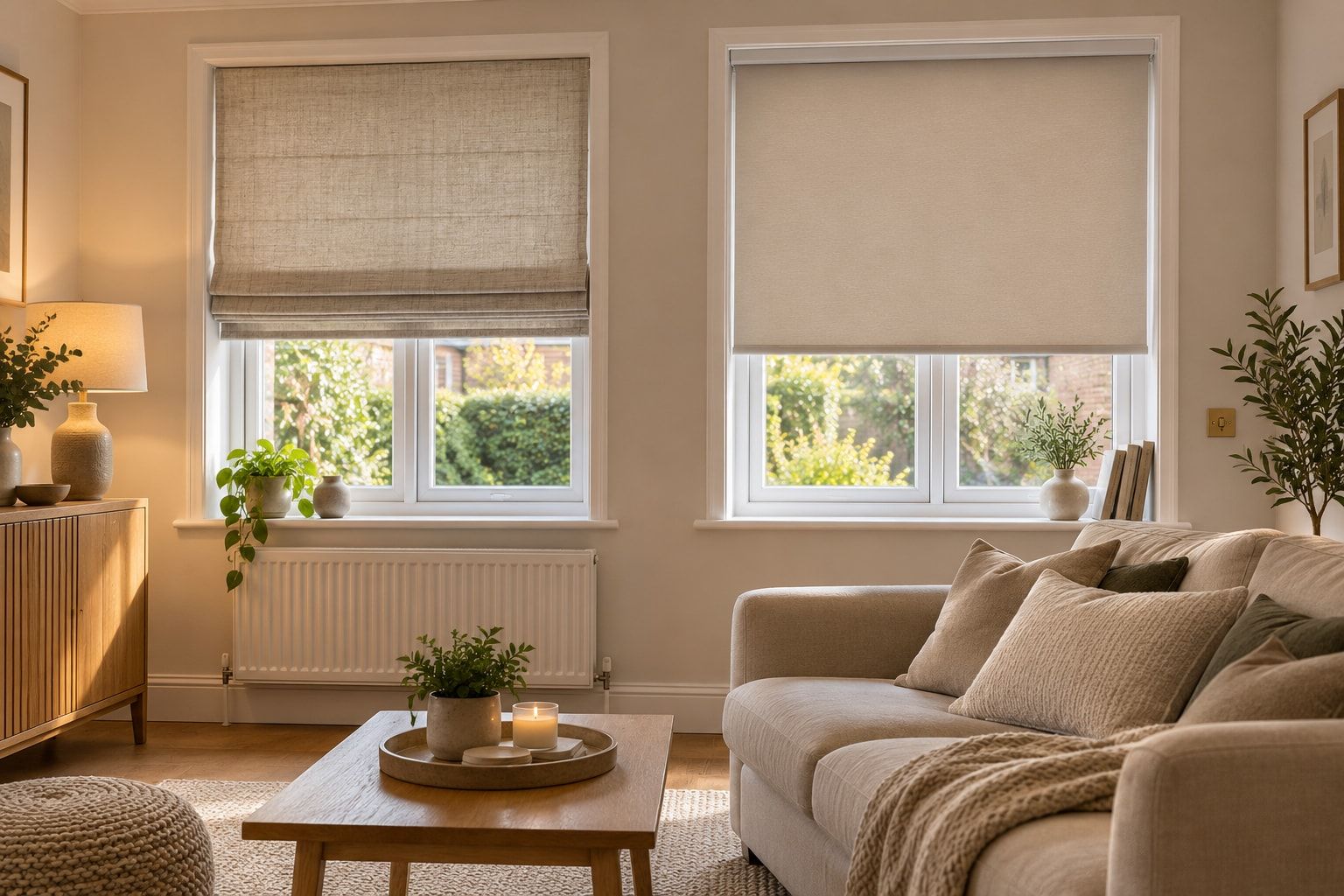
A Roman blind with a blackout lining gives a softer, more decorative look, which many parents like for a nursery. It folds up into neat, soft pleats during the day. As with any blind that has a chain, keep the chain secured and out of reach.
Layer a blind with blackout-lined curtains
For the darkest possible room, combine a blackout blind with made-to-measure curtains with a blackout lining. The blind covers the glass, and the curtains cover the edges and the top. It’s the approach we’d suggest for rooms that get strong early morning sun.
Comparing your options
| Option | How dark | Cords and chains | Best for |
|---|---|---|---|
| Blackout roller inside the recess | Very dark, with thin lines of light at the edges | Cordless or secured chain | A neat look on most windows |
| Blackout roller outside the recess | Darker, with less light at the edges | Cordless or secured chain | Rooms where darkness matters most |
| Perfect Fit blackout blind | Very dark, held close to the glass | No loose cords | uPVC and tilt-and-turn windows |
| Roman blind with blackout lining | Very dark, with a soft finish | Secured chain, kept out of reach | A softer, decorative nursery |
| Blackout blind plus blackout-lined curtains | The darkest option | As for the blind | East-facing rooms and early risers |
Child safety comes first
Every blind we supply meets the UK child-safety standard for blinds, BS EN 13120. Even so, how a blind is chosen, fitted and used makes a real difference. Here’s our straightforward advice for any child’s room.
- Go cordless where you can. A spring-assisted cordless roller blind is raised and lowered by hand, with no chains or cords at all. Perfect Fit blinds have no loose cords either. For a nursery, these are the simplest choices.
- Keep any chain secured. If a blind has a chain, it should be fixed to the wall or window frame with a child-safe tensioner that holds it taut. Never unclip or remove a tensioner, even for a moment, and check from time to time that it’s still firmly fixed.
- Keep cots and beds away from the window. Children climb. A cot, bed, chair or chest of drawers under a window gives them a way up to the blind and to the window itself. Position furniture away from windows wherever you can.
- Keep the windowsill clear. Toys and storage on the sill draw little ones towards the window.
- Check older blinds around the house. Children explore every room, not just their own. Blinds fitted years ago may have loose looped cords, or chains without tensioners. If you’re unsure about one, ask us to take a look when we visit.
For more detail, read our guide to window blind child safety.
Choosing a blind that grows with your child
A nursery doesn’t stay a nursery for long. Within a few years it’s a toddler’s room, then a school child’s bedroom, and before you know it a teenager’s den. It’s worth choosing a blind that can keep up.
- Pick a calm, neutral fabric. Bold nursery prints are fun, but children grow out of them quickly. A soft grey, cream or muted colour works at every age, and you can add personality with bedding, cushions and wall art.
- Think long term about darkness. Older children still need to sleep on light summer evenings, and teenagers tend to appreciate a dark room more than anyone. A good blackout blind stays useful for years.
- Make it easy to use. As children get older they’ll want to open and close their own blind. A cordless blind or a Perfect Fit blind is simple for small hands and doesn’t leave anything dangling.
A few fitting tips from our team
- Notice where the morning sun comes from. East-facing rooms get the earliest light, so edge gaps matter more. That’s where an outside-recess fit or layered curtains really earn their place.
- Mind the bottom edge. A blind that stops short of the windowsill lets light in underneath. We’ll make sure yours sits right down on the sill, or overlaps below it if it’s fitted outside the recess.
- Don’t forget the top. Light can leak over the top of the roller. Fitting the blind above the recess, so it starts higher than the window opening, helps here.
- Leave room for the window to open. Fresh air matters in a bedroom. We’ll check the blind won’t stop the window opening or clash with the handle.
Book a free home visit
The easiest way to get a nursery right is to see the fabrics in the room itself. Book a free home visit and we’ll measure the windows, bring blackout samples you can hold up to the glass, and talk you through the safest options for your child’s room. We visit 7 days a week at a time that suits you, so we can work around naps. The quote is free, there’s no obligation, and fitting is included in your quote.
Questions
Can I have a blackout blind in a pale colour?
Yes. Blackout fabrics block light because of how they're made, not because of their colour, so creams, whites and soft pastels can all be fully blackout. We bring samples to your visit so you can hold them up to the window.
Do blackout blinds help in summer as well as winter?
Yes. They keep out early morning sun and bright summer evenings, and on hot days a lowered blind can help stop a room heating up through the glass. In winter, a thermal blackout fabric can help reduce heat loss through the window.
Can you replace an old blind in my child's room?
Yes. If an older blind has loose cords, or simply isn't dark enough, we can quote for a replacement at your free home visit. We repair blinds we supplied, but for blinds from other companies we'll quote for a new one instead.