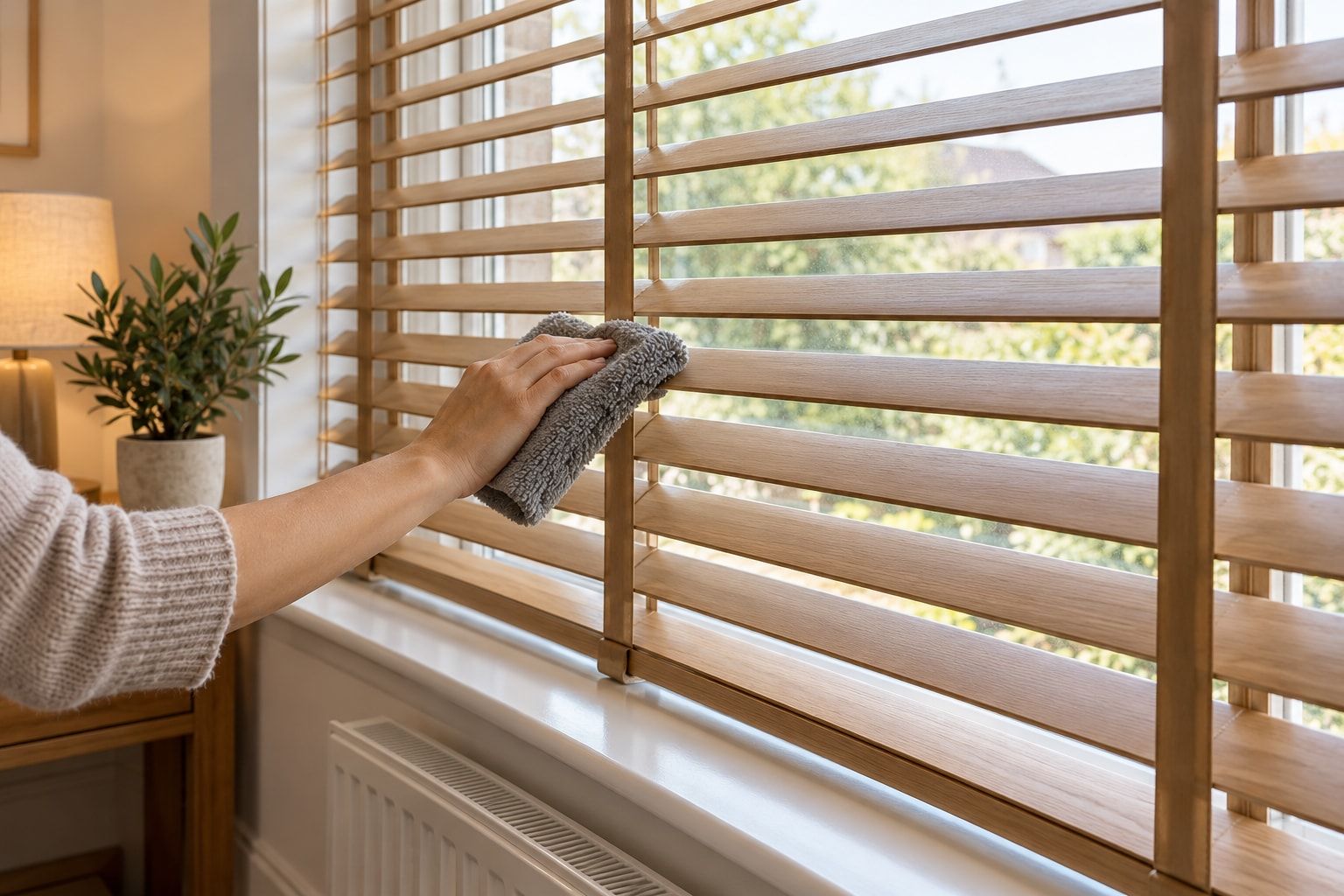
Blinds don’t need much looking after, but a little regular care keeps them looking fresh and working smoothly for longer. The most important rule is also the simplest: little and often. A quick, regular dust does more good than an occasional deep clean, and it’s far less likely to cause damage.
Here’s how to care for each type of blind we fit, what to use, and the mistakes that can cause lasting harm. Whatever type you have, the safest approach is always the gentlest one.
The golden rules
- Check the care label or instructions first. Different fabrics and finishes need different care. If you’re not sure and we supplied your blinds, just ask us.
- Dust regularly. Dust is much easier to remove before it builds up and settles into the fabric.
- Start gentle. Try the mildest method first: a dry cloth, then a damp one, then a little mild soapy water.
- Test somewhere hidden. Before spot-cleaning fabric, try it on a small area that doesn’t show, in case it leaves a mark.
- Don’t soak a blind unless the care instructions say you can. Water can damage stiffened fabrics, coatings and wood.
- Lower and close the blind first. That way you can reach the whole surface and clean it evenly.
What you’ll need
- Soft microfibre cloths
- A feather or microfibre duster
- A vacuum cleaner with a soft brush attachment
- Warm water with a few drops of mild washing-up liquid
Steer clear of bleach, abrasive cleaners, scouring pads and solvent-based sprays unless the care instructions specifically recommend them. They can fade colours, strip finishes and roughen fabric.
Care guide by blind type
| Blind type | Regular care | Spot-cleaning | Avoid |
|---|---|---|---|
| Roller, blackout, day and night | Dust or vacuum on low with a soft brush | Dab with a barely damp cloth | Soaking, scrubbing, rolling up while damp |
| Roman | Vacuum on low with an upholstery brush | Blot gently, if the label allows | Washing at home unless the label says so |
| Pleated | Light dusting or a soft brush | Dab very gently | Pulling the pleats, heavy wetting |
| Vertical | Dust vanes from top to bottom | Wipe with a damp cloth, if suitable | Tugging vanes off their hangers |
| Wooden Venetian | Dust slats with a dry cloth | A barely damp cloth, dried straight away | Water, sprays and harsh cleaners |
| Faux wood Venetian | Dust slats regularly | Wipe with mild soapy water | Abrasive pads and strong solvents |
| Waterproof | Wipe down regularly | Mild soapy water, then let it dry | Abrasive cleaners |
Roller, blackout and day and night blinds
These are all fabric blinds on a roller, and the fabric is usually stiffened so it hangs flat. With the blind fully down, dust it gently or vacuum on the lowest setting with a soft brush, working from top to bottom.
For marks, dab rather than rub, using a soft cloth that’s barely damp with mild soapy water. Rubbing can push marks further into the weave or roughen the surface. Some marks simply won’t come out, and scrubbing harder usually makes things worse.
Always let the fabric dry completely, with the blind down, before rolling it up. Rolling a damp blind can leave water marks and creases. Blackout fabrics may have a coating on the back, so be extra gentle with that side. With day and night blinds, dust both layers of fabric, and don’t try to separate them. And whatever the blind, don’t take the fabric off the roller to clean it, as it’s very hard to get it back on straight.
Roman blinds
Roman blinds are made from soft fabric, often with a lining, and they fold into neat pleats when raised. Dust gathers along the tops of the folds, so vacuum them regularly on a low setting with an upholstery brush, with the blind fully lowered.
For spills, blot with a clean, barely damp cloth. Many Roman blinds aren’t designed to be washed at home, because the lining, rods and stitching can shrink, pucker or distort. Always check the care label, as some fabrics need professional dry cleaning. If you’re not sure and we supplied the blind, ask us before you try anything.
Pleated blinds
Pleated blinds are light and delicate. Dust them gently with a feather duster or soft brush while they’re closed, and only vacuum on the very lowest setting, if at all. Spot-clean with the lightest touch. Avoid pulling or squashing the pleats, which can crease them out of shape for good.
Vertical blinds
Close vertical blinds so the vanes lie flat, then dust from top to bottom. Hold the bottom of each vane steady as you go, so you don’t pull it off its hanger. Wipe-clean vanes can be wiped with a damp cloth. Some fabric vanes can be unclipped and cleaned flat, but check the care instructions first. Take care around the weights and chain along the bottom, as they can tangle.
Wooden Venetian blinds
Real wood and water don’t mix. To clean wooden Venetian blinds, close the slats flat and dust them with a dry microfibre cloth or duster, then tilt them the other way and do the other side.
For a mark, use a cloth wrung out until it’s barely damp, then dry the slat straight away with a second cloth. Never soak wooden slats or spray cleaner directly onto them. Too much moisture can make wood warp, swell or stain, and that kind of damage usually can’t be undone. Go gently around the ladder tapes and cords, and keep them dry.
If a wooden blind keeps getting splashed, it may be in the wrong spot. Faux wood is much better suited to steamy or splashy windows.
Faux wood Venetian blinds
Faux wood Venetian blinds are far more forgiving. Dust them regularly, and wipe the slats with a cloth and mild soapy water when they need it. Dry them with a soft cloth to avoid streaks. In kitchens, a regular wipe stops grease building up, which is much harder to shift once it’s set. Avoid abrasive pads, which can scratch the finish.
Waterproof blinds
Waterproof blinds are made for bathrooms and kitchens, but waterproof doesn’t mean dirt-proof. Wipe them down with a damp cloth and a little mild soapy water, then leave them down to dry. Good ventilation helps the blind and the room.
Perfect Fit and panel blinds
Clean a Perfect Fit blind in the same way as the blind style it uses, and wipe the frame with a damp cloth. Panel blinds can be dusted or vacuumed on a low setting, with marks dabbed gently as for roller blinds.
Don’t forget the moving parts
While you’re cleaning, give the working parts a quick look. Wipe chains with a damp cloth, dust along the headrail, and keep water and cleaning products out of the mechanism.
It’s also a good moment to spot early signs of wear: a fraying cord, a stiff control, a cracked bracket or a chain tensioner that’s come loose from the wall. The tensioner is part of what keeps a chain child-safe, so make sure it stays firmly fixed.
If anything feels stiff or sticks, don’t force it. Forcing a stuck blind is a quick way to turn a small problem into a bigger one. If we supplied your blinds, our blind repairs service can take a look.
A simple care routine
- Regularly: a quick dust or a light vacuum on a low setting.
- Every few months: wipe down faux wood and waterproof blinds, and check the chains, cords and brackets.
- As soon as it happens: deal with spills and marks. Fresh marks are usually easier to deal with than old ones.
When cleaning isn’t enough
Even well-cared-for blinds don’t last forever. If yours are faded, stained or damaged beyond a good clean, it may be time for new ones. Book a free home visit and we’ll measure up, bring samples and help you choose blinds that suit how you live, including easy-care options for kitchens and bathrooms. The quote is free with no obligation, and fitting is included in your quote.
Questions
Can I steam clean my blinds?
We wouldn't recommend it unless the care instructions say it's safe. Heat and moisture can damage stiffened fabrics, coatings, pleats and wood. Dusting and gentle spot-cleaning are the safer options for almost every blind.
Can I get mould spots off a fabric blind?
Sometimes light marks can be wiped off waterproof or wipe-clean fabrics with mild soapy water, but on most fabrics mould leaves a stain that won't come out. If it keeps coming back, the window probably needs a blind designed for moisture, such as a waterproof roller blind or faux wood Venetian blind.