Shutters are one of the biggest changes you can make to a room. They’re made to fit your window exactly, they give you a level of light control that’s hard to match with fabric, and they quickly start to feel like part of the house. But before you think about colours and finishes, there’s a more important decision to make: which style suits your window and the way you use the room.
There are four main styles. Full-height, tier-on-tier and café-style shutters cover most windows in most homes, while tracked and special-shape shutters deal with doors and unusual windows. Here’s how each one works, where it shines and where it falls short, so you can go into your home visit with a clear idea of what you want.
The styles at a glance
| Style | What it covers | Best for | Main trade-off |
|---|---|---|---|
| Full-height | The whole window, in single panels from top to bottom | Living rooms, bedrooms, bay windows | Less flexible privacy than tier-on-tier |
| Tier-on-tier | The whole window, in separate top and bottom panels | Street-facing rooms, tall sash windows | More panels and hardware |
| Café-style | The lower part of the window only | Kitchens, dining rooms, hallway windows | The top of the window stays uncovered |
| Tracked and special-shape | Patio doors, bifolds, arched and angled windows | Wide openings and unusual shapes | Needs careful planning around the space |
Full-height shutters
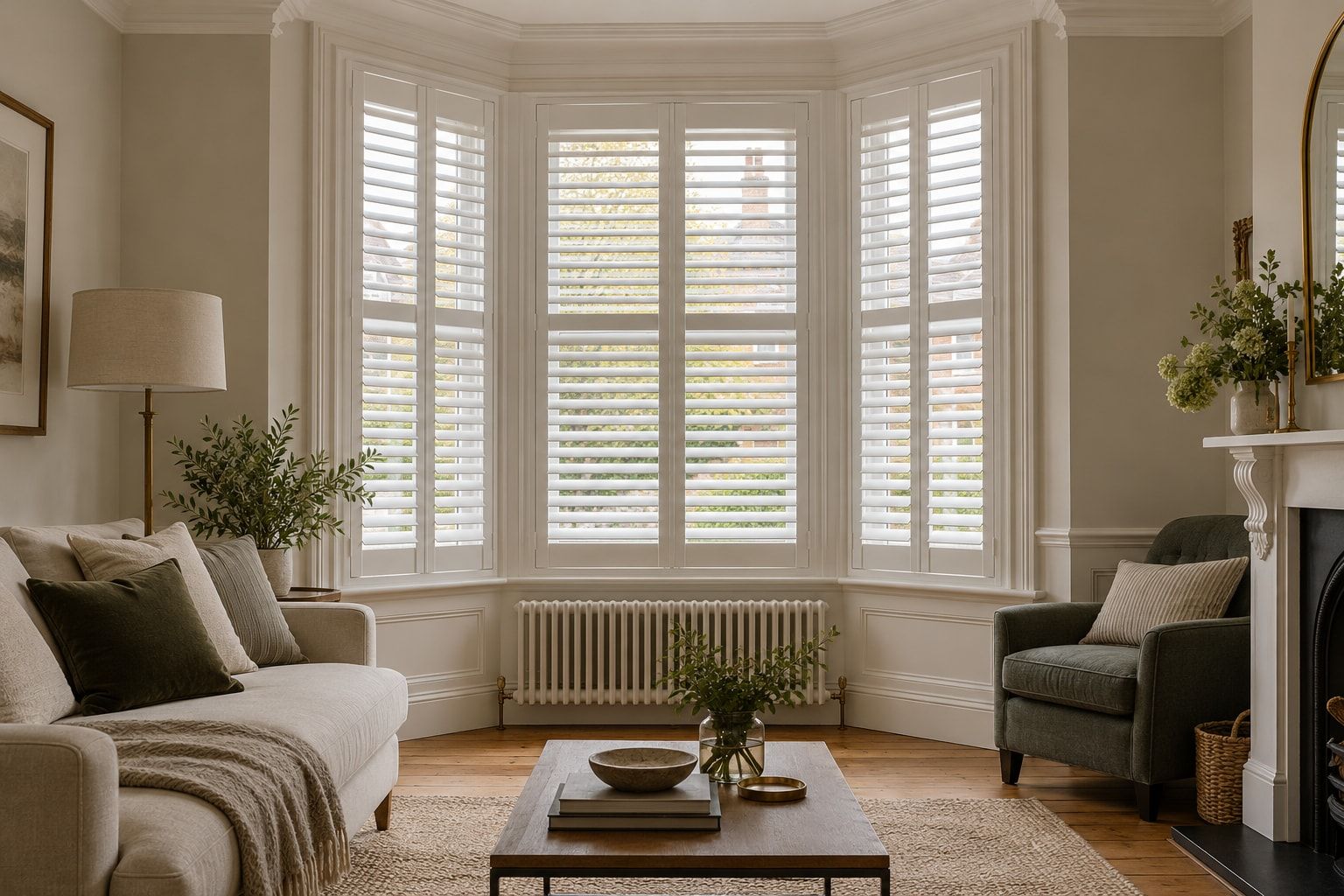
Full-height shutters cover the whole window with single panels that run from top to bottom. They’re the classic shutter look: clean, simple lines that suit both period homes and new builds.
You control the light by tilting the louvres, and you open the panels like doors when you want clear glass or need to open the window. On taller windows, the panels often include a horizontal divider rail. This adds strength and can let you tilt the louvres above and below it separately, which gives you some of the flexibility of tier-on-tier without separate panels.
Strengths
- A tidy, uncluttered look, with few breaks across the window
- Good all-round light control and privacy
- A smart, unified finish across a bay window
Trade-offs
- To get completely clear glass at the top, you have to open the whole panel
- On a street-facing window, opening the panels for daylight means giving up privacy at the same time
Full-height shutters are often the simplest choice for living rooms and bedrooms where you don’t need separate control of the top and bottom of the window.
Tier-on-tier shutters
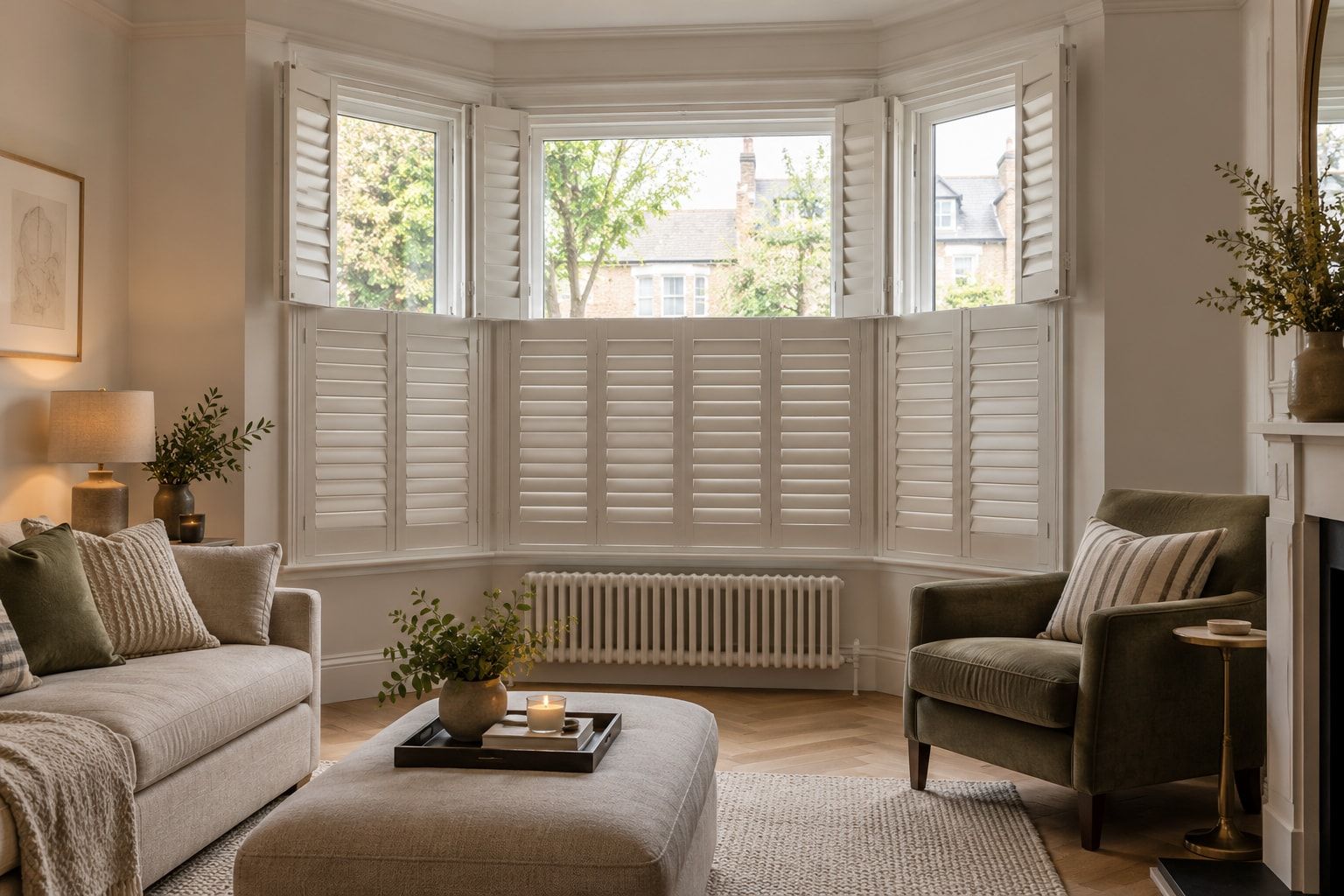
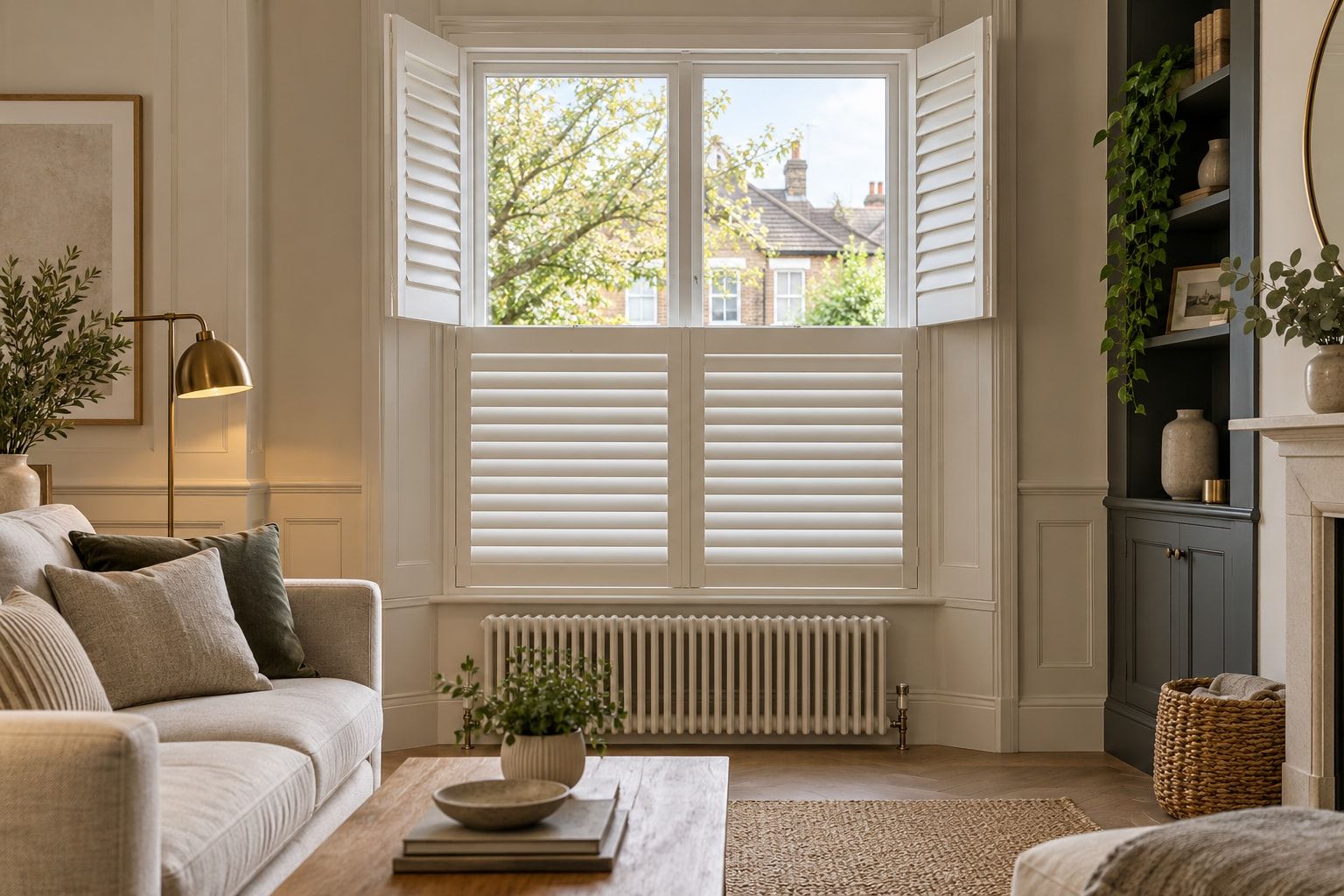
Tier-on-tier shutters split the window into two sets of panels, one above the other, which open independently. You can fold back the top tier to let daylight pour in while keeping the bottom tier closed for privacy, or the other way round.
That flexibility is why they work so well in front rooms on busy streets, and on the tall sash windows you find in many Victorian and Edwardian homes. You get light from the top of the window and privacy at eye level, without having to choose between the two.
Strengths
- The most flexible light and privacy control of any style
- Top and bottom panels can be opened, closed or tilted independently
- Well suited to tall windows
Trade-offs
- More panels and hinges make it a more involved build. If you’re weighing it up against full-height, ask us to quote for both
- The line where the two tiers meet is more noticeable, which some people love and others don’t
Café-style shutters
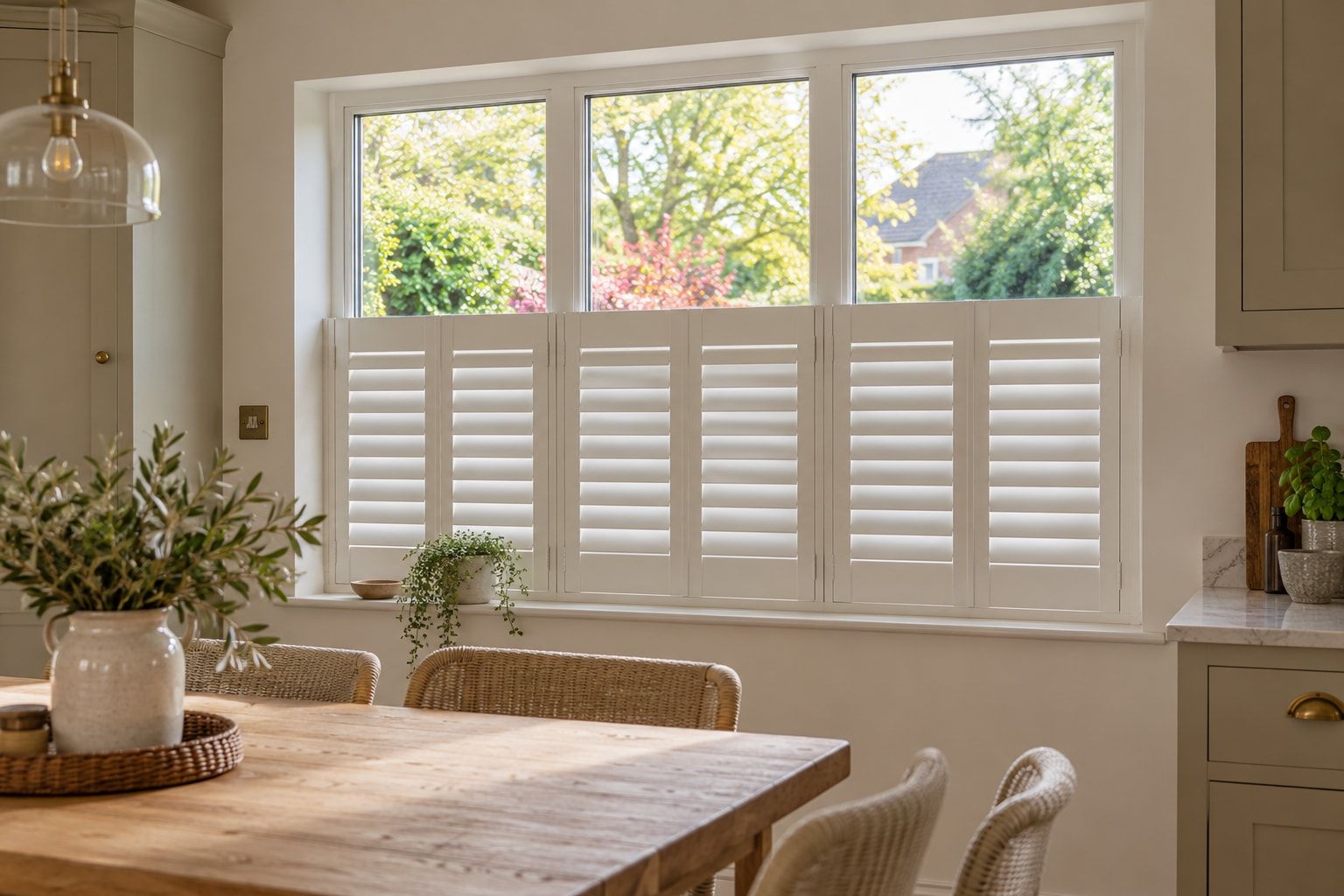
Café-style shutters cover only the lower part of the window, often around half its height, leaving the glass above open.
They’re a lovely answer for rooms where you want privacy from passers-by but don’t want to lose daylight, such as kitchens, dining rooms and ground-floor rooms that face the street. They also suit small rooms where a full set of shutters would feel heavy, and narrow windows beside a front door.
Strengths
- Privacy at street level, with plenty of daylight above
- A light, airy look that doesn’t dominate a small room
- Usually the simplest and least imposing way to have shutters
Trade-offs
- The top of the window is always uncovered, so they won’t darken a room or give privacy from above
- Less suited to bedrooms, or to rooms that are overlooked from higher up
If you like the look of café-style shutters but want full cover in the evening, mention it when we visit. We can suggest ways to pair them with a blind or curtains.
Tracked and special-shape shutters
Not every opening is a standard rectangle. Tracked and special-shape shutters cover the awkward ones.
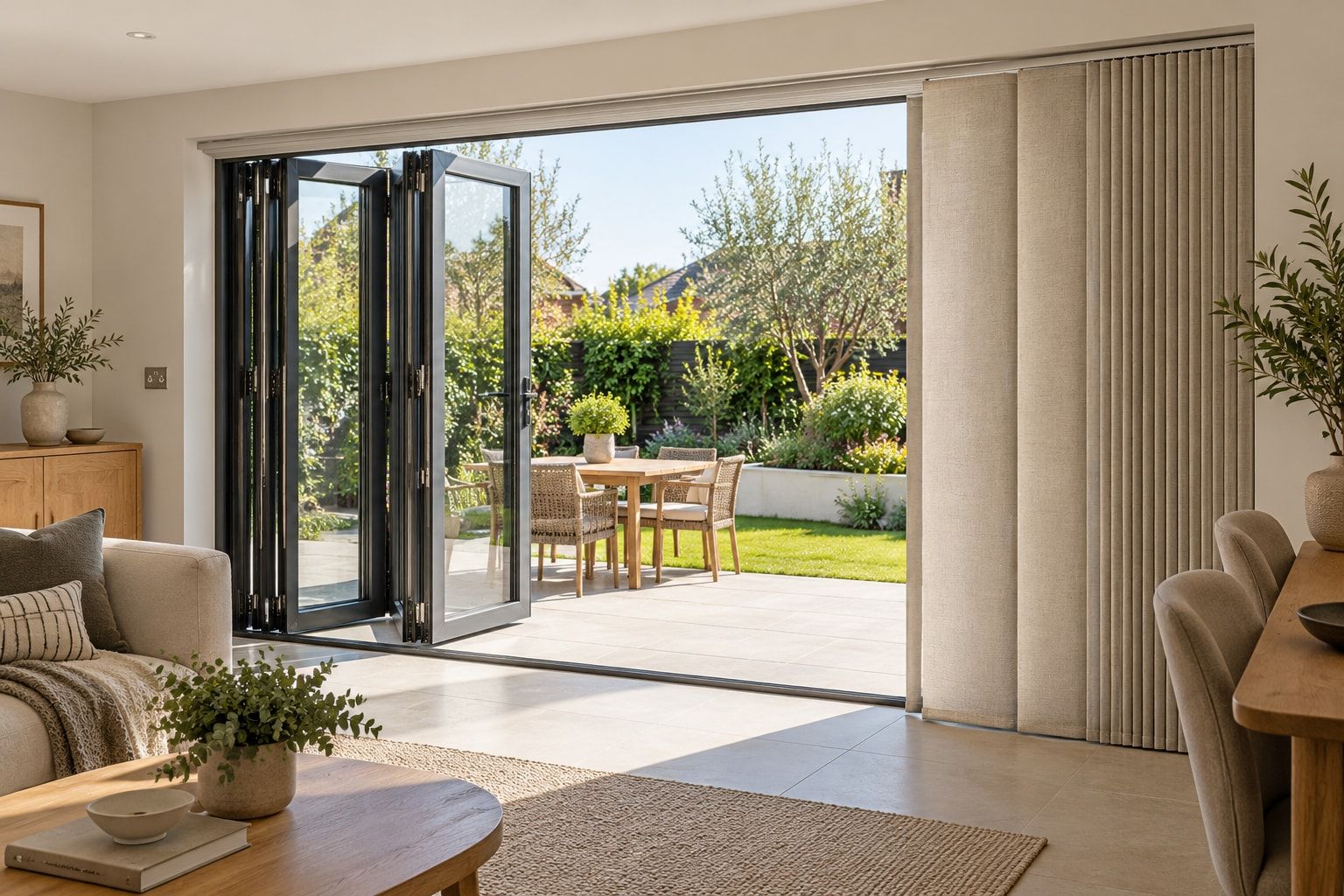
- Tracked shutters hang from a track, so the panels slide and fold back to one side. They’re made for patio doors, bifold doors and very wide openings, where hinged panels wouldn’t be practical.
- Special-shape shutters are made to follow arched, angled and other unusual windows, so even a tricky window can match the rest of the room.
The main thing to plan with tracked shutters is where the panels will sit when they’re open. They need space to stack, so we’ll look at how they clear the doors and how much glass they cover when folded back. For more on dressing big openings, see our guide to blinds and shutters for patio and bifold doors.
How to decide
Start with how you use the room, not just the look. These questions usually point you in the right direction:
- Does the window face the street or a neighbour? If you want daylight and privacy at the same time, tier-on-tier or café-style shutters make that easy.
- How tall is the window? Tall windows suit tier-on-tier, or full-height panels with a divider rail. Shorter windows usually look best with full-height panels.
- Do you need the room dark? No shutter gives total blackout, but full-height and tier-on-tier shutters close off the whole window. Café-style shutters won’t darken a room.
- Is it a door or an unusual shape? That’s a job for tracked or special-shape shutters.
- What does the rest of the house look like? If you’re doing several windows at the front of the house, keeping to one style looks consistent from the street.
Things to check before you choose
A few practical details make a big difference to how shutters fit and work day to day.
- Window handles. Tilt-and-turn windows and chunky handles need clearance, so the louvres and panels don’t catch. We check this when we measure.
- Recess depth. Shutters can be fitted inside the window recess or on a frame around it. A shallow recess may mean fitting them outside.
- Room to open. Hinged panels need space to swing open, so think about furniture, radiators and anything that lives on the windowsill.
- Louvre size. Wider louvres give a more open view and a more contemporary look. Narrower louvres can look neater on smaller windows.
We bring samples to your home visit, so you can compare louvre sizes and finishes against your own walls and in your own light.
Getting it right
Shutters are made to measure for each window, so accurate measuring matters even more than it does with blinds. Bay windows, frames that aren’t quite square and old sash windows all need careful measuring, and that’s where 20 years of fitting experience pays off.
If you’re still not sure which style suits your home, the easiest next step is to book a free home visit. We’ll measure up, show you samples and talk through each option honestly, including whether blinds might suit a particular room better. The quote is free with no obligation, and fitting is included in your quote.
Questions
Do shutters block out all the light?
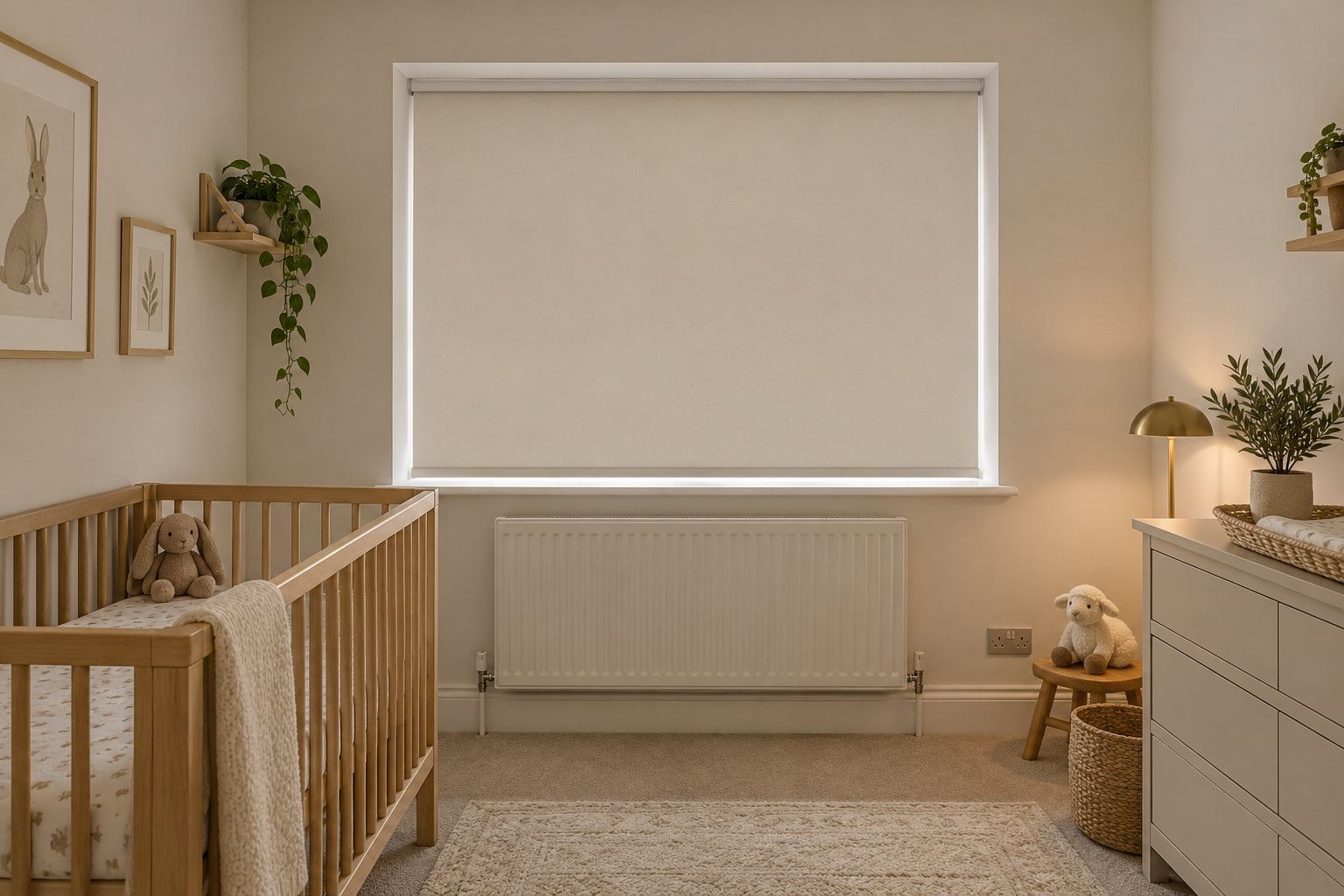
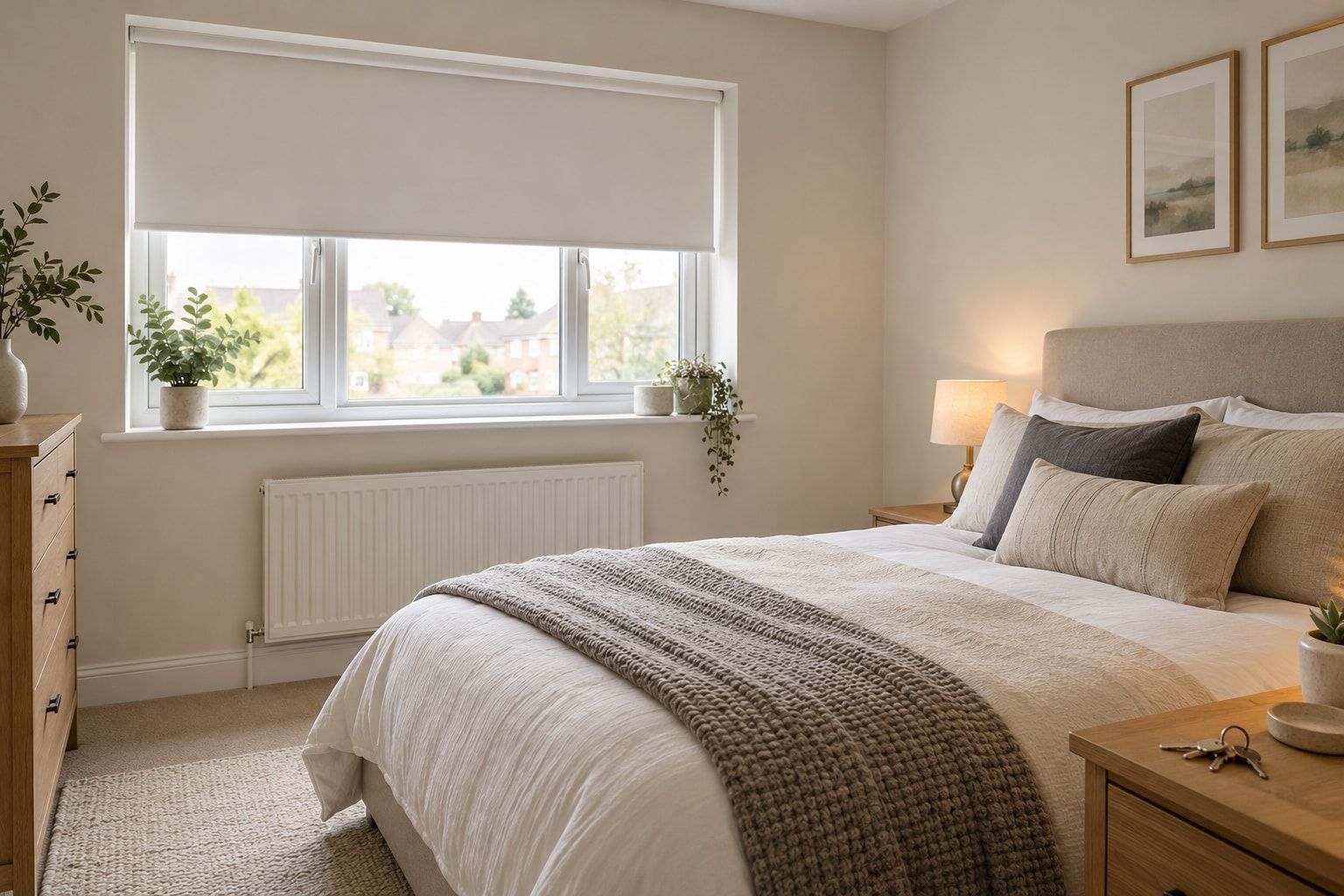
No. Closed shutters make a room much darker, but a little light usually creeps in around the edges of the panels and between the louvres. If you need a bedroom to be properly dark, tell us at your home visit and we'll talk through the options, including whether a blackout blind would suit that room better.
Can shutters be fitted in a bay window?
Yes. Shutters suit bay windows very well. Each window in the bay gets its own panels, made to follow the angles of the bay, and full-height, tier-on-tier and café-style shutters can all work.
Will shutters work with tilt-and-turn windows?
Often, yes, but it depends on how far the handles stick out and how much depth there is around the window. We check this when we measure, so the panels clear the handles and the window still opens properly.