Bathrooms are the toughest room in the house for a blind. Every bath and shower fills the air with steam, the glass runs with condensation, and the blind sits right in the middle of it, day after day. Choose the wrong one and the signs show up quickly: slats that bow, fabric that sags or puckers, and small black spots of mould creeping along the bottom edge.
Choose the right one and none of that happens. After 20 years of fitting blinds across Birmingham and the West Midlands, our advice for bathrooms comes down to three things: pick a material that doesn’t soak up water, fit it so air can move around it, and keep the room well ventilated. Here’s how to do all three, with the honest pros and cons of each option.
What a bathroom blind has to cope with
It helps to know what you’re up against before you look at products.
- Steam and humidity. Warm, damp air gets into anything absorbent. Natural materials swell as they take on moisture and shrink as they dry out. Doing that every day is what makes them warp.
- Condensation. Water runs down the glass and pools on the windowsill and frame, which is exactly where the bottom of a blind sits.
- Splashes. A window over a bath or basin will get splashed. A window inside a shower enclosure gets sprayed directly.
- Mould. Mould needs moisture and time. Anything that stays damp for hours after a shower gives it both.
So a bathroom blind needs to be made from something that doesn’t absorb water, and it needs to dry quickly. That rules out quite a lot, but it still leaves some good-looking options.
The three options we recommend
Waterproof roller blinds
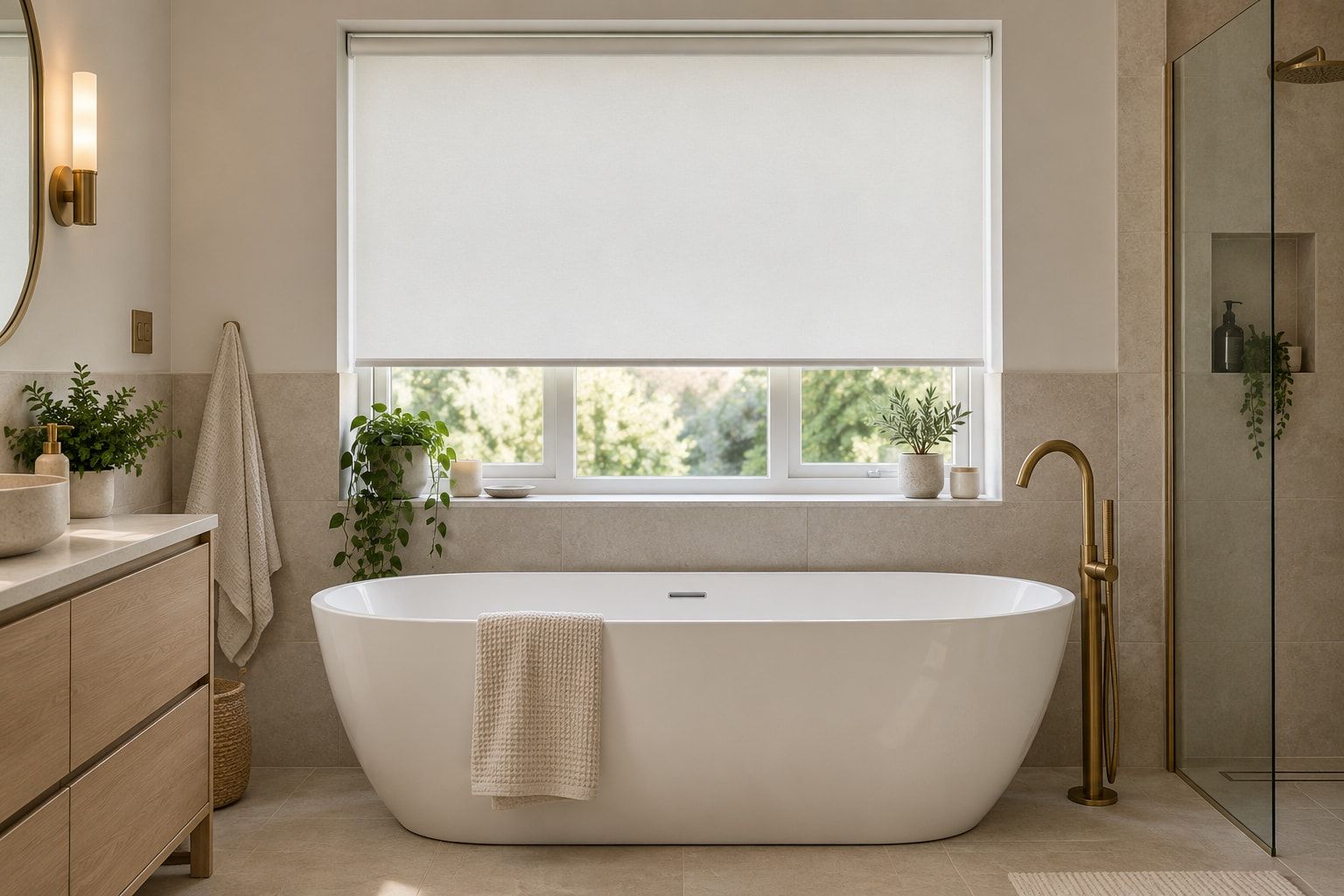
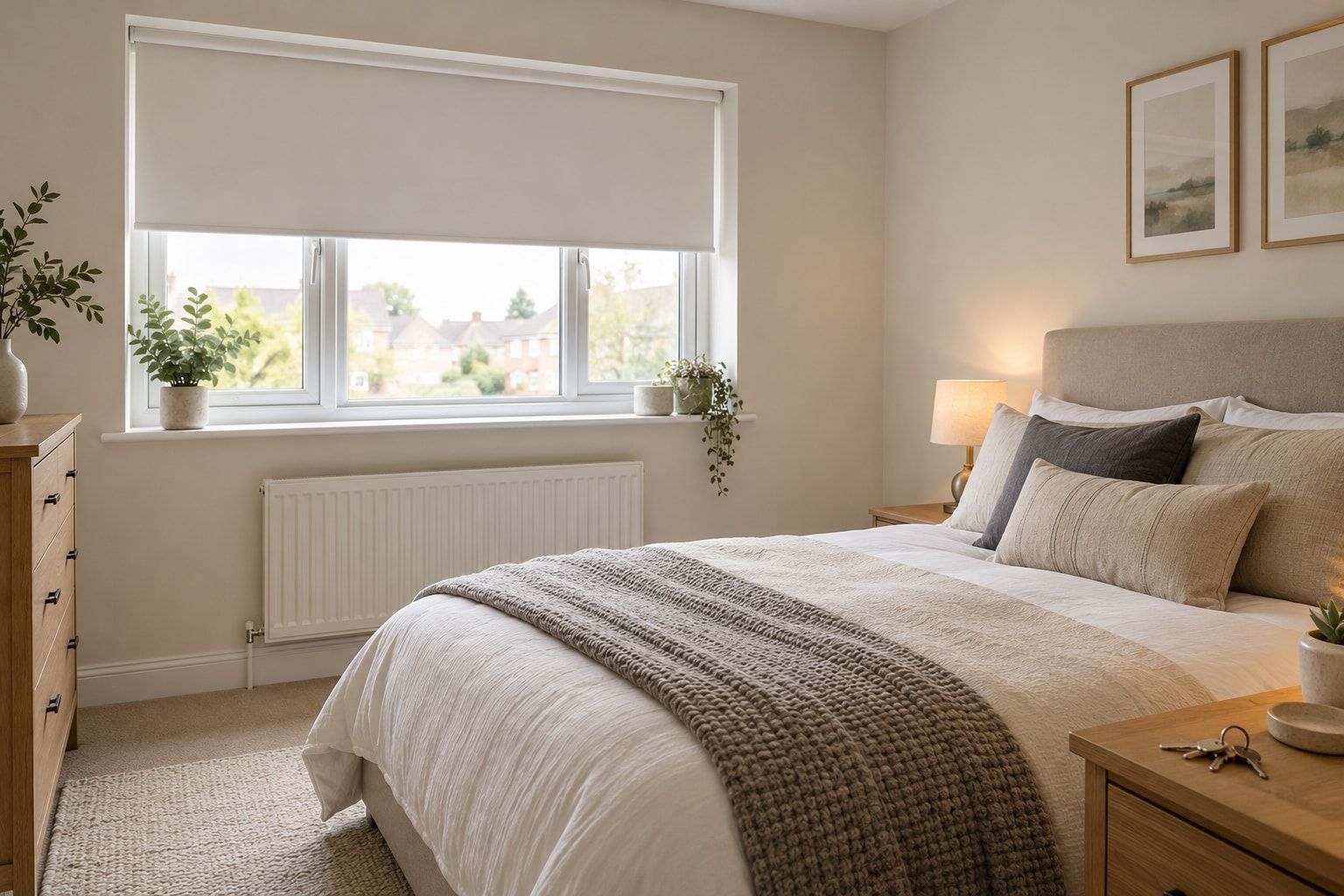
A waterproof roller blind is the safest all-round choice for a bathroom. The fabric is PVC or a wipe-clean waterproof material, so water sits on the surface rather than soaking in. It won’t warp or sag, and you can wipe it clean in seconds.
They’re simple to live with, too. Lower it for privacy, raise it for daylight, and it rolls up neatly out of the way. If your window sits inside a shower enclosure, a waterproof roller is the only blind we’d suggest, and we’ll look carefully at the position when we visit. Sometimes frosted glass on its own is the more sensible answer there, and we’ll tell you if we think so.
The trade-off is light control. A roller blind is up, down or somewhere in between, so you can’t angle the light the way you can with slats.
Faux wood Venetian blinds
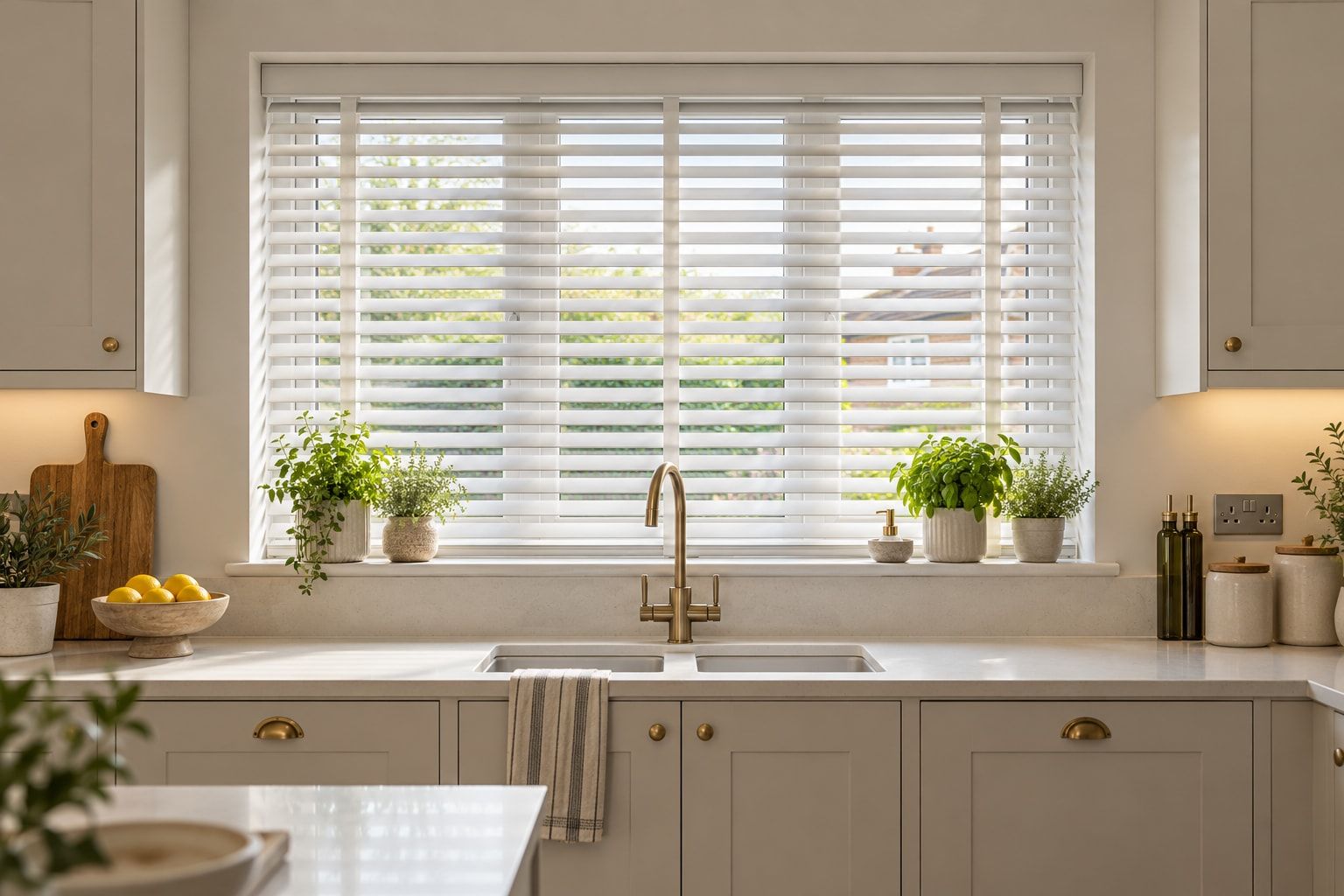
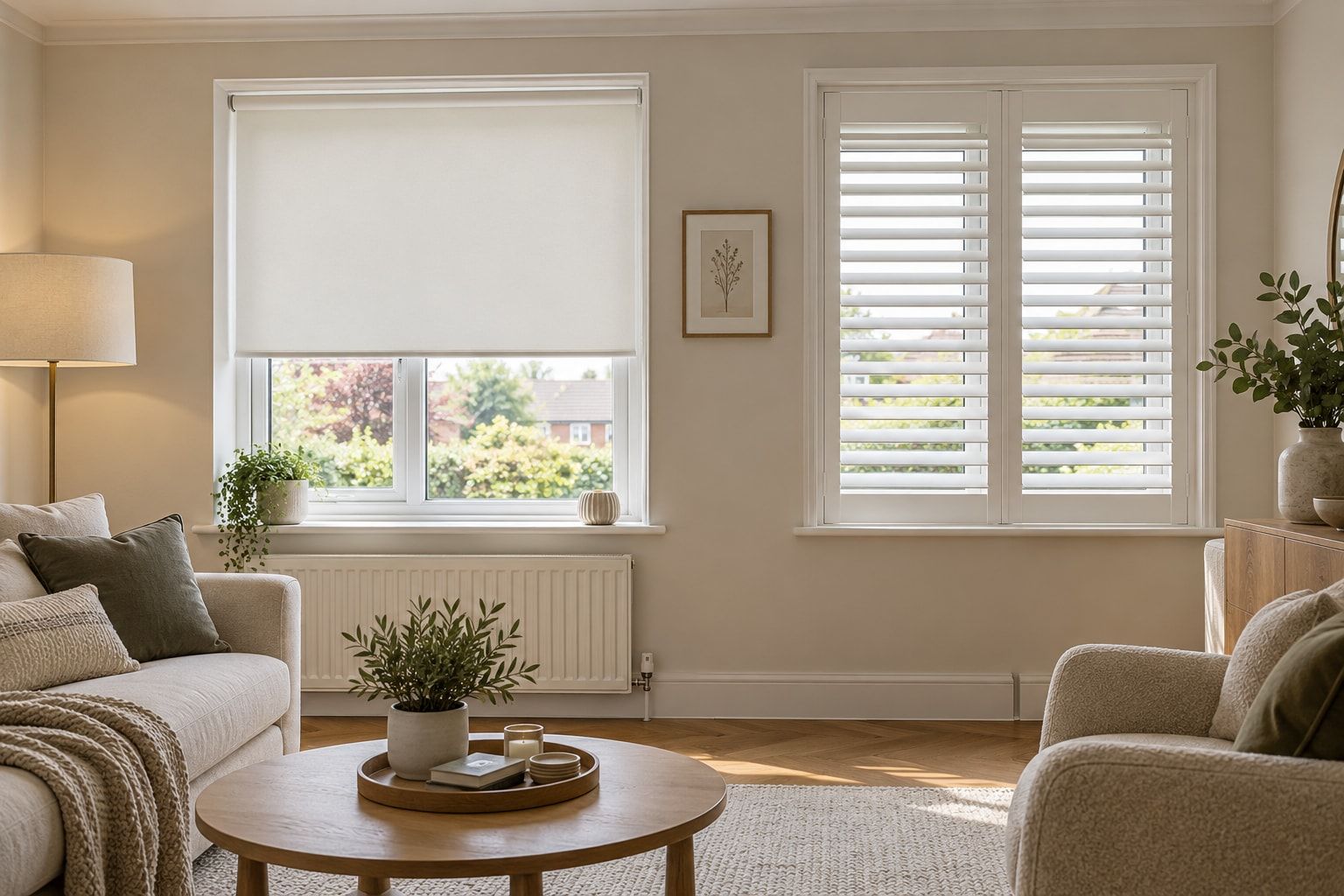
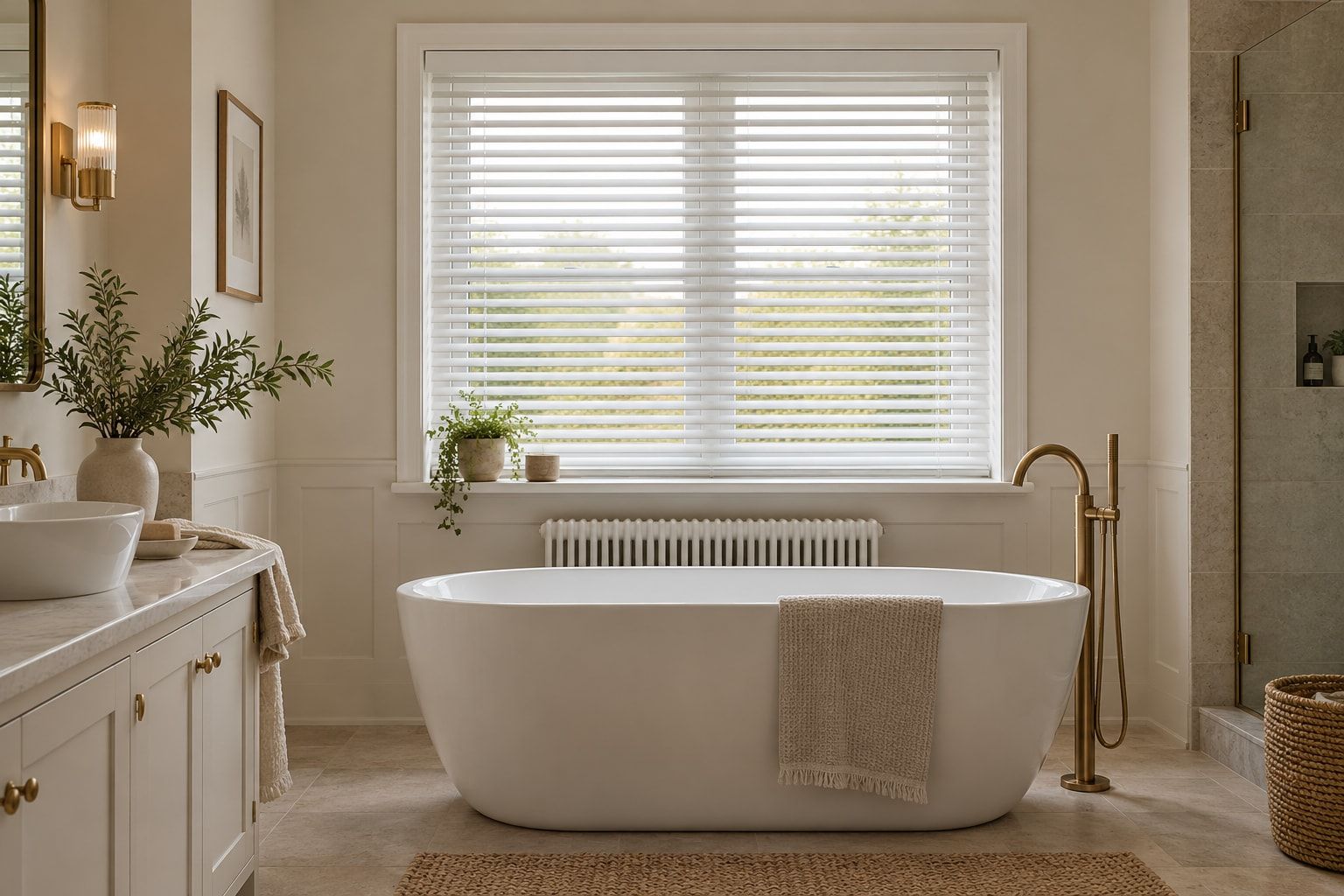
If you love the warmth of wood, faux wood Venetian blinds give you the look without the risk. The slats are made from a moisture-resistant material rather than real timber, so they stay straight in a steamy room where a wooden blind would bow.
Their big strength is control. Tilt the slats and daylight comes in while the room stays private, which is ideal for a bathroom that faces the street or overlooks a neighbour’s garden. Tilt them open after a shower and air moves freely between the slats, which helps everything dry faster.
The downside is cleaning. Slats catch dust, and in a bathroom that dust can mix with steam and hairspray. A quick wipe along each slat every so often keeps them looking fresh, but it takes longer than wiping a roller blind.
Perfect Fit blinds
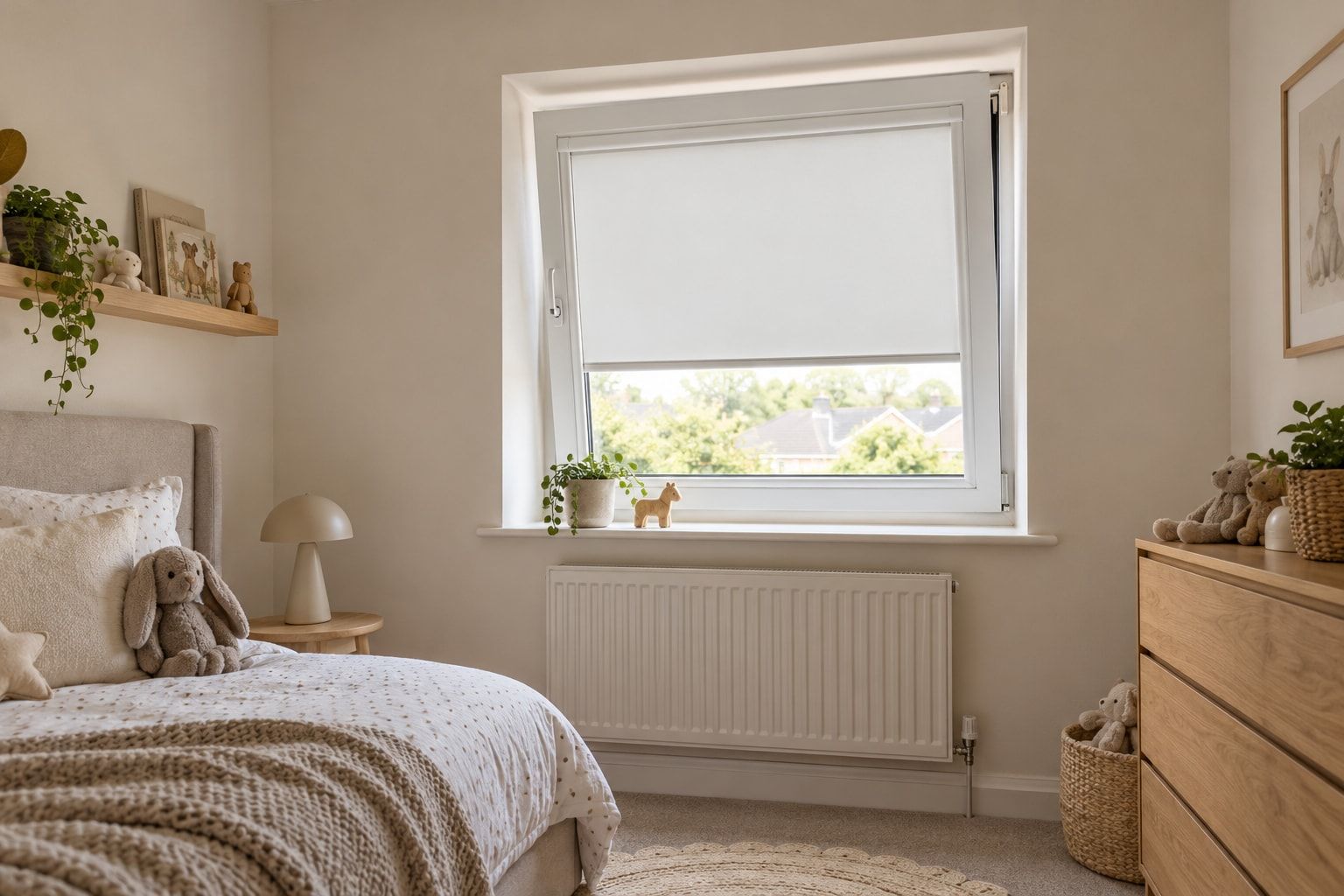
Lots of bathrooms have uPVC windows that tilt in or open out for ventilation. Perfect Fit blinds are made for exactly these. The blind sits in a slim frame that clips into the window’s glazing beads, so there’s no drilling at all. That’s a real advantage when your window recess is tiled and you’d rather not risk cracking a tile.
Because the blind is part of the window, it moves with it. You can open the window to let the steam out while the blind stays closed for privacy. There are no loose cords, and the frame holds the blind close to the glass so it doesn’t flap about in a draught. We’ll recommend a fabric that suits a humid room when we visit.
Perfect Fit only works on uPVC windows with suitable beads, so we’ll check yours when we measure.
Your options at a glance
| Waterproof roller | Faux wood Venetian | Perfect Fit | |
|---|---|---|---|
| Copes with steam | Yes, fully waterproof | Yes, moisture-resistant | Yes, with a suitable fabric |
| Direct splashes | The best choice | Occasional splashes are fine | Keep away from spray |
| Light control | Raise or lower | Tilt for light and privacy | Raise or lower |
| Cleaning | Wipe in seconds | Wipe slat by slat | Wipe or dust gently |
| Drilling needed | Yes | Yes | No |
| Best for | Windows over the bath or in the shower | Street-facing windows, a wood look | uPVC tilt windows, tiled recesses |
What to avoid in a steamy bathroom
Honest advice means telling you what not to buy, too.
- Real wooden Venetian blinds. Real wood is beautiful in a living room or bedroom, but it takes on moisture. In a steamy bathroom the slats can warp, split or discolour. Choose faux wood instead.
- Standard fabric roller blinds. Ordinary fabrics absorb moisture, so they tend to sag, crease and go mouldy along the bottom edge.
- Roman blinds and lined fabrics. Soft folds and linings hold water and take a long time to dry. They’re lovely elsewhere in the house, but not next to a bath or shower.
None of these are bad blinds. They’re just in the wrong room.
Getting the fit right
Where and how a blind is fitted matters as much as what it’s made of.
- Leave room for air. A blind pressed tight against wet glass stays damp. A small gap between the blind and the window lets air circulate and helps it dry.
- Think about the windowsill. If your sill collects bottles and condensation, a blind that stops just above it stays drier and cleaner.
- Check how the window opens. Many bathroom windows tilt inwards or open outwards. We make sure the blind won’t clash with the handle or stop the window opening, which matters when ventilation is so important.
- Frosted glass still needs a blind. Obscured glass hides detail in the daytime, but with the light on at night it can still show silhouettes from outside. A blind gives you proper privacy after dark.
Keeping a bathroom blind fresh
A little routine care goes a long way.
- Ventilate. Run the extractor fan during and after a bath or shower, or open the window. No blind is mould-proof in a room that never dries out.
- Leave roller blinds down to dry. Rolling up a damp blind traps moisture inside the roll. Leave it lowered until it’s dry, then raise it.
- Tilt slats open. After a shower, angle faux wood slats open so air can flow through.
- Wipe regularly. Use a soft cloth and warm, mildly soapy water, then dry with a clean cloth. Avoid bleach and abrasive cleaners, which can damage the surface.
So which should you choose?
If your window is over the bath or inside the shower, go for a waterproof roller. If it faces the street and you want daylight and privacy at the same time, a faux wood Venetian is hard to beat. If you have a uPVC tilt window or a tiled recess you don’t want to drill, Perfect Fit is the neatest answer. Plenty of homes end up with a mix, with one style in the main bathroom and another in the en-suite.
Kitchens face many of the same challenges, so if you’re doing both rooms, our guide to choosing blinds for your kitchen is worth a read. And if you’d like an expert eye on your own bathroom, book a free home visit. Our fitters will measure your windows, bring samples you can see against your tiles, and give you a quote with no obligation. Fitting is included in your quote.
Questions
Do waterproof blinds only come in white?
No. White is a popular choice for bathrooms, but there's a choice of colours and finishes. We bring samples to your home visit so you can see them against your own tiles and in your own light.
Can you fit a blind in a small en-suite or cloakroom window?
Yes. Every blind we supply is made to your exact measurements, so even a narrow or awkwardly placed window gets a blind that fits properly. We measure every window ourselves at the free home visit.
Will you fit a bathroom blind I've bought online?
Yes, we'll fit blinds you've bought online or elsewhere. If we think a blind won't cope with the steam in your bathroom, we'll tell you honestly before we put it up.