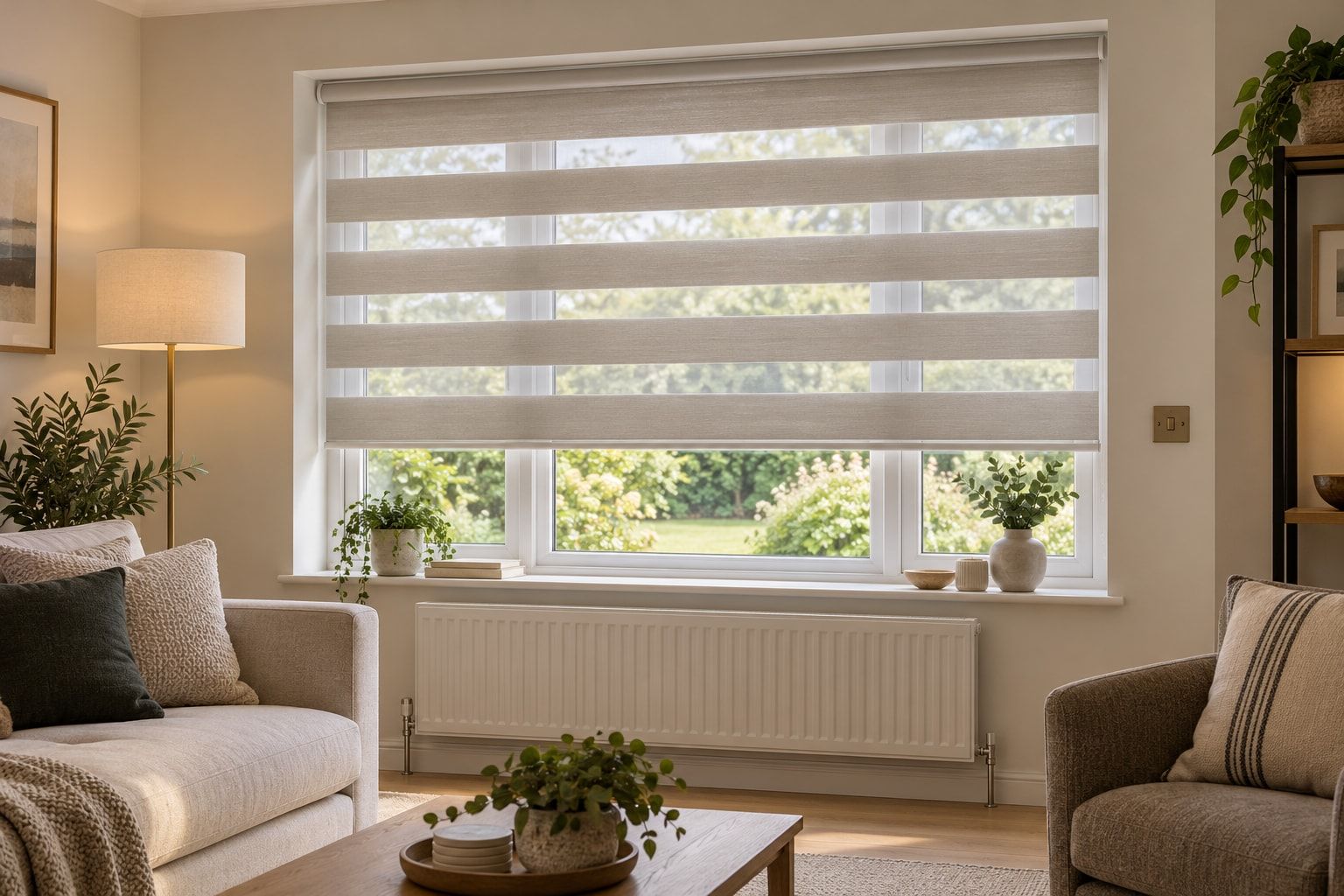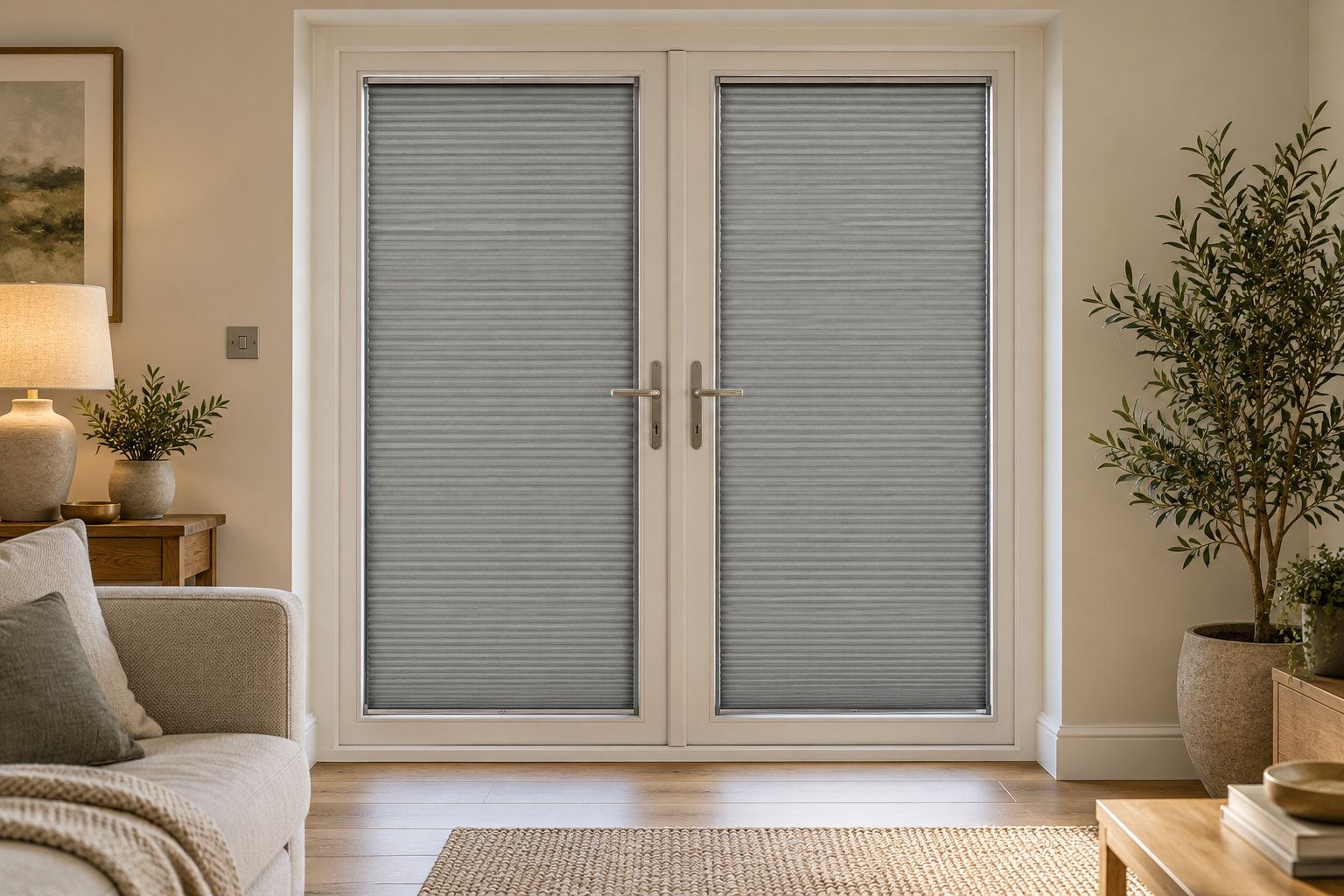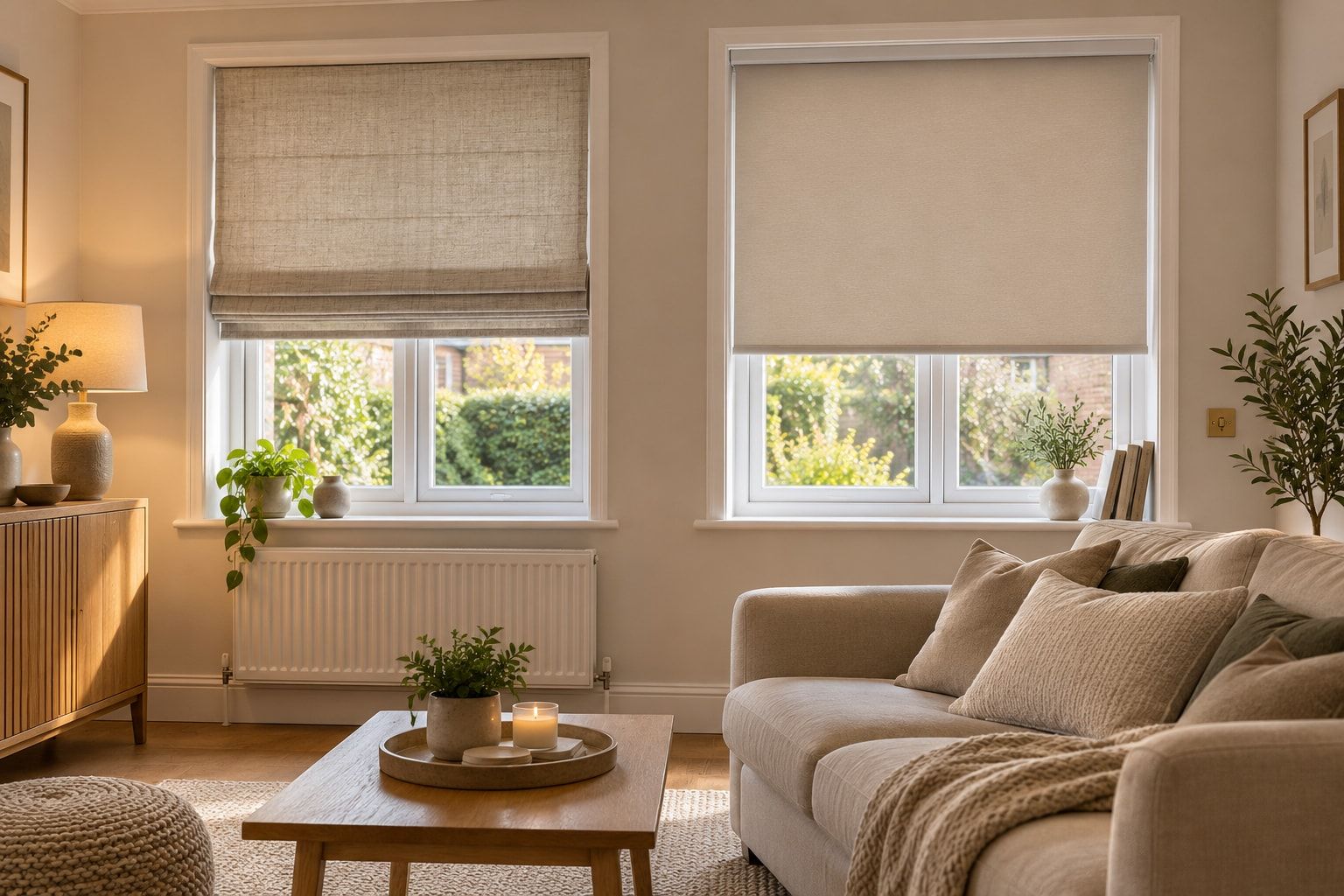
Roman and roller blinds are the two blinds we’re asked about most, and they’re often the last two left on the shortlist. Both are made to measure, both come in a wide range of fabrics, and both can be made to block out light. The difference is in how they look, how they feel in a room and how they cope with everyday life.
The short answer is this. A Roman blind brings softness and warmth, and suits living rooms, bedrooms and dining rooms. A roller blind is simpler, slimmer and more practical, and suits kitchens, bathrooms, home offices and small windows. Most homes end up with some of each. Here’s the detail to help you decide, room by room.
Roman and roller blinds side by side
| Roman blinds | Roller blinds | |
|---|---|---|
| Look | Soft, tailored folds of fabric, closer to a curtain | Flat, clean and minimal |
| Fabrics | Curtain-style fabrics, including rich textures and patterns | Blind fabrics from light-filtering to blackout, plus wipe-clean finishes |
| Linings | Standard, thermal or blackout linings | The fabric itself sets the light level |
| When raised | Folds stack at the top and can cover part of the glass | Rolls up tightly and takes almost no space |
| Warmth | Fabric plus lining makes a thick, cosy layer | Thermal and blackout fabrics help, but it’s a single layer |
| Steam and splashes | Best kept away from them | Wipe-clean and waterproof options available |
| Depth needed | Sits further forward from the window | Very slim, so it suits shallow recesses |
| Child safety | Meets BS EN 13120, with secured controls | Meets BS EN 13120, with cordless and secured-chain options |
Where Roman blinds work best
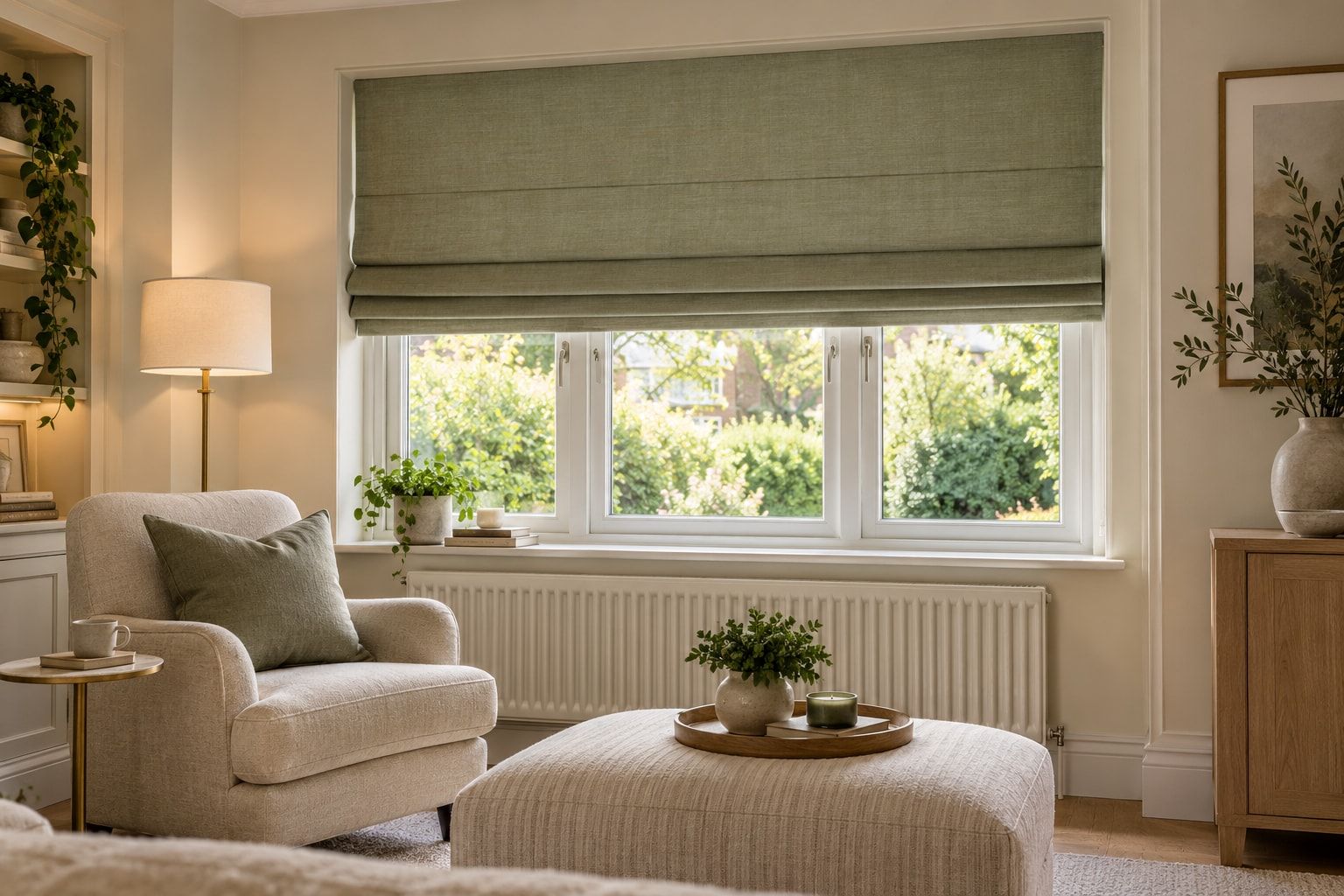
A Roman blind is made from a single piece of fabric that folds into neat, horizontal pleats as you raise it. Lowered, it hangs flat with gentle lines across it. Raised, it forms a soft stack of folds at the top of the window. It brings much of the comfort of a curtain, in a tidier package.
Romans are at their best in:
- Living rooms and dining rooms, where you want the window to feel finished and inviting.
- Bedrooms, especially with a blackout lining for darker mornings.
- Period homes, where soft fabrics suit the character of the rooms.
- Windows with a radiator or window seat underneath, where long curtains aren’t practical.
The fabric is a big part of the appeal. Because Romans use curtain-style fabrics, you can pick up a colour from your cushions, or choose a pattern that would feel too busy as a pair of full-length curtains.
The trade-offs
Romans aren’t right for every window, and it’s better to know that before you choose.
- The stack takes up space. When fully raised, the folds still cover the top of the glass unless the blind is fitted above the window. On a short window, that can mean losing a little daylight.
- They sit further into the room. The folds need more depth than a roller, so we check window handles and windowsill clearance when we measure.
- They don’t like steam. A Roman can work in a well-ventilated kitchen away from the sink and hob, but it isn’t the right choice above a sink or in a bathroom.
- They’re more involved to make. A Roman uses more fabric, a lining and more making time than a roller, and that’s reflected in the quote.
- Very wide windows are sometimes better split into two Roman blinds, so each one stays easy to raise and folds neatly.
Where roller blinds work best
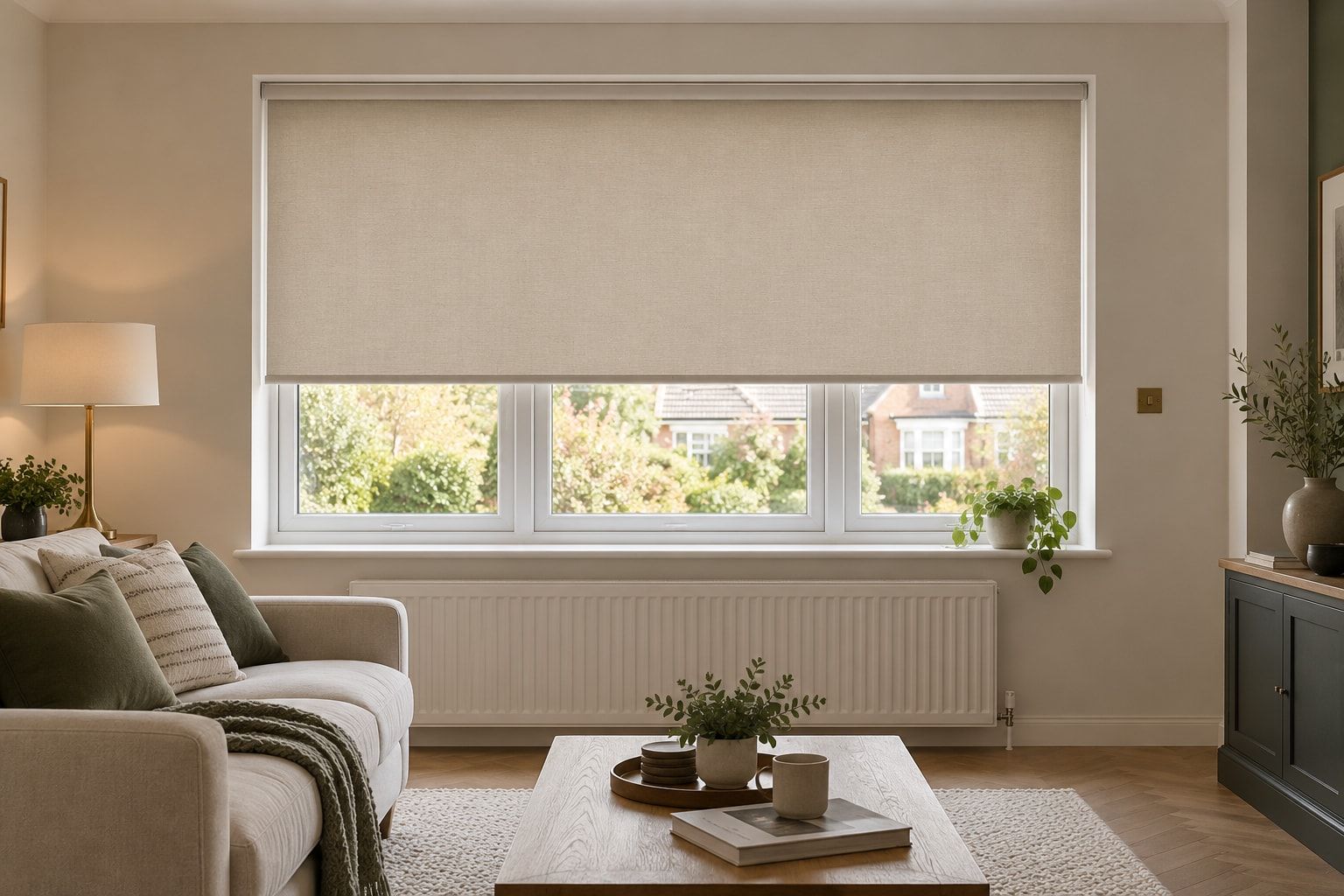
A roller blind is a single panel of fabric that winds onto a slim tube at the top of the window. It’s the simplest blind there is, and that’s its strength. It takes up almost no room when raised, so you get all your daylight back.
Rollers come into their own in:
- Kitchens, with wipe-clean and moisture-resistant fabrics.
- Bathrooms, where our waterproof blinds are made to cope with steam and splashes.
- Home offices, where a dim-out fabric cuts glare on screens.
- Small or shallow windows, where a Roman’s folds would feel bulky.
- Behind curtains, where a slim blind does the daytime work and the curtains provide the softness.
There’s a huge choice of fabrics too, from crisp plains to bold prints, and from light-filtering weaves to full blackout.
The trade-offs
- The look is simpler. In a formal living room, a plain roller can feel a little bare on its own, although it works beautifully paired with curtains.
- It’s a single layer. A thermal or blackout fabric helps, but a roller won’t feel as thick and cosy as a lined Roman.
- The fabric is on show. With no folds to break it up, a flat roller shows off a pattern well, but it also makes a plain fabric look very plain. Seeing samples at the window helps.
Light control and blackout
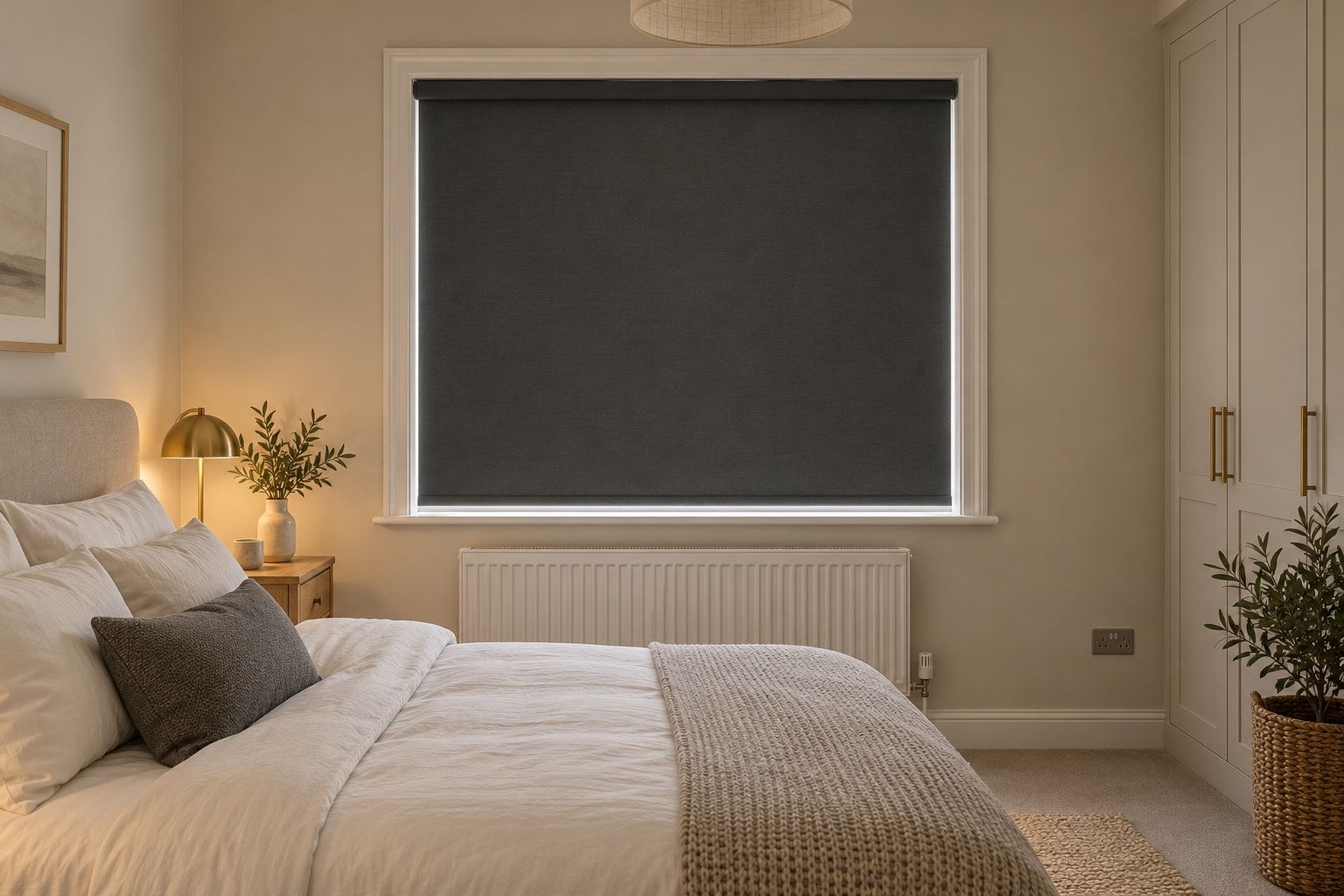
If you need a dark room, both can do it. A roller blind uses a blackout fabric, while a Roman pairs its face fabric with a blackout lining behind it.
What neither can do inside a recess is seal the edges completely. There’s always a small gap at each side, and a little light will find its way around. If darkness matters most, ask us about fitting the blind outside the recess so it overlaps the frame, or adding curtains in front.
For daytime privacy, the two behave differently. Roman blinds are lined, so they’re usually lowered in the evening rather than left down all day. If you want privacy with plenty of daylight, a light-filtering roller fabric is the better tool.
Warmth
If you’re choosing for a cold room, a Roman with a thermal lining gives you a thick, cosy layer at the window. A roller in a thermal or blackout fabric helps too, just a little less. Our guide to whether blinds can help keep your home warmer goes into more detail.
Using both in the same home
You don’t have to pick one for the whole house. A common, very effective approach is:
- Roman blinds in the living room and main bedroom, for softness and warmth.
- Roller blinds in the kitchen, bathroom, home office and children’s rooms, for practicality.
- Colours that work together, so the house still feels joined up, inside and from the street.
You can even use both at the same window. In a deep enough recess, a blackout roller can sit behind a decorative Roman, giving you the look of the Roman and the darkness of the blackout roller. We’ll check whether your recess has the depth for it when we measure.
A quick way to decide
Ask yourself these questions for each room:
- Does the window get steam or splashes? If so, choose a roller.
- Do you want the window to feel soft and dressed, or clean and minimal? Soft points to a Roman, minimal to a roller.
- Is there room above the window for the folds of a Roman? If not, a roller keeps the glass clear.
- Do you need a dark room? Either works, with a blackout fabric or lining.
- Is the window small or shallow? A roller usually looks neater.
If you’re still torn, that’s exactly what the home visit is for. Seeing both in your own room, in your own light, usually settles it quickly.
Book a free home visit and we’ll bring Roman and roller blind samples to your home, measure every window and give you honest advice on which suits each room. The quote is free with no obligation, and fitting is included in your quote.
Questions
Are Roman blinds harder to look after than roller blinds?
A little. Roman blinds are made from softer, curtain-style fabrics, so they're best kept fresh with a gentle vacuum using a brush attachment, and spot-cleaned when needed. Roller blinds can be made in wipe-clean fabrics, which makes them the easier choice for busy rooms.
Which is better for a child's bedroom?
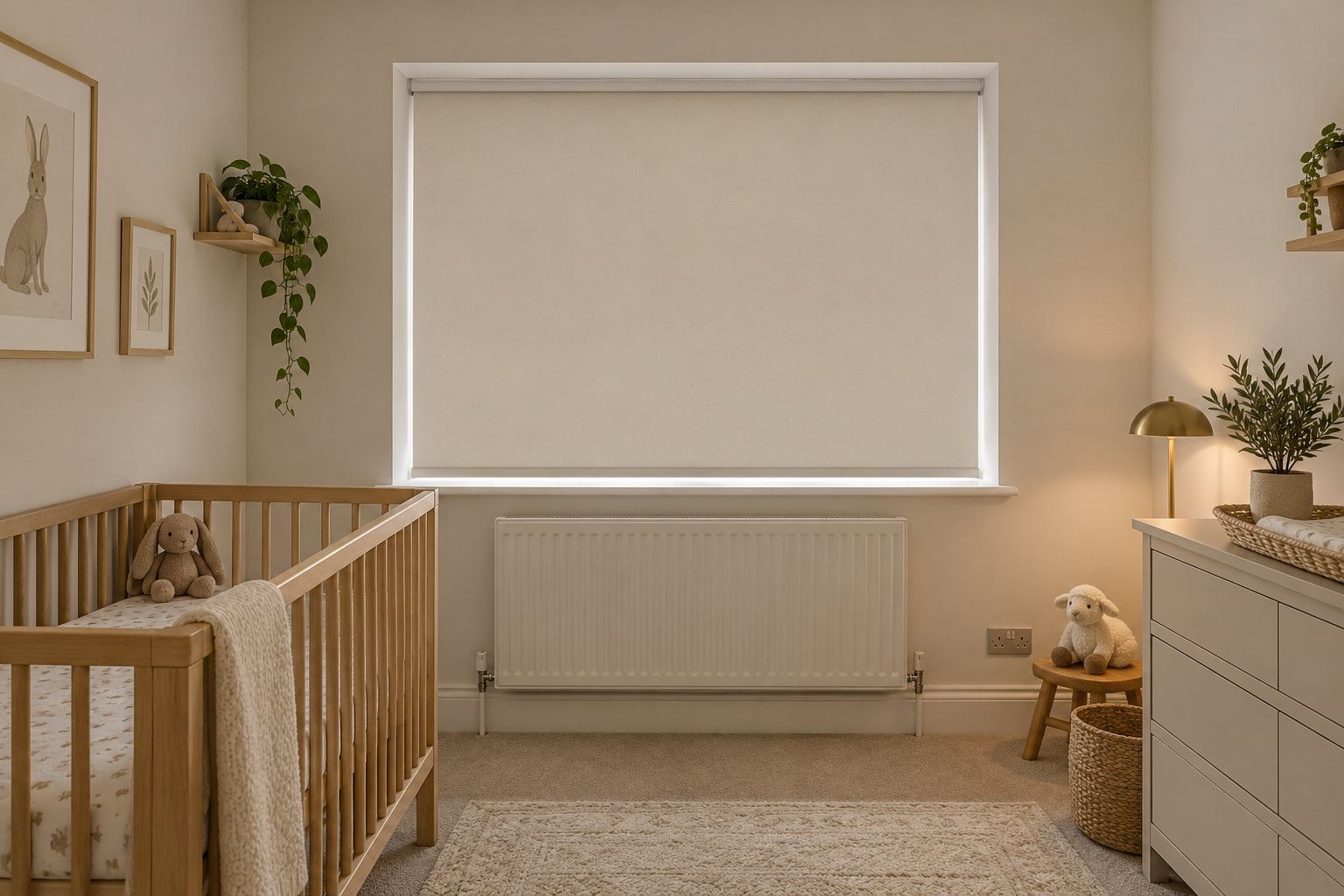
Both work well. A cordless roller blind is the simplest choice, with no chain at all, while a Roman blind with a blackout lining gives a softer look. Every blind we fit meets the UK child-safety standard, BS EN 13120, with cordless and secured-chain options.
Can I have a Roman or roller blind on a tilt-and-turn window?
Yes, but it needs to be fitted high enough to clear the window when it opens inwards. If you tilt your windows open often, a Perfect Fit blind, which clips into the frame and moves with the window, is usually the easier option.