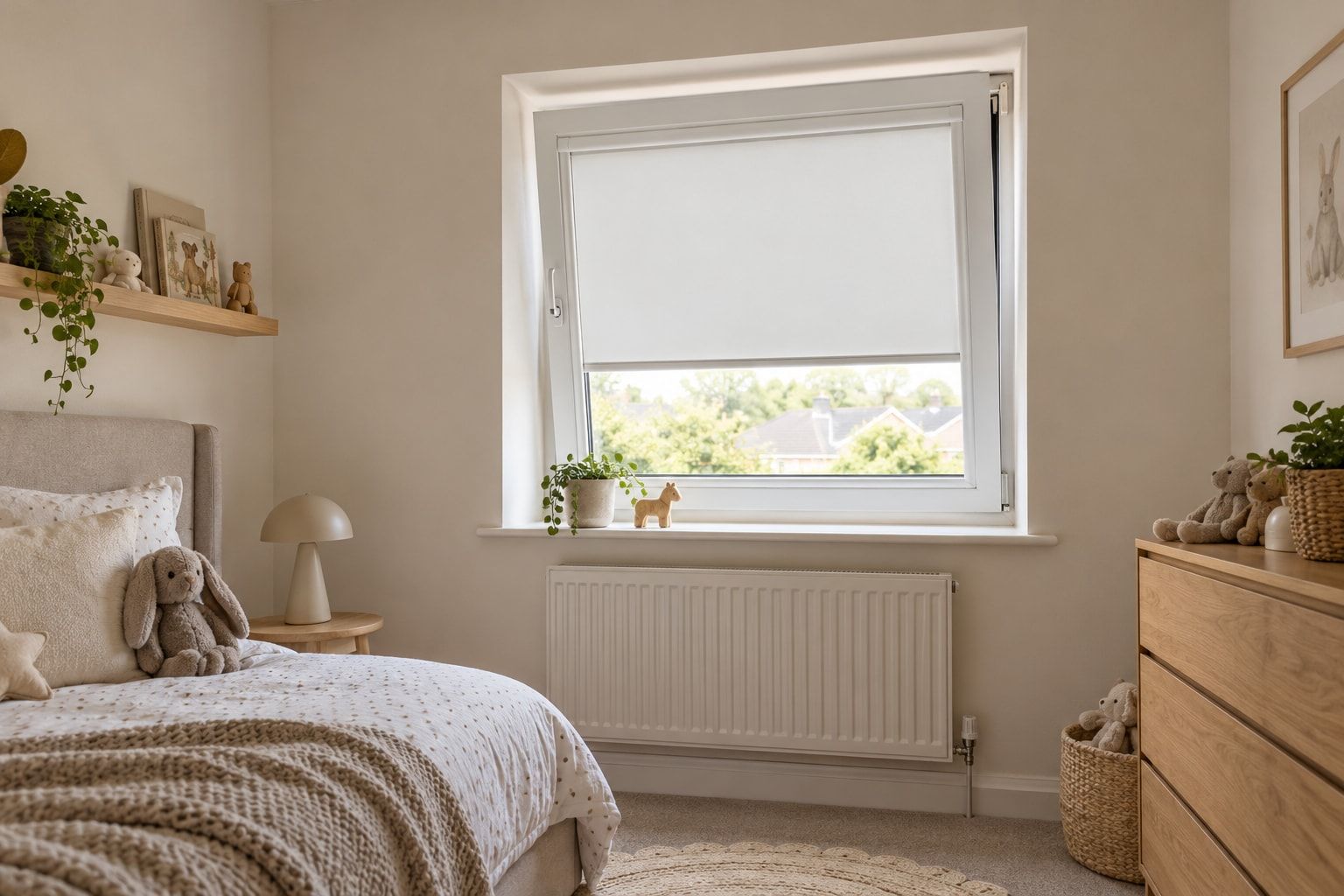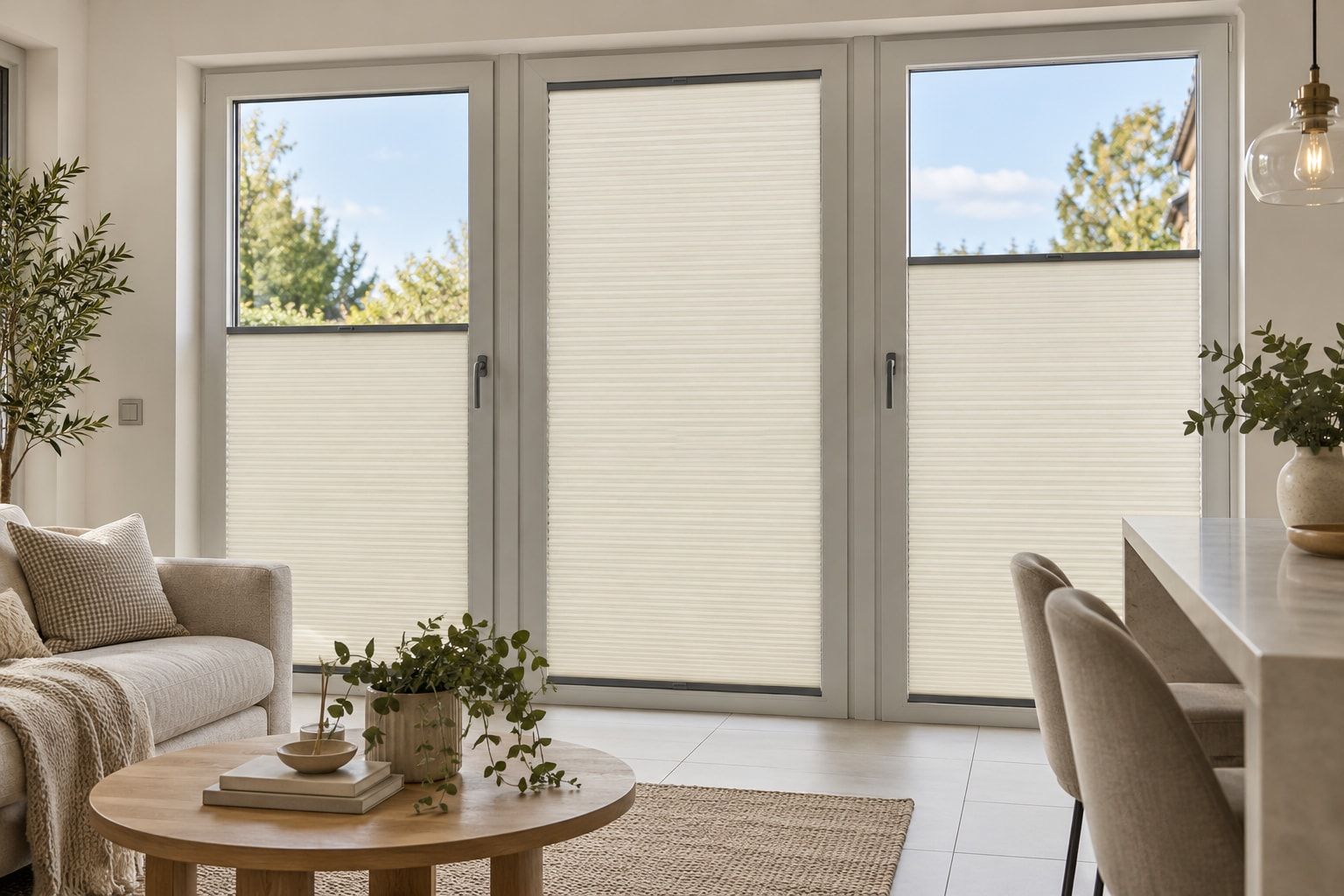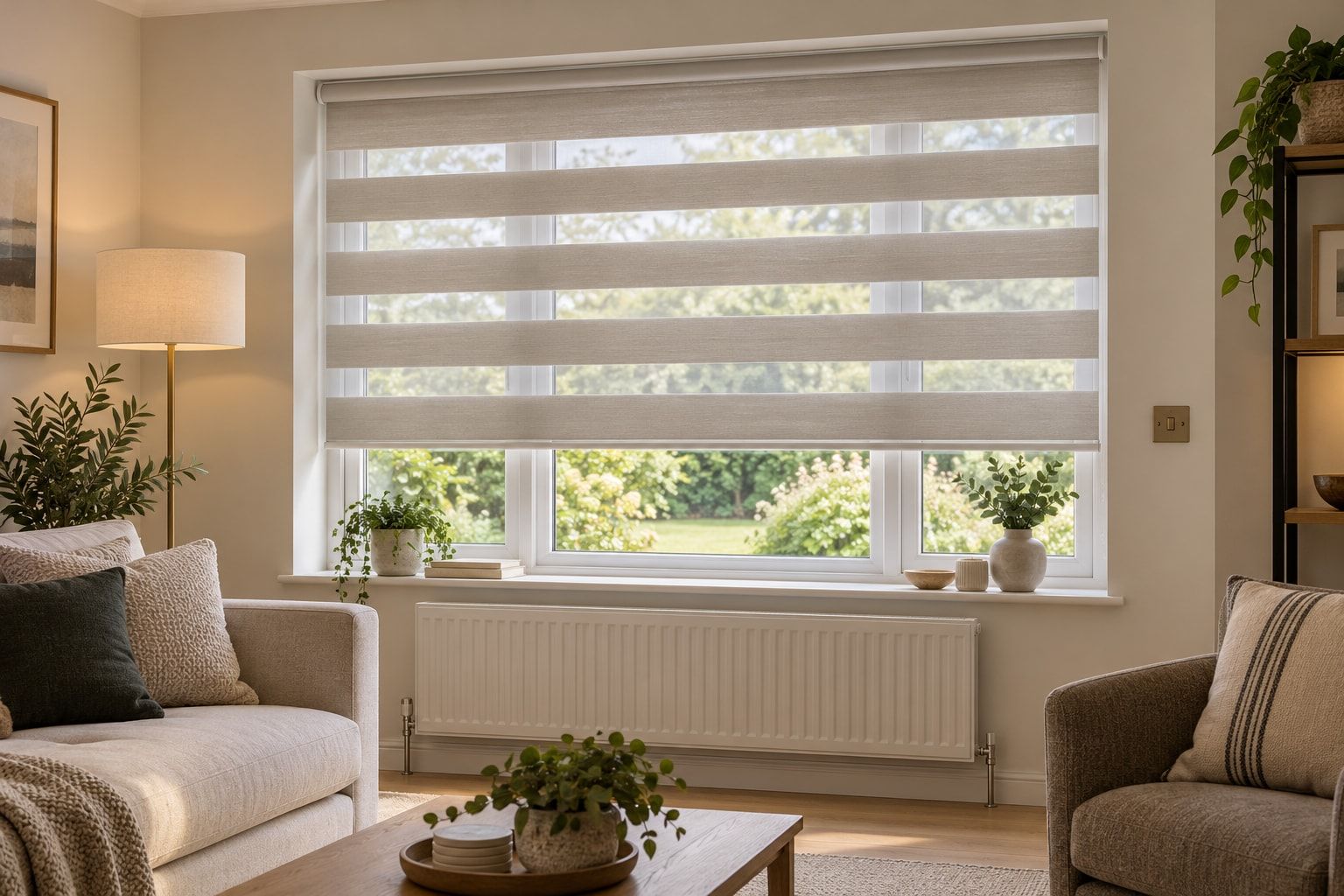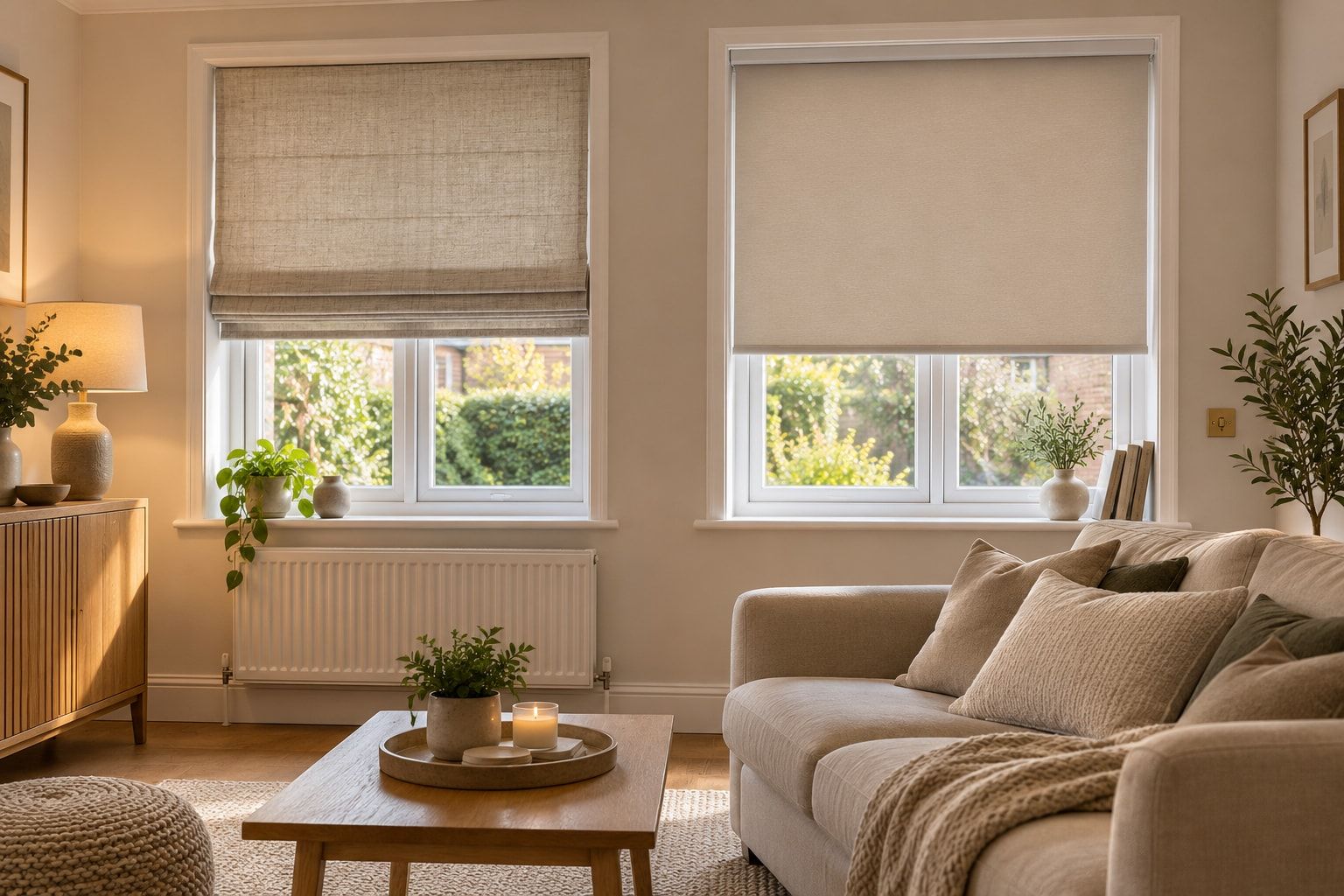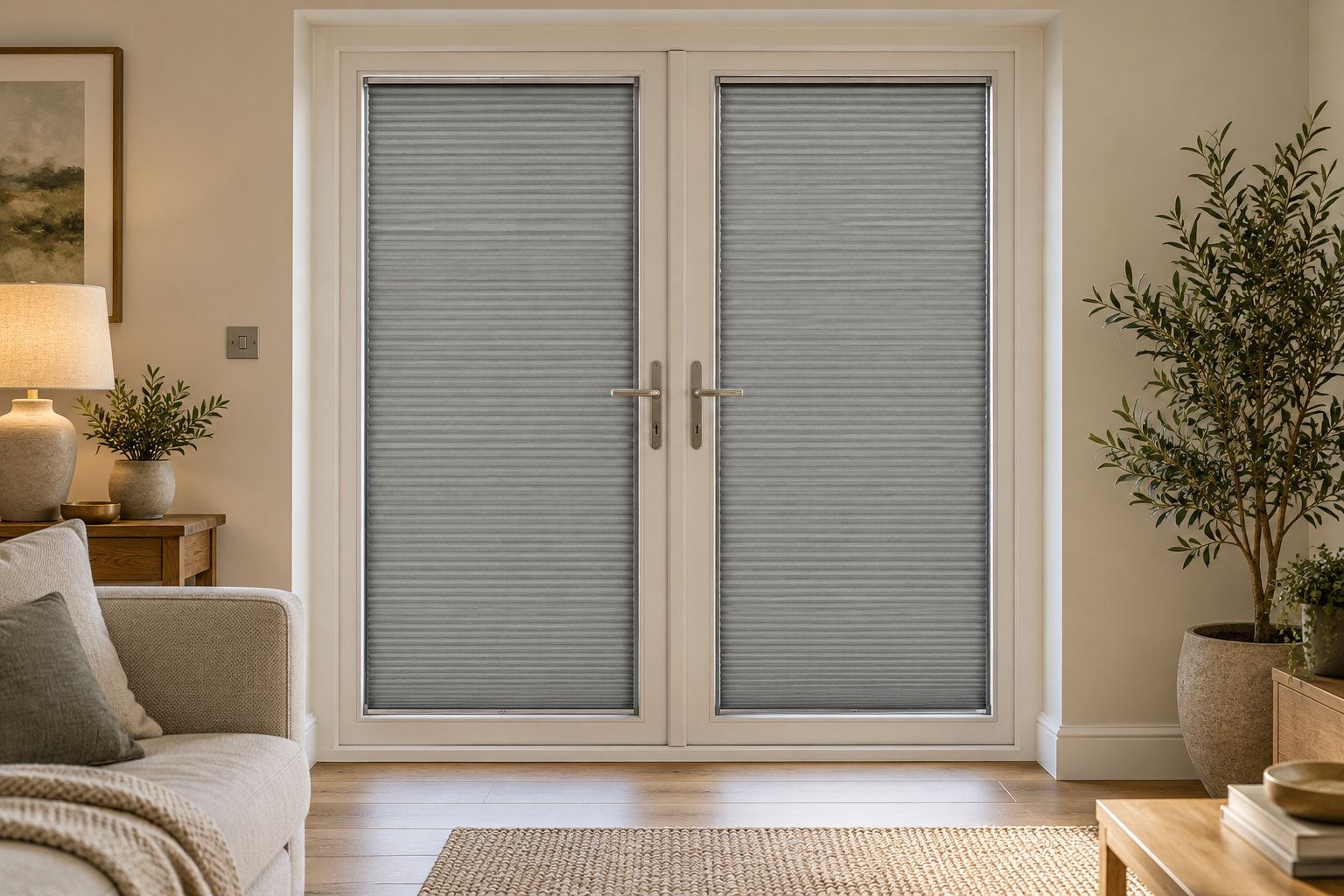
If you have uPVC windows or doors, Perfect Fit blinds are worth knowing about. Instead of hanging from the wall or the top of the recess, they clip into the window frame itself. That means no drilling, no loose cords and a blind that stays put when you open the window.
They’ve become a go-to choice for tilt-and-turn windows, French doors and children’s bedrooms. But they’re not right for every window, and we’d rather you knew that before you choose. Here’s what they are, how they work, and who they suit.
What is a Perfect Fit blind?
A Perfect Fit blind is a blind held inside a slim frame that sits within the glass area of a uPVC window or door. Small brackets slot in behind the window’s glazing beads, the plastic strips that hold the glass in place, and the frame clips onto those brackets. There are no screws and no drill holes.
Because the blind is attached to the opening part of the window, it moves with it. Tilt a tilt-and-turn window open and the blind tilts too. Open a French door and the blind goes with it. Nothing swings, catches or flaps in the breeze.
The styles available
We fit Perfect Fit blinds in two main styles.
- Pleated. Crisp, folded fabric that packs into a slim stack at the top of the frame. You move it by hand using a small handle on the rail, so there’s nothing to pull. If you’d like pleated blinds on windows that aren’t uPVC, take a look at our standard pleated blinds.
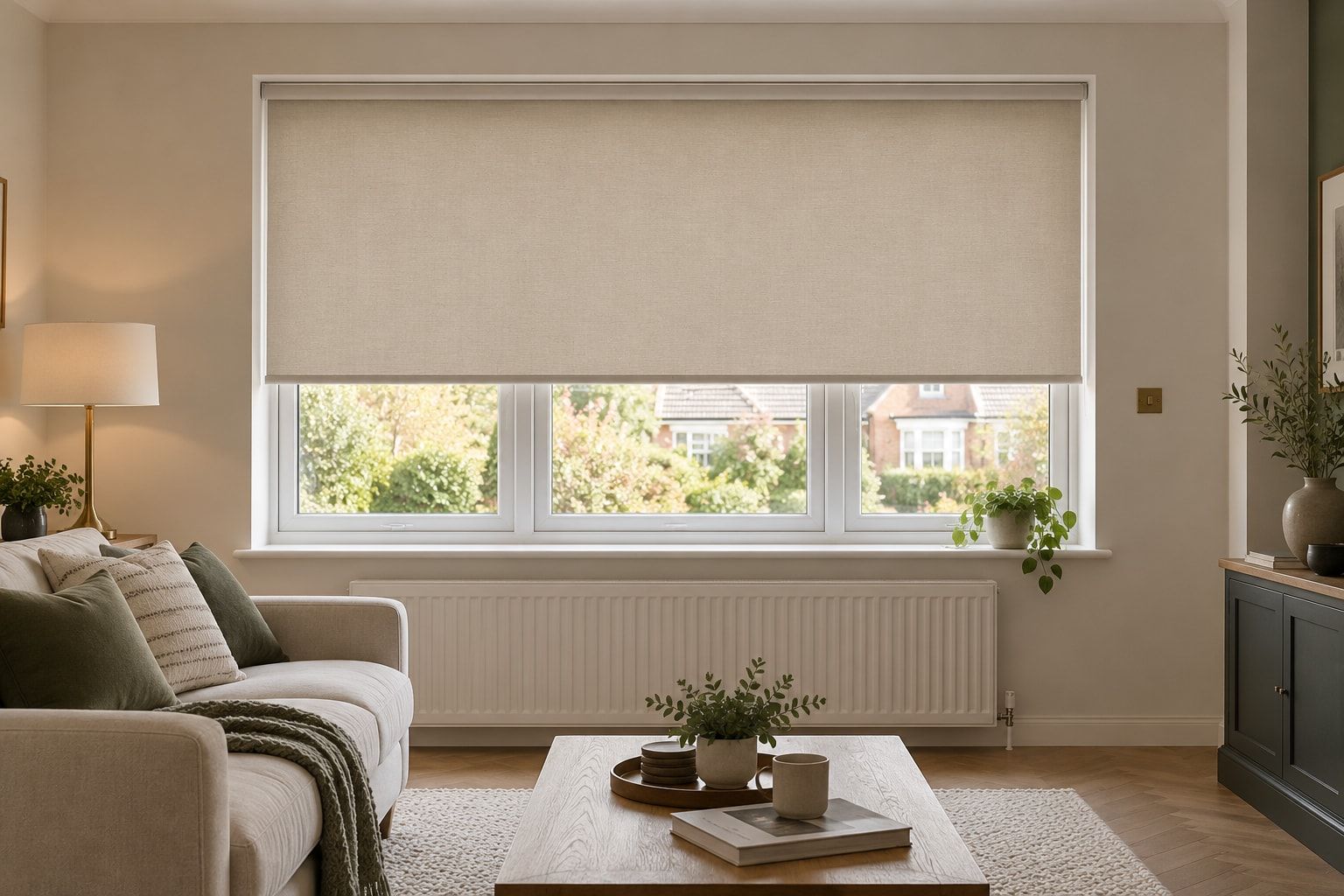
- Roller. A simple roller blind in a slim frame. It’s ideal if you like the clean look of a roller blind but need it to work with an opening window.
Both come in a choice of fabrics, from light-filtering to blackout, and we’ll show you frame colours to suit your windows at your visit.
Why people choose Perfect Fit
No drilling
Nothing is screwed into your walls, recess or window frame. That’s ideal for new windows you’d rather not drill, tiled recesses in bathrooms and kitchens, and rented homes, with your landlord’s agreement. It’s tidy, too: no dust and no filling holes later.
It works with opening windows
This is the big one. A standard blind fitted in the recess can stop a tilt-and-turn window opening inwards, or swing about when the window tilts. A Perfect Fit blind moves with the window, so you can open it for fresh air with the blind still down.
No loose cords
There’s nothing dangling, which makes Perfect Fit a sensible option for children’s bedrooms and family rooms. Like all our blinds, they meet the UK child-safety standard (BS EN 13120).
A neat, close fit
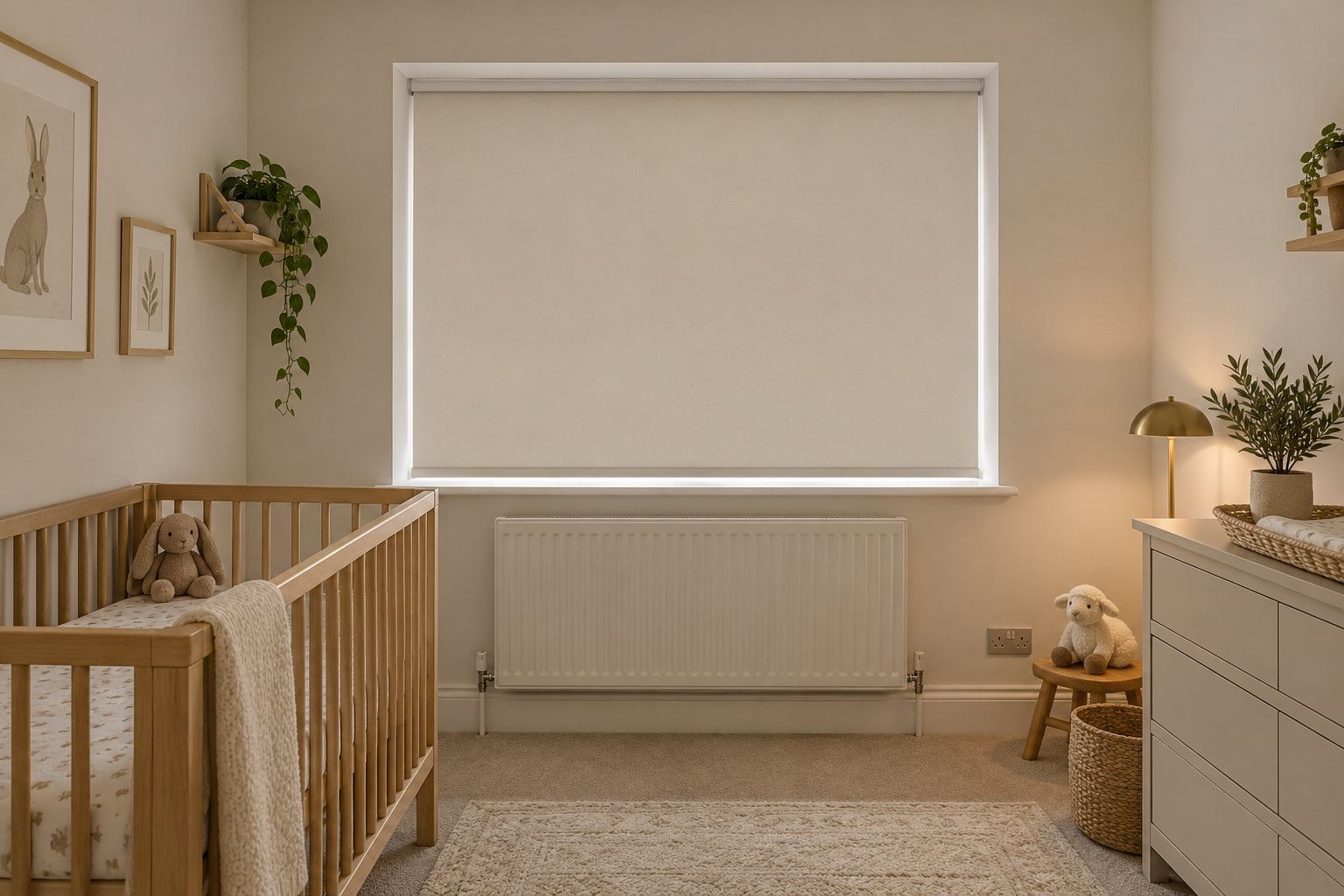
The frame holds the blind close to the glass, so there’s very little gap round the edges for light to sneak through. With a blackout fabric, that makes a noticeably darker room. The blind also stays tidy when the window is open, rather than billowing in a draught.
A clear windowsill
Because the blind sits on the glass, the windowsill stays free for plants, photos or the washing-up liquid. Each pane has its own blind, so you can close some and leave others open.
Where Perfect Fit works best
- Tilt-and-turn windows in extensions, loft conversions and new builds.
- uPVC French doors and back doors, where a hanging blind would swing every time you go in and out.
- Bathrooms and kitchens, where recesses are often tiled and windows need to open for ventilation. Our guide to the best blinds for bathrooms has more on this.
- Children’s bedrooms, for the combination of no loose cords and good darkness.
- The upright windows and doors of uPVC conservatories. We don’t fit blinds for conservatory roofs.
Choosing fabric and frame colour
A few things are worth thinking about when you choose.
- Light level. Light-filtering fabrics soften the sun and give daytime privacy, which suits kitchens, living rooms and French doors. Blackout fabrics suit bedrooms and nurseries.
- Frame colour. A frame that matches your window frame blends in and looks part of the window. White frames suit white windows, and if yours are a different colour, we’ll show you what’s available.
- Consistency. Because every pane has its own blind, it’s worth using the same fabric across a room, or even a whole floor, so your windows look consistent from inside and out.
- Pleated or roller. On French doors, many people prefer pleated blinds, because the slim stack takes up very little of the glass when raised. On a single window, a roller gives a clean, simple look.
When Perfect Fit isn’t the right choice
We’d always rather be honest with you. Perfect Fit may not suit you if:
- Your windows aren’t uPVC. The system is designed for uPVC frames. Most timber, aluminium and steel windows aren’t suitable, so we’d recommend a standard blind instead.
- Your beads aren’t suitable. Some uPVC windows have glazing beads that are too shallow, or a shape the brackets can’t grip. We check every window when we measure, so you’ll know before you order.
- The window has lots of small panes. Each pane needs its own blind. On a wide window with several panes, that can look busier than a single blind across the whole recess, and you’ll have several blinds to open and close.
- You want a soft, decorative look. Perfect Fit blinds look crisp and practical. In a living room where you want softness, a Roman blind or curtains may suit you better.
- You’re replacing your windows soon. Each blind is made for a specific pane, so it’s worth waiting until the new windows are in.
Perfect Fit compared with a standard blind
| Perfect Fit blind | Standard blind in the recess | |
|---|---|---|
| Fixing | Clips into the glazing beads, no drilling | Screwed into the recess or wall |
| Windows it suits | uPVC windows and doors with suitable beads | Almost any window |
| Opening the window | Moves with the window | May need raising first, and can block tilt-and-turn windows |
| Cords and chains | No loose cords | Cordless or secured-chain options |
| Light at the edges | Very little, as the frame sits close to the glass | Small gaps at the sides of the recess |
| Look | Crisp and close to the glass, one blind per pane | One blind across the whole window |
| Styles | Pleated and roller | Every style we offer |
Why measuring matters so much
A Perfect Fit blind has to match its pane exactly. If the frame is even slightly out, it won’t sit snugly in the beads, or the blind won’t run smoothly. That’s why we measure every window ourselves rather than asking you to do it. Once your blinds are made, our fitters come back to fit them, which is quick and clean with no drilling. Fitting is included in your quote.
Is Perfect Fit right for your windows?
If you have uPVC windows and you’re wondering whether Perfect Fit is for you, the easiest way to find out is to let us take a look. Book a free home visit and we’ll check your windows, bring samples of pleated and roller fabrics, and give you honest advice and a quote with no obligation. If Perfect Fit isn’t the best fit for a particular window, we’ll tell you, and suggest something that is.
Questions
Can I take Perfect Fit blinds with me when I move house?
Each blind is made to fit one particular pane, so it will only fit a pane of exactly the same size and type. In most cases it's best to leave them for the new owners and choose new blinds for your next home.
Can I mix Perfect Fit blinds with other blinds in the same room?
Yes. A common example is Perfect Fit blinds on uPVC French doors with a roller blind on the window next to them. We can often match fabrics or colours across both, and we'll show you what's possible at your visit.
Do Perfect Fit blinds work on outward-opening windows?
Yes, as long as the window is uPVC with suitable beads. The blind is fixed to the opening part of the window, so it simply goes with it when you push the window open.