Venetian blinds with wood-look slats are a lovely way to dress a window. They give you precise control over light and privacy, with a warmth and character that suits almost any room, from a Victorian sitting room to a new-build kitchen.
The first decision is whether to choose real wood or faux wood. From across the room they can look very similar. Up close, and over years of daily use, they behave quite differently. Here’s how to choose between them.
The short answer
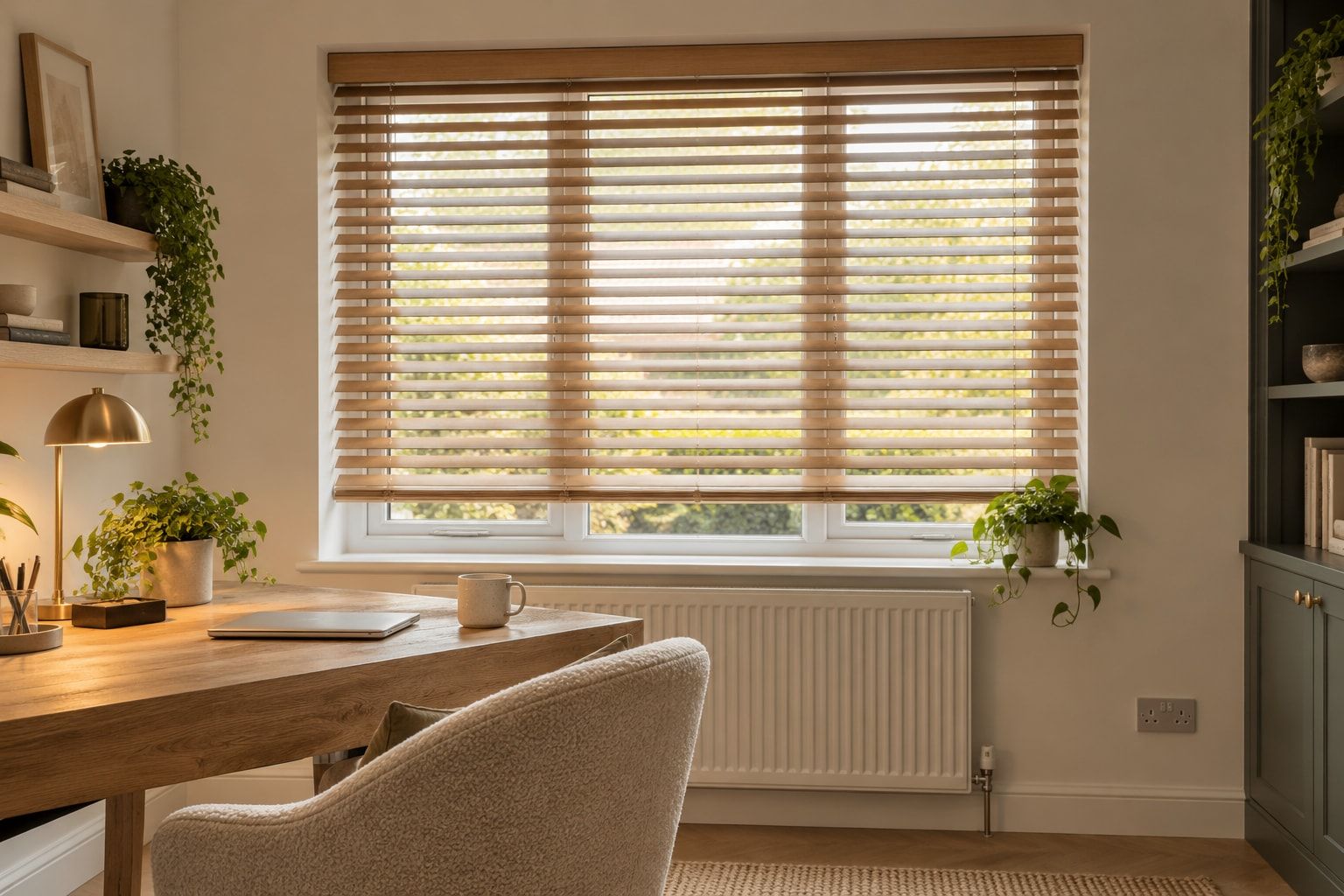
- Choose real wood for living rooms, bedrooms, dining rooms and studies. These are dry rooms where you’ll enjoy the natural grain and warmth every day.
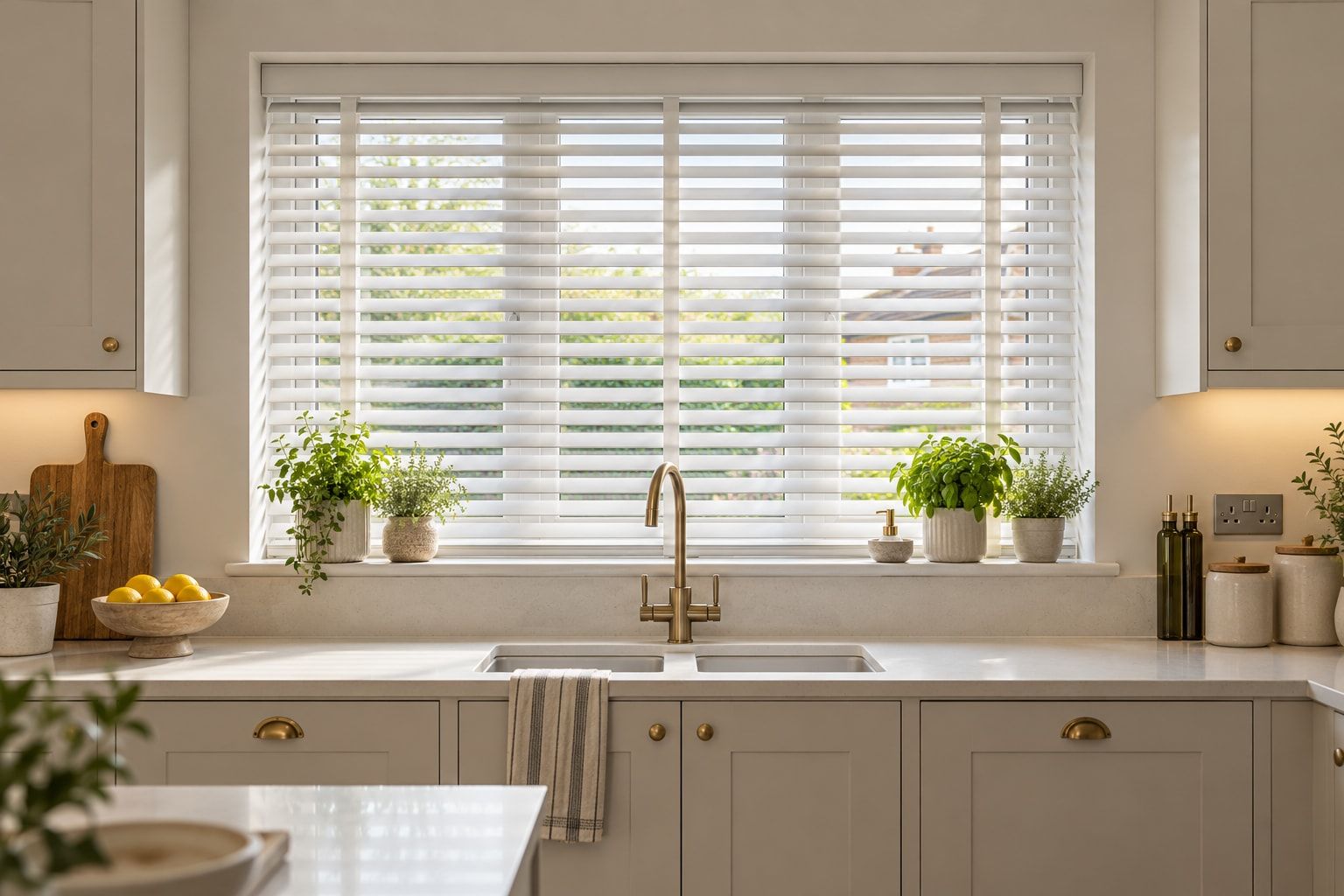
- Choose faux wood for kitchens, bathrooms, utility rooms and busy family spaces, where steam, splashes and sticky fingers are part of daily life.
Plenty of homes have both: real wood in the main living spaces, and faux wood wherever moisture is a concern.
What’s the difference?
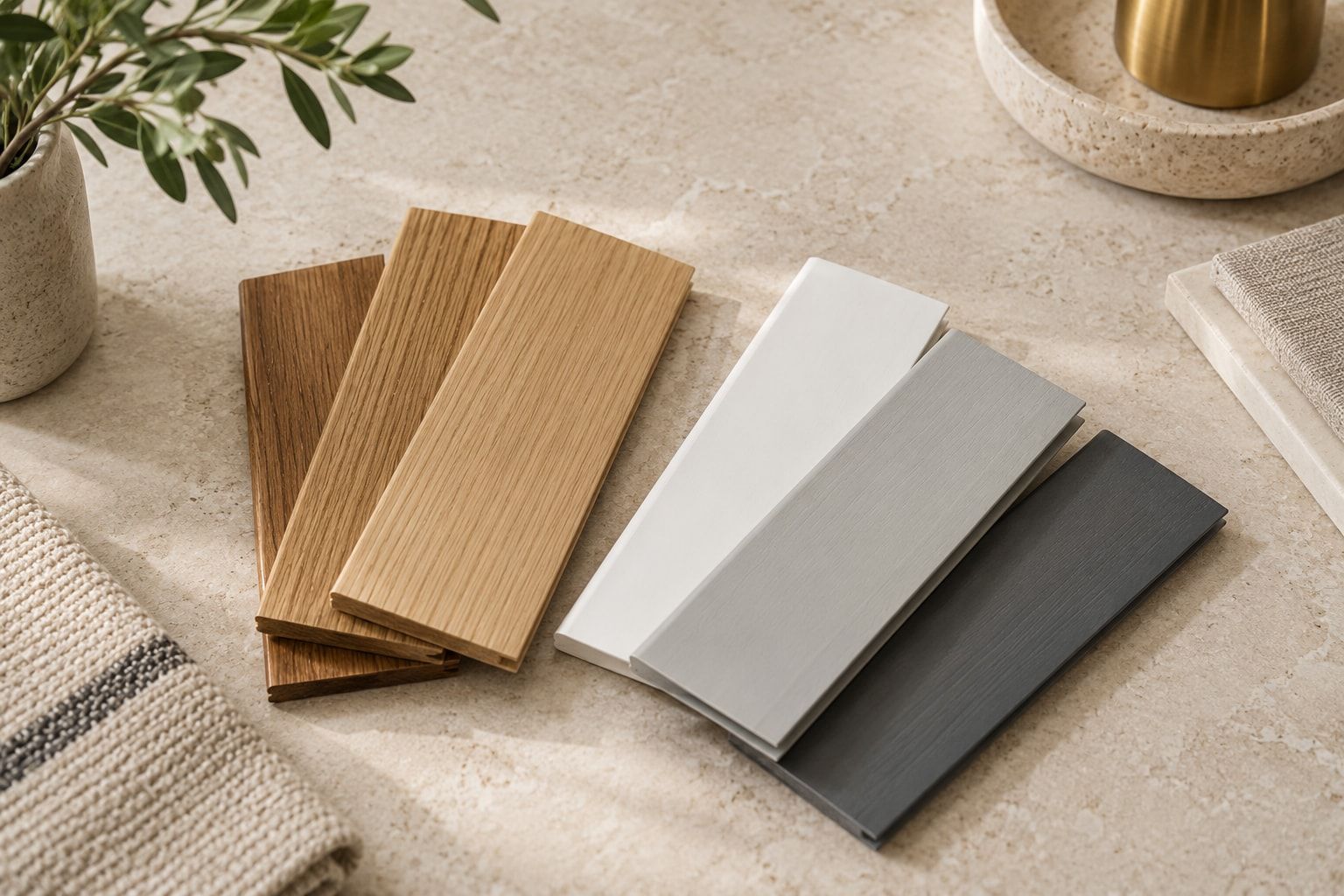
Wooden Venetian blinds are made from real timber slats, finished with a stain, lacquer or paint. Every slat has its own grain, so no two blinds are quite the same.
Faux wood Venetian blinds are made from a PVC-based or composite material, designed to look like painted or stained wood. They’re moisture-resistant, so they won’t warp in steam, and they’re very easy to keep clean.
Both work in the same way. You tilt the slats with a wand to control light and privacy, and raise the whole blind with a cord when you want a clear view.
| Real wood | Faux wood | |
|---|---|---|
| Look up close | Natural grain, rich and varied | Smooth, even finish, some with a subtle grain effect |
| Feel | Warm and natural | Smooth and solid |
| Steam and humidity | Can warp or crack in damp rooms | Moisture-resistant and won’t warp |
| Weight | Lighter | Heavier, which matters on wide windows |
| Finishes | A wide range of natural stains and painted colours | Mostly whites, neutrals and wood-effect tones |
| Durability | Hard-wearing in dry rooms | Very hard-wearing, even in busy rooms |
| Best rooms | Living rooms, bedrooms, dining rooms, studies | Kitchens, bathrooms, utility rooms, family rooms |
Real wooden Venetian blinds
Why people love them
- The look. Real wood has a depth and warmth that’s hard to imitate, especially in natural stained finishes.
- They’re lighter. Wooden slats weigh less than faux wood, so a wide blind is easier to raise and lower.
- Character. The natural variation in the grain gives each blind its own personality. It suits period homes and rooms with wooden floors or furniture particularly well.
What to watch
- Moisture. Wood reacts to humidity. In a steamy bathroom or right above a kitchen sink, slats can warp, bow or crack over time. We wouldn’t recommend real wood in either place.
- Strong sunlight. Like wooden furniture, natural finishes can mellow or change colour slightly over the years in a very sunny window.
- Knocks and scuffs. Real wood is tough, but in a busy hallway or playroom, faux wood shrugs off daily wear more easily.
Faux wood Venetian blinds
Why people love them
- They cope with moisture. Faux wood won’t warp or crack in steam, which makes it the natural choice for kitchens and bathrooms. If your bathroom gets very wet, our guide to the best blinds for bathrooms covers all the options, and a waterproof roller blind is the safer choice for a window inside a shower area.
- They’re tough. Faux wood stands up well to busy family life and the odd knock.
- Low maintenance. A quick wipe is usually all they need.
- Consistent colour. The finish is even from slat to slat, which gives a crisp, uniform look, particularly in white.
What to watch
- Weight. Faux wood is heavier than real wood. On a very wide window, a single blind can feel heavy to raise, so we may suggest splitting it into two. We’ll advise when we measure.
- The finish up close. From a few steps away, faux wood looks very convincing. Close up, it lacks the depth of real grain. In a living room where you see the blind every day, some people find that matters.
- Fewer finishes. The range leans towards whites and neutrals, with fewer rich, natural stains than real wood.
Room by room
| Room | Our usual recommendation | Why |
|---|---|---|
| Living room | Real wood | Warmth and character where you spend the most time |
| Bedroom | Real wood, often with curtains | A natural look, with curtains for darker nights |
| Dining room | Real wood | Pairs well with wooden tables and furniture |
| Kitchen | Faux wood | Copes with steam and wipes clean |
| Bathroom | Faux wood | Won’t warp in a steamy room |
| Utility room | Faux wood | Hard-wearing and moisture-resistant |
| Home office | Either | Both tilt easily to cut glare on screens |
| Children’s room | Faux wood, or a cordless blind | Tough and wipeable, though a cordless roller is often simpler |
For kitchens in particular, our guide to choosing blinds for your kitchen looks at faux wood alongside the other options.
Things that apply to both
Slat width
Venetian blinds come in different slat widths. Wider slats give a bolder, more contemporary look, a little like shutters, and a clearer view when tilted open. Narrower slats suit smaller windows and more traditional rooms. We bring samples of both so you can see the difference at your own window.
Recess or outside the recess
Like most blinds, Venetians can be fitted inside the window recess for a neat finish, or outside it to cover the frame and reduce light around the edges. On inward-opening windows, such as tilt-and-turn, we check that the blind sits clear of the window and its handle.
Child safety
Venetian blinds are raised with a cord, so it’s important that the cord is kept out of reach. All our blinds meet the UK child-safety standard, BS EN 13120, and our fitters fit the safety devices properly and show you how they work.
Questions to ask before you choose
If you’re still undecided, these questions usually point the way:
- Will the blind see steam, splashes or condensation? If so, choose faux wood.
- How close will you be to it? In a room where you’ll see the slats up close every day, the grain of real wood is worth having.
- How wide is the window? On a very wide window, real wood’s lighter weight makes a single blind easier to use. With faux wood, splitting it into two blinds often makes more sense.
- What colour are you after? For rich, natural stains, real wood offers more choice. For crisp whites and soft neutrals, both work well.
- How busy is the room? In hallways, playrooms and family kitchens, faux wood copes better with knocks and sticky fingers.
Mixing real and faux wood in one home
It’s very common to use real wood in the living room and faux wood in the kitchen and bathroom. If the two will be seen together, though, for example in an open-plan kitchen-diner, compare the samples side by side first. A white real wood slat and a white faux wood slat can differ slightly in shade and sheen. In an open-plan space, using faux wood throughout often gives the most consistent look.
The easiest way to decide is to see and handle both. Book a free home visit and we’ll bring real wood and faux wood samples to your home, so you can compare them in your own light, next to your own floors and furniture. We’ll measure every window and give you an honest recommendation for each room. Fitting is included in your quote.
Questions
Do wooden Venetian blinds block out all the light?
No. Even with the slats fully closed, some light comes through around the edges and where the slats meet. Venetian blinds are excellent for controlling light, but if you need a dark bedroom, pair them with blackout curtains or choose a blackout blind instead.
How should I clean wooden and faux wood blinds?
Dust real wood blinds regularly with a soft cloth or duster, and use a barely damp cloth for marks, drying the slats straight away. Faux wood slats can be wiped with a damp cloth and a little mild soapy water. Close the slats first so you can clean one side at a time.
Are faux wood blinds a good choice for rental properties?
Yes. They're hard-wearing, easy to wipe clean between tenancies and cope well with steamy kitchens and bathrooms, which is why many landlords choose them.